Part II – The Architecture of His Craft
For all the mythology that surrounds Mark Schwarzer, the Uruguay saves, the Europa League run, the decade as Middlesbrough’s quiet pillar, the essence of his greatness is technical. He was a goalkeeper built on fundamentals, a specialist in the invisible margins of the craft. Where other keepers relied on reflex or theatrics, Schwarzer’s game was founded on positioning, geometry, timing, and sheer consistency. To understand him is to understand the art of the unflashy.
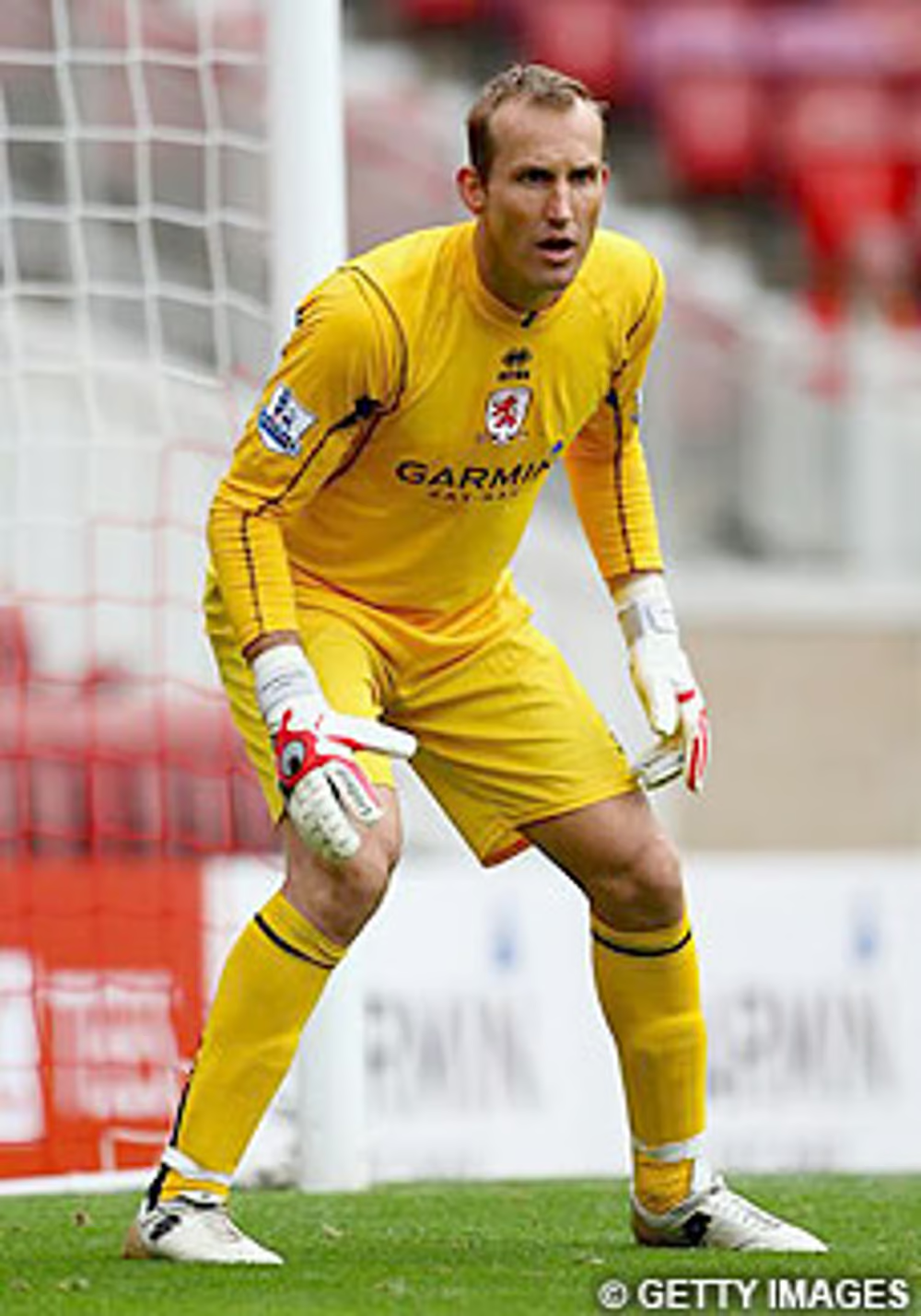
Schwarzer marshals his area while playing for Middlesbrough.
Schwarzer’s most defining attribute was his sense of position. For a keeper of his size (1.94m), he was remarkably economical with movement. His starting points were disciplined, conservative without being passive. Rather than rushing to the edge of the six yard box or sitting deep on his line, he occupied the “decision line,” a zone where he could still react to shots but also influence crosses and cutbacks.
This allowed him to make difficult saves look routine. Because he rarely overcommitted, his footwork remained tidy: short, lateral steps that kept his weight centred and his shoulders square. It meant he did not need the spectacular dive unless the situation truly demanded it. Schwarzer’s biggest saves often came without the flourish of airborne photography. They were the saves of a goalkeeper who had already done the thinking 0.5 seconds before the ball was struck.
This meant two things tactically.
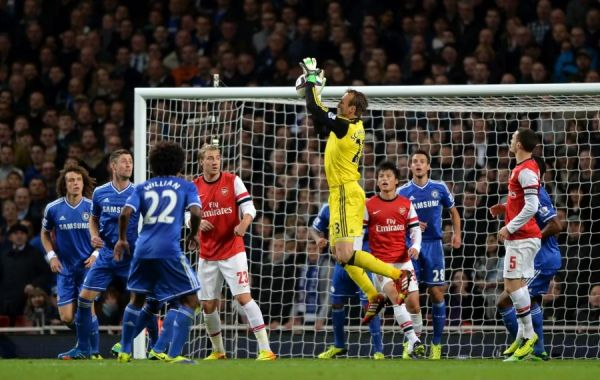
Schwarzer rises to claim a cross in Chelsea colours against Arsenal.
Schwarzer may not have been flamboyant, but he was commanding, particularly under the high ball. His judgment of flight and timing made him one of the Premier League’s most reliable aerial keepers.
He applied a simple rule: if he came, he claimed.
There were no half steps, no aborted leaps. His take offs were strong because they were committed. He entered traffic with broad shoulders, high knees, and authoritative voice projection, giving defenders a psychological licence to focus solely on their duel, knowing Schwarzer would clear the space if he chose to intervene.
Teams like Fulham, who often defended deep, depended on this dominance. Against sides like Stoke, Bolton, or early era Everton, where crossing volume was enormous, Schwarzer’s ability to “reset the box” with a single catch relieved sustained pressure.
Schwarzer did the opposite.
He held the pause.
He delayed.
By staying upright longer than most keepers, he forced strikers to make the first decision, often a rushed or imperfect one. Because he remained balanced, he could spread late, extend his frame, or drop into a reactive block.
The Uruguay save in 2005 is the quintessential example. He waited for Darío Rodríguez’s penalty to declare its height, then sprang. This micro patience defined his style in open play as well.
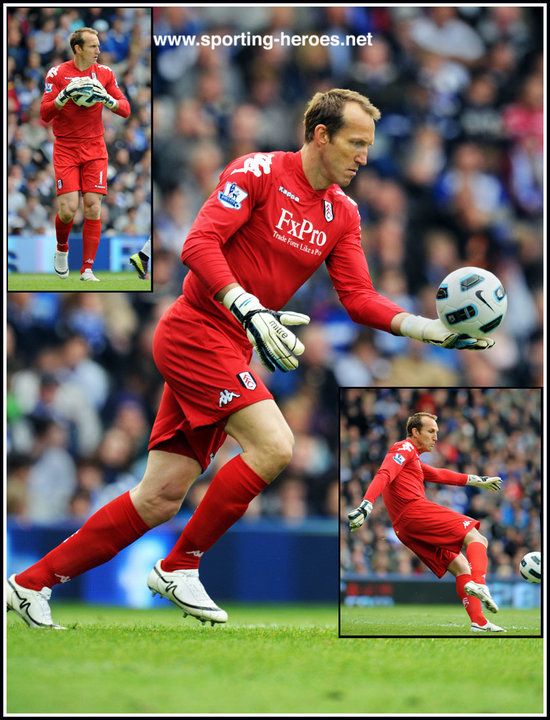
Schwarzer distributes the ball for Fulham.
Schwarzer was not a modern “quarterback goalkeeper.” He was trained in a more traditional era, and his distribution followed a risk managed model.
Long, targeted kicks into channels for Viduka at national level or Zamora at Fulham.
Clipped diagonals to the full back line when unpressed.
Quick throws to ignite counters, especially under Hodgson’s compact, transition oriented system.
He did not break lines with passes like Alisson or Ederson, but he also did not put his team into danger. His distribution philosophy was simple but tactically effective: maintain momentum, avoid turnovers, and trust the midfield structure.
This meant he reduced the angle of the shot before the striker realised it. He pushed off from clean, stable bases. His large frame could extend fully without technical compromise.
Even in his forties at Chelsea, this foundation allowed him to perform at Champions League level when called upon.
He was the metronome of the defensive line.
His ability to “pre coach” defensive actions, often shifting his back four a step earlier, spotting overloads, identifying triggers, reduced chaos. He was, tactically, a defensive coordinator wearing goalkeeper gloves.
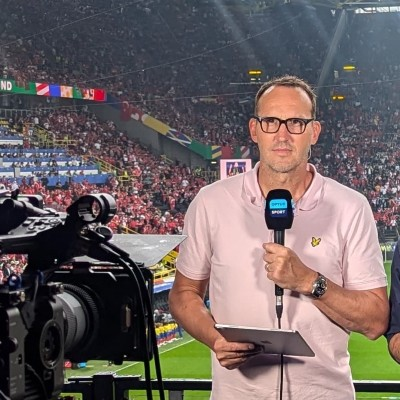
Schwarzer as a football pundit.
Schwarzer saw football through patterns. His preparation was forensic, studying striker habits, preferred shooting angles, pre shot cues. This analytical mindset is why he transitioned so seamlessly into punditry. He had been analysing the game his entire career from the best vantage point on the pitch.
In a Premier League era overwhelmed by shot stoppers, sweepers, and distribution wizards, Schwarzer was the rare figure who proved that control, not explosion, is the true currency of elite goalkeeping.
1. Positioning: The Foundation of Everything
Schwarzer marshals his area while playing for Middlesbrough.
Schwarzer’s most defining attribute was his sense of position. For a keeper of his size (1.94m), he was remarkably economical with movement. His starting points were disciplined, conservative without being passive. Rather than rushing to the edge of the six yard box or sitting deep on his line, he occupied the “decision line,” a zone where he could still react to shots but also influence crosses and cutbacks.
This allowed him to make difficult saves look routine. Because he rarely overcommitted, his footwork remained tidy: short, lateral steps that kept his weight centred and his shoulders square. It meant he did not need the spectacular dive unless the situation truly demanded it. Schwarzer’s biggest saves often came without the flourish of airborne photography. They were the saves of a goalkeeper who had already done the thinking 0.5 seconds before the ball was struck.
2. Handling and Ball Security
Where many Premier League keepers relied on parries, Schwarzer placed immense value on clean catches, a slightly old school preference that provided enormous defensive stability. His technique was textbook: body behind the ball, hands soft but secure, eyes never leaving the trajectory.This meant two things tactically.
- Counter attacks started with him, not the second phase.
His catches allowed for immediate distribution into wide channels, especially at Middlesbrough and Fulham where transitions were central to the game model. - Defensive confidence increased.
Centre backs played with the knowledge that Schwarzer was unlikely to spill a straightforward shot. That security shapes an entire block: defenders hold their line a metre higher, full backs can squeeze inward, midfielders defend forward.
3. Cross Management and Aerial Dominance
Schwarzer rises to claim a cross in Chelsea colours against Arsenal.
Schwarzer may not have been flamboyant, but he was commanding, particularly under the high ball. His judgment of flight and timing made him one of the Premier League’s most reliable aerial keepers.
He applied a simple rule: if he came, he claimed.
There were no half steps, no aborted leaps. His take offs were strong because they were committed. He entered traffic with broad shoulders, high knees, and authoritative voice projection, giving defenders a psychological licence to focus solely on their duel, knowing Schwarzer would clear the space if he chose to intervene.
Teams like Fulham, who often defended deep, depended on this dominance. Against sides like Stoke, Bolton, or early era Everton, where crossing volume was enormous, Schwarzer’s ability to “reset the box” with a single catch relieved sustained pressure.
4. One on One Situations: Patience as a Weapon
The single most underrated feature of Schwarzer’s game was his refusal to commit early in one on one moments. Many keepers attempt to win the moment through aggression: rushing the striker, spreading early, or diving at feet.Schwarzer did the opposite.
He held the pause.
He delayed.
By staying upright longer than most keepers, he forced strikers to make the first decision, often a rushed or imperfect one. Because he remained balanced, he could spread late, extend his frame, or drop into a reactive block.
The Uruguay save in 2005 is the quintessential example. He waited for Darío Rodríguez’s penalty to declare its height, then sprang. This micro patience defined his style in open play as well.
5. Distribution: Pragmatic, Not Playmaking
Schwarzer distributes the ball for Fulham.
Long, targeted kicks into channels for Viduka at national level or Zamora at Fulham.
Clipped diagonals to the full back line when unpressed.
Quick throws to ignite counters, especially under Hodgson’s compact, transition oriented system.
He did not break lines with passes like Alisson or Ederson, but he also did not put his team into danger. His distribution philosophy was simple but tactically effective: maintain momentum, avoid turnovers, and trust the midfield structure.
6. Footwork and Reaction Saves
Schwarzer’s reactions remained sharp deep into his late thirties, and the reason was mechanical: his footwork was superb. He never crossed his feet, never took unnecessary backward steps, and always set early.This meant he reduced the angle of the shot before the striker realised it. He pushed off from clean, stable bases. His large frame could extend fully without technical compromise.
Even in his forties at Chelsea, this foundation allowed him to perform at Champions League level when called upon.
7. Leadership and Defensive Organisation
Schwarzer was not loud, but he was authoritative. He communicated in concise, functional cues: distances, line height, body orientation. At Fulham, where Hodgson drilled a famously rigid 4 4 2 block, Schwarzer’s organisational clarity was fundamental.He was the metronome of the defensive line.
His ability to “pre coach” defensive actions, often shifting his back four a step earlier, spotting overloads, identifying triggers, reduced chaos. He was, tactically, a defensive coordinator wearing goalkeeper gloves.
8. The Analytical Mind Behind the Technique
Schwarzer as a football pundit.
Schwarzer saw football through patterns. His preparation was forensic, studying striker habits, preferred shooting angles, pre shot cues. This analytical mindset is why he transitioned so seamlessly into punditry. He had been analysing the game his entire career from the best vantage point on the pitch.
Conclusion: A Keeper Made of Craft, Not Chaos
Mark Schwarzer was not defined by one skill. He was defined by the absence of weaknesses. His game was a harmonious balance of geometry, timing, certainty, and restraint. He mastered the fundamentals so completely that he elevated them into an art form.In a Premier League era overwhelmed by shot stoppers, sweepers, and distribution wizards, Schwarzer was the rare figure who proved that control, not explosion, is the true currency of elite goalkeeping.
Honours & Achievements
- 2008–09: Fulham Player of the Year
- 2009: Awarded the Medal of the Order of Australia (OAM)
- 2009: Football Media Association Australia International Player of the Year
- 2009 & 2010: FFA Australian Football Awards: Footballer of the Year
- 2010: Australian Professional Football Association Player of the Year
- 2014: Awarded the Alex Tobin OAM Medal
- 2021: Inducted into the Football Australia Hall of Fame
- 2025: Inducted into the Sport Australia Hall of Fame


