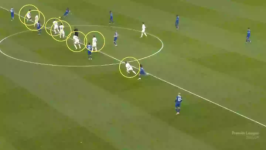
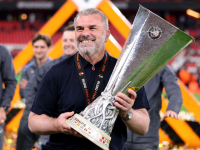
Few managers in modern football polarise opinion quite like Ange Postecoglou. To some, he’s a legend, to others such as Dan Kilpatrick he may be a clown. Postecoglou's tactical philosophy often dubbed "Angeball" is built on attacking intent, positional overloads, and a high defensive line. It’s a style that thrives on courage and commitment, and when it works, it looks like genius. When it doesn’t, it attracts ridicule.
Postecoglou's early tenure at Tottenham Hotspur was electric. In the first 10 games of the 2023/24 Premier League season, Spurs were flying high and scoring freely, leading the table, and earning plaudits across the board. But that early-season momentum came to a screeching halt after a chaotic clash against Chelsea. Spurs finished that game with nine men, yet instead of retreating into a low block, Postecoglou persisted with his attacking principles. It nearly paid off too—Eric Dier’s disallowed equaliser could have changed the narrative. Unfortunately for Postecoglou, the game ended 4–1, and from that point on, the tide turned. The phrase "To dare is to do" became a punchline among critics and long running gag.
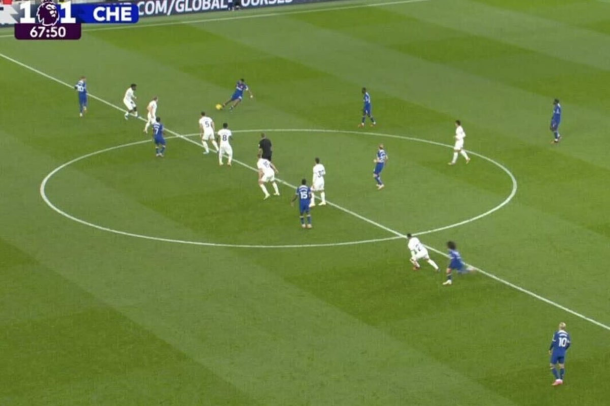
Tottenham's (in white) high line with 9 men against Chelsea (in blue), otherwise referred to as the 0-7-1 formation
To make matters worse, the aftermath of the Chelsea match marked the beginning of a significant injury and suspension crisis. Key players such as James Maddison, Micky van de Ven, Richarlison, Rodrigo Bentancur, and Cristian Romero were all sidelined for extended periods. Each of them played a vital role in Postecoglou’s system. Maddison had been central to Spurs’ attacking creativity and ball progression; van de Ven’s pace was essential in covering the high line, and with Harry Kane no longer at the club, Richarlison was the only natural striker forcing Son Heung-min to lead the line out of position. With so many integral players missing, the structure and fluidity of “Angeball” began to unravel.
To compound the issue, opposition teams quickly adapted to Angeball. They began sitting deep and staying compact, patiently waiting to exploit the inevitable gaps left behind by Tottenham’s high-flying inverted full-backs, Destiny Udogie and Pedro Porro. By refusing to track Spurs’ wide wingers, opponents effectively forced Tottenham to rely on individual 1v1 brilliance; something the squad lacked. As a result, attacking moves often broke down, and in transition, the vulnerability was glaring. With Udogie and Porro pushed forward, Spurs’ centre-backs were routinely left exposed and scrambling to recover.
Even after Tottenham welcomed back key players from injury, they never quite recaptured the fluid, high-tempo form that defined their opening 10 games. In Postecoglou's first season, an early exit from both domestic cups allowed the team to focus on a more forgiving, one-game-a-week schedule. Yet despite this advantage, the spark seemed to fade, and Spurs became increasingly inconsistent, even with a near full-strength squad. Still, thanks to their blistering start to the campaign, Tottenham managed to secure a 5th-place finish, qualifying for the Europa League. That achievement, while modest, was enough to keep Postecoglou in the job heading into his second season.
It became increasingly clear that once teams had figured out how to neutralise Tottenham’s system, the squad needed reinforcements, particularly in attacking areas and in providing defensive cover for Micky van de Ven and Cristian Romero. However, meaningful recruitment never truly materialised. Daniel Levy, true to form, oversaw a window that brought in just one player in his prime, Dominic Solanke. The rest of the signings were focused on potential, with teenage prospects Archie Gray, Wilson Odobert, and Lucas Bergvall arriving as long-term projects rather than immediate first team players. Bergvall performed admirably it should be said, however an 18 year old was relied on far too much due to the poor performances of those around him. Spurs also re-signed Timo Werner on loan, but due to poor performances, Postecoglou would favour 17 year old Mikey Moore in his place.
The number of games Tottenham played in Postecoglou’s second season was astronomical compared to his first. In 2023–24, Spurs played just 41 matches across all competitions. A year later, that number jumped to 60, largely due to the 15 match campaign en route to winning the Europa League. This demanding schedule was compounded by an unprecedented injury crisis, forcing 18-year-old Archie Gray to fill in across the backline for much of the season. Of course, many critics will blame Postecoglou's tactics and training for the injury crisis. However, Postecoglou did push back on the narrative explaining that the packed calendar left virtually no time to train.
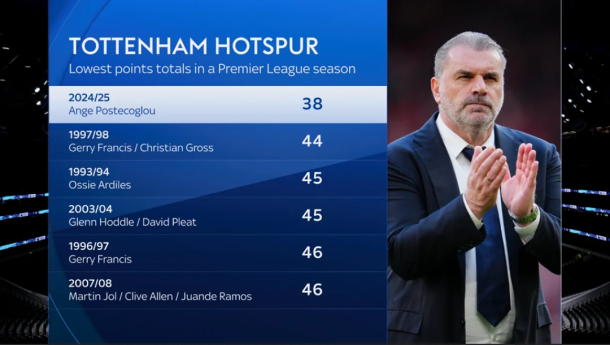
Tottenham’s 2024/25 season ends with a record-low 38 points under Ange Postecoglou | Sky Sports
To return to the point and wrap up Postecoglou's second season, Tottenham finished with 22 losses in the Premier League, were defeated in the fourth round by Aston Villa of the FA Cup, were convincingly beaten by Liverpool 4-1 on aggregate in the Carabao cup, and yet amid the chaos they won a Europa League trophy and qualified to the UEFA Champions League. Some will say silverware is the ultimate goal so therefore it's a good season, others such as Daniel Levy will disagree. Clearly, "always winning in his second season" wasn't good enough to keep his job, so then what's next?
Ange Postecoglou will not be short of offers, despite what the critics say. It's been reported today by The Athletic that Brentford had informal discussions with Postecoglou about swapping managers. Meanwhile, BBC Sport reported that Los Angeles FC also expressed interest. It seems likely however that Ange will stay in Europe, determined to prove himself and hope to have another swing at the Premier League. Whatever comes next, one thing is certain: many will be watching, whether they’re fans of his attacking philosophy or critics waiting for it to fail.
Postecoglou's early tenure at Tottenham Hotspur was electric. In the first 10 games of the 2023/24 Premier League season, Spurs were flying high and scoring freely, leading the table, and earning plaudits across the board. But that early-season momentum came to a screeching halt after a chaotic clash against Chelsea. Spurs finished that game with nine men, yet instead of retreating into a low block, Postecoglou persisted with his attacking principles. It nearly paid off too—Eric Dier’s disallowed equaliser could have changed the narrative. Unfortunately for Postecoglou, the game ended 4–1, and from that point on, the tide turned. The phrase "To dare is to do" became a punchline among critics and long running gag.
Tottenham's (in white) high line with 9 men against Chelsea (in blue), otherwise referred to as the 0-7-1 formation
To make matters worse, the aftermath of the Chelsea match marked the beginning of a significant injury and suspension crisis. Key players such as James Maddison, Micky van de Ven, Richarlison, Rodrigo Bentancur, and Cristian Romero were all sidelined for extended periods. Each of them played a vital role in Postecoglou’s system. Maddison had been central to Spurs’ attacking creativity and ball progression; van de Ven’s pace was essential in covering the high line, and with Harry Kane no longer at the club, Richarlison was the only natural striker forcing Son Heung-min to lead the line out of position. With so many integral players missing, the structure and fluidity of “Angeball” began to unravel.
To compound the issue, opposition teams quickly adapted to Angeball. They began sitting deep and staying compact, patiently waiting to exploit the inevitable gaps left behind by Tottenham’s high-flying inverted full-backs, Destiny Udogie and Pedro Porro. By refusing to track Spurs’ wide wingers, opponents effectively forced Tottenham to rely on individual 1v1 brilliance; something the squad lacked. As a result, attacking moves often broke down, and in transition, the vulnerability was glaring. With Udogie and Porro pushed forward, Spurs’ centre-backs were routinely left exposed and scrambling to recover.
Even after Tottenham welcomed back key players from injury, they never quite recaptured the fluid, high-tempo form that defined their opening 10 games. In Postecoglou's first season, an early exit from both domestic cups allowed the team to focus on a more forgiving, one-game-a-week schedule. Yet despite this advantage, the spark seemed to fade, and Spurs became increasingly inconsistent, even with a near full-strength squad. Still, thanks to their blistering start to the campaign, Tottenham managed to secure a 5th-place finish, qualifying for the Europa League. That achievement, while modest, was enough to keep Postecoglou in the job heading into his second season.
It became increasingly clear that once teams had figured out how to neutralise Tottenham’s system, the squad needed reinforcements, particularly in attacking areas and in providing defensive cover for Micky van de Ven and Cristian Romero. However, meaningful recruitment never truly materialised. Daniel Levy, true to form, oversaw a window that brought in just one player in his prime, Dominic Solanke. The rest of the signings were focused on potential, with teenage prospects Archie Gray, Wilson Odobert, and Lucas Bergvall arriving as long-term projects rather than immediate first team players. Bergvall performed admirably it should be said, however an 18 year old was relied on far too much due to the poor performances of those around him. Spurs also re-signed Timo Werner on loan, but due to poor performances, Postecoglou would favour 17 year old Mikey Moore in his place.
The number of games Tottenham played in Postecoglou’s second season was astronomical compared to his first. In 2023–24, Spurs played just 41 matches across all competitions. A year later, that number jumped to 60, largely due to the 15 match campaign en route to winning the Europa League. This demanding schedule was compounded by an unprecedented injury crisis, forcing 18-year-old Archie Gray to fill in across the backline for much of the season. Of course, many critics will blame Postecoglou's tactics and training for the injury crisis. However, Postecoglou did push back on the narrative explaining that the packed calendar left virtually no time to train.
It's then fair to ask how could all this be Postecoglou's fault? Well, according to Tom Allnut of The Times there were concerns within the club's medical department from early on.
It's been well known that Postecoglou will stick to his philosophy regardless of who he is playing, or the fatigue of the players. One may then say that he showed a willingness to adapt to the circumstances of injuries during his Europa League run where he played more defensively. According to James Olley of ESPN FC, this wasn’t necessarily a tactical evolution initiated by Postecoglou, but rather the result of a player-led intervention.
It can be assumed, then, that the players accepted they would stick with Postecoglou’s attacking philosophy in the league, where the season was essentially beyond salvaging and instead shift their focus to doing whatever it took to win the Europa League. However, according to Ange Postecoglou, adapting for knockout football isn’t new. He’s stated that his teams have always played differently in cup competitions.
There may be some truth to this, as during the 2018 World Cup qualifier away to Honduras, Postecoglou adopted a more cautious approach, departing from his typical style due to the uneven pitch conditions. Conversely, In the 2015 Asian Cup final, Postecoglou should have parked the bus, but he continued to attack which allowed South Korea to score a late equaliser and send the match into extra time. Perhaps Brisbane Roar or South Melbourne fans can weigh in on the truth to this.
Tottenham’s 2024/25 season ends with a record-low 38 points under Ange Postecoglou | Sky Sports
To return to the point and wrap up Postecoglou's second season, Tottenham finished with 22 losses in the Premier League, were defeated in the fourth round by Aston Villa of the FA Cup, were convincingly beaten by Liverpool 4-1 on aggregate in the Carabao cup, and yet amid the chaos they won a Europa League trophy and qualified to the UEFA Champions League. Some will say silverware is the ultimate goal so therefore it's a good season, others such as Daniel Levy will disagree. Clearly, "always winning in his second season" wasn't good enough to keep his job, so then what's next?
Ange Postecoglou will not be short of offers, despite what the critics say. It's been reported today by The Athletic that Brentford had informal discussions with Postecoglou about swapping managers. Meanwhile, BBC Sport reported that Los Angeles FC also expressed interest. It seems likely however that Ange will stay in Europe, determined to prove himself and hope to have another swing at the Premier League. Whatever comes next, one thing is certain: many will be watching, whether they’re fans of his attacking philosophy or critics waiting for it to fail.