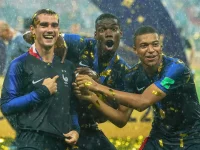
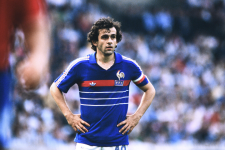
Over the past 30 years, no country has produced more top-flight European footballers than France, especially when measured by sheer volume of talent. France consistently exports more players to Europe’s top five leagues than any other nation. In many seasons, French players rank No. 1 for total minutes played across the Premier League, Bundesliga, Serie A, and La Liga. It’s a talent pipeline that is almost industrial in its efficiency. Here’s the story of France’s Golden Conveyor Belt – the nation that perfected youth development. From the misty pitches of Clairefontaine to the concrete playgrounds of Bondy, France’s commitment to youth development has created a dynasty of football intelligence, artistry, and diversity.
A School for Genius
The morning fog hangs low over Clairefontaine, France’s national football academy, as the first sounds of studs and laughter echo across immaculate lawns. It’s a familiar scene repeated across generations. In these corridors, France has refined not only its footballers but its footballing soul. Here, amid discipline and science, genius has been quietly sculpted. Thierry Henry, Nicolas Anelka, Blaise Matuidi, and Kylian Mbappé all trained under the same Parisian sky. They represent the essence of Le Système Français – a methodical yet creative philosophy that turned a nation’s restless diversity into world football’s most consistent production line. How did France create this golden conveyor belt, and why does it keep running when others stall?
From Crisis to Creation
The roots of France’s revolution go back to the early 1970s, when the national game was languishing in mediocrity. Results were poor, infrastructure weak, and coaching fragmented. Then came a radical decision: to build a national centre for excellence that would professionalise youth training. In 1973, the Centre Technique National Fernand Sastre – better known simply as Clairefontaine – opened its doors. It was a football academy like no other, combining sport and education, technique and intellect. Young players lived, studied, and trained together in a controlled environment that valued thought as much as flair. “Clairefontaine was never just about football,” said Gérard Houllier, one of its architects. “It was about shaping minds.” That mindset set France apart. While other nations prized athleticism and grit, the French emphasised intelligence, adaptability, and touch. They built thinkers who could improvise and players who could read patterns and anticipate moments. By the late 1990s, the payoff arrived: Zidane, Vieira, Henry, Thuram – the class that conquered the world in 1998. They were a new type of footballer: multicultural, technical, and fearless. Clairefontaine wasn’t just a school; it was a factory of identity.
The Blueprint Expands
The FFF didn’t stop at one centre. Over the next two decades, it rolled out 12 regional Pôles Espoirs – satellite academies designed to find raw talent from every corner of the country. Each one mirrored the Clairefontaine philosophy of education first, technique second, results third. Scouts travelled across youth leagues and urban tournaments, often unearthing brilliance in overlooked suburbs. At 15, the best graduates moved into professional club academies such as Lyon, Rennes, Monaco, and Le Havre, each now an institution in its own right. Lyon’s conveyor belt produced Karim Benzema and Corentin Tolisso. Rennes nurtured Ousmane Dembélé and Eduardo Camavinga. Le Havre, humble yet legendary, birthed Paul Pogba and Riyad Mahrez. The numbers tell their own story: by the early 2020s, France was producing more professional footballers in Europe’s top five leagues than any other nation – well over a thousand.
Banlieues and Brilliance
But Clairefontaine alone cannot explain the phenomenon. France’s true strength comes from the streets – the banlieues, the sprawling suburban estates that ring Paris, Lyon, Marseille, and other major cities. In Bondy, Sarcelles, Trappes and beyond, children play football on cracked asphalt and inside small cages, improvising with style and swagger. It’s here that Kylian Mbappé honed his acceleration, N’Golo Kanté learned patience and perseverance, and Paul Pogba developed his confidence. “On those playgrounds, you play with your soul,” Mbappé once said. “You learn freedom before tactics.” The FFF recognised early that these communities, often marginalised, were brimming with untamed genius. By integrating banlieue clubs into their scouting networks, they turned social diversity into footballing gold. The synergy between street football and structured coaching became France’s secret weapon – an alchemy of creativity and order that few nations have replicated.
The French Way: Technique, Vision, Intelligence
At the heart of the French system lies a mantra repeated through every level of coaching: technique, vision, intelligence. Every licensed youth coach in France is trained through the FFF’s rigorous education system. The curriculum demands not only knowledge of drills and tactics but an understanding of psychology and pedagogy. The aim is to create decision-makers, not automatons. “The French player is taught to see before he receives,” explained François Blaquart, former FFF technical director. “We coach the brain first, then the body.” It’s why French players appear so composed under pressure, why defenders like Varane and Upamecano pass with confidence, and why midfielders like Tchouaméni and Camavinga read the game as if conducting it. Sessions are built around repetition and recognition: small-sided games, rondos, and positional drills that teach geometry and rhythm. The young player learns not just how to play, but why – a distinction that underpins French success.
The Modern Academies
Today’s French academies are marvels of both science and culture. At Paris Saint-Germain’s new Poissy complex, players wear GPS trackers and motion sensors. At Rennes, every youth team has access to nutritionists, psychologists, and academic tutors. Lyon collaborates with local universities to research decision-making and motor learning. Yet despite the technology, France refuses to abandon its artistic heart. “We never want to produce robots,” insists Jean-Claude Giuntini, head of France’s under-17 programme. “We want thinkers who can invent solutions.” That duality – rigorous yet imaginative – remains the defining trait of the French school. It’s why they keep producing players who fit any tactical era: from Henry’s elegance to Griezmann’s work rate, from Pogba’s charisma to Mbappé’s clinical speed.
The Exporters of Excellence
French football’s fingerprints stretch far beyond its borders. Japan’s academy network was modelled on Clairefontaine’s methods. African nations like Senegal and Mali have benefited from French-trained coaches and scouts. Even England’s 2010s overhaul of its youth system – culminating in its 2017 U17 World Cup win – owed a quiet debt to French inspiration. France’s system works because it is not purely technical; it’s social. The diversity of its talent pool, the blend of cultures and styles, gives it an unmatched edge. As one FFF coach put it: “Our secret isn’t Clairefontaine. It’s the street, the school, and the dream – all working together.”
New Pressures, New Frontiers
Success, however, brings new dilemmas. European superclubs now raid French academies with precision, snapping up teenagers before they debut. The financial reality of Ligue 1 forces clubs to sell early, turning player development into economic necessity. There is also a philosophical warning. Some within France fear the system’s efficiency could sterilise its spontaneity. “We risk producing players who all look the same,” Jean-Pierre Papin warned. “We must preserve our individuality.” Social issues also linger. The same banlieues that fuel French football’s rise still wrestle with inequality and tension. The national team’s multicultural identity – once celebrated as Black, Blanc, Beur – remains a flashpoint for political debate. But on the pitch, the formula still works. Football in France remains a rare space where difference unites.
Horizon 2030: The Next Revolution
Looking ahead, France is already retooling. The FFF’s Horizon 2030 project aims to integrate neuroscience and cognitive training into youth development – training the mind’s decision-making processes alongside technique. The women’s game has also flourished under this blueprint. Clubs like Lyon Féminin and PSG have built youth systems as sophisticated as the men’s, producing global stars such as Wendie Renard and Marie-Antoinette Katoto. The next frontier isn’t just about developing better players; it’s about nurturing thinkers who can thrive in football’s future chaos.
Case Study: Kylian Mbappé
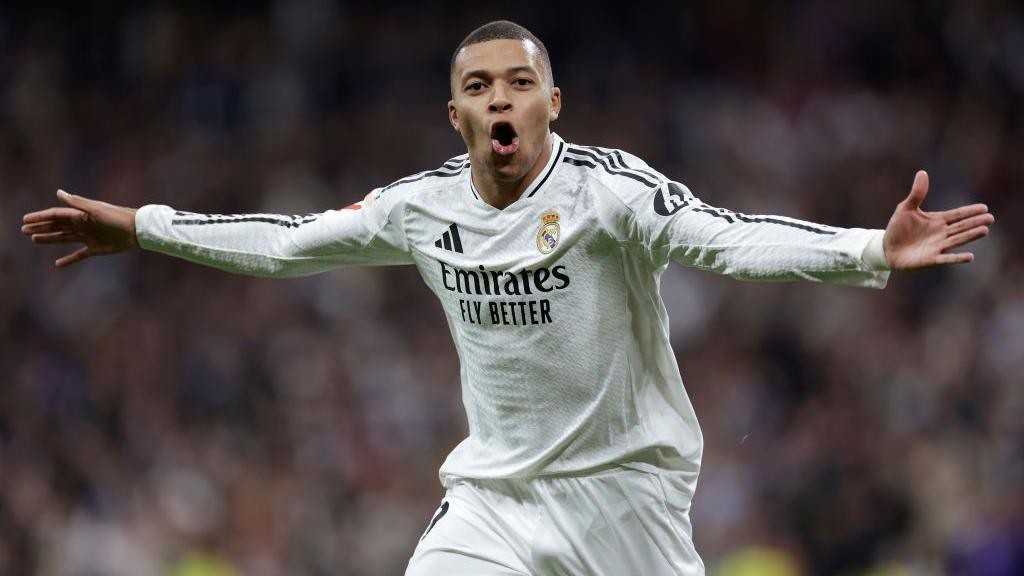
Mbappé stands as the ultimate product of France’s footballing assembly line: fast, intelligent, and fearless.
On quiet mornings at Clairefontaine, when the mist still hangs low over the pines, coaches sometimes point toward a certain stretch of grass and say, “C’est là qu’il a commencé à vraiment comprendre qui il était.” That’s where he started to understand who he was. They mean Kylian Mbappé. When he arrived in 2011, Clairefontaine was already steeped in myth – built on anonymity, discipline, and humility. Yet even within that ecosystem, one boy stood out. Mbappé was small but explosive, with acceleration that made coaches exchange glances of disbelief. “He was the only player I’ve seen who could arrive at full speed and still make the right decision,” said one former coach. Another noted that his brain seemed to move ahead of his feet.
Clairefontaine is a place where talent is not indulged. It expects its prodigies to be its quietest workers. The young Mbappé adapted quickly – polite, curious, driven. He asked for extra finishing drills, studied game footage obsessively, and peppered coaches with questions. During a video session on Thierry Henry, he focused not on Henry but on defenders, rewinding their mistakes. He wanted to understand the entire match, not just his part in it. Even in his early teens, stories circulated: the day he scored twice in a scrimmage, then spent forty minutes fixing his weaker foot; the classroom session where he spoke about tactics with the calm authority of someone older. Clairefontaine staff would not call him a star – but they would say, “He’s different.”
By fourteen, he was being contacted by Real Madrid and Chelsea. Clairefontaine worked to shield him while preparing him for the pressures he would inevitably face. They trained him in leadership, communication, resilience. “He never seemed weighed down,” a coach said. “He seemed motivated by the idea that the world was watching.” When he left for Monaco, Clairefontaine wasn’t losing a player – it was releasing a phenomenon. “Nous, on a posé les premières pierres. Lui, il a construit tout le reste,” one instructor said. We laid the first stones. He built everything else.
Case Study #2: Robert Pirès
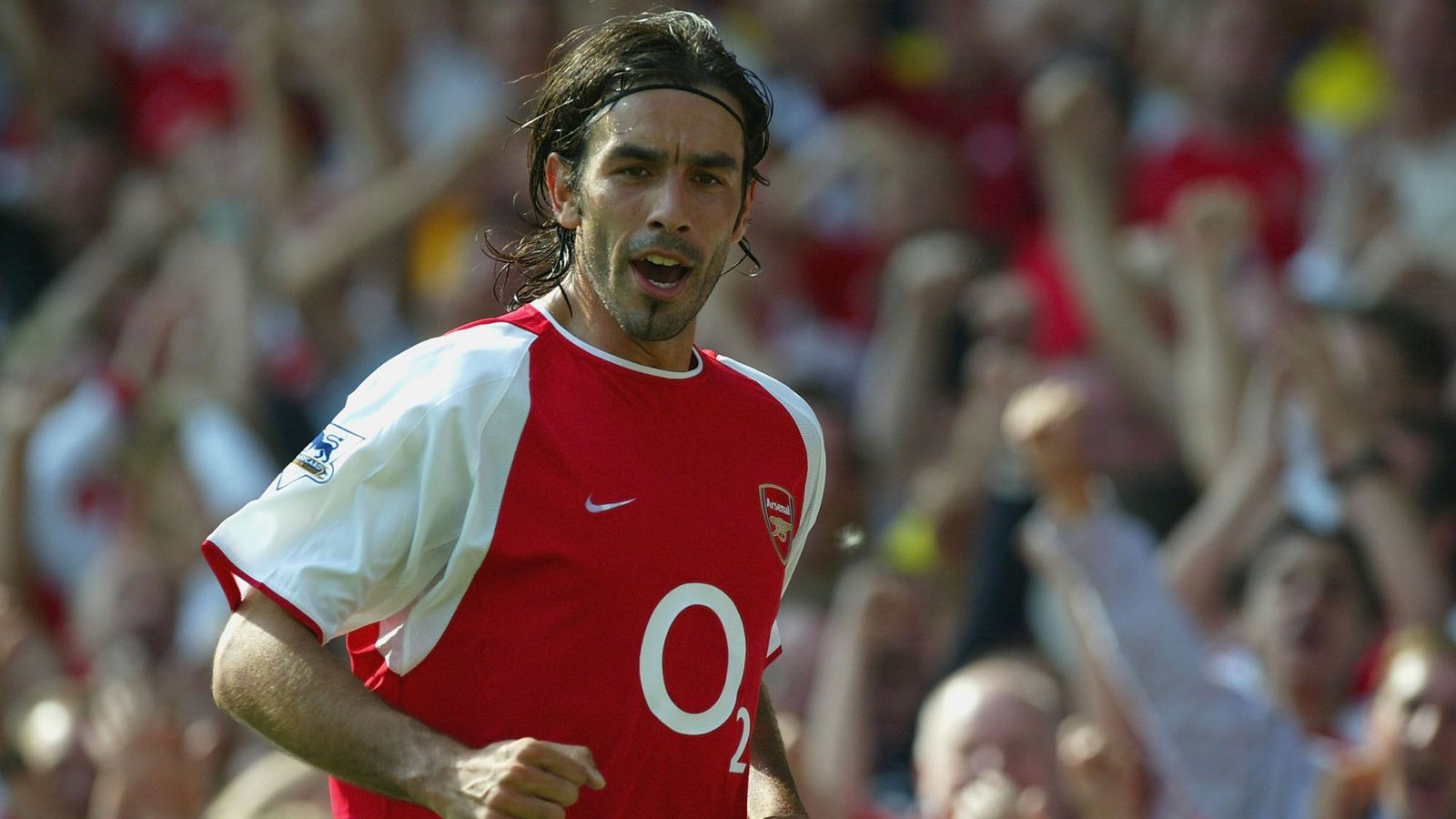
Robert Pires won two Premier League titles and three FA Cups with Arsenal.
When Robert Pirès first walked through the pine-lined entrance of Clairefontaine, he arrived with quiet grace. Clairefontaine has produced warriors and tacticians, but Pirès was something else entirely: a glide in a world of sprints, a painter in a place built for engineers. Even as a teenager, he moved with languid elegance – long strides, soft touches, a natural silkiness that made the ball seem alive. “Robert ne force jamais,” one coach said. Robert never forces anything. It was both praise and warning. Clairefontaine demanded intensity, but Pirès’s intensity was internal, fluid, unhurried.
At Clairefontaine, he learned tactical structure that later allowed him to drift between midfield and attack with airy intelligence. He refined his signature movements: starting wide, disappearing briefly, then reappearing in pockets defenders couldn’t anticipate. These weren’t improvisations – they were the result of long, methodical sessions that valued intelligence as much as athleticism. Off the pitch, classmates remember him as quiet, witty, and self-assured. “Avec Robert, le ballon vivait,” one coach recalled. With Robert, the ball lived.
Pirès also found belonging. Born in Reims to a Portuguese father and Spanish mother, he grew up on the edges of French identity. Clairefontaine, a melting pot of cultures and backgrounds, gave him a sense of home. His quiet confidence bloomed. Beneath his elegance, the academy hardened him. He stayed after training, rehearsing the same curved delivery over and over until it became his trademark. When he later excelled at Metz and soared at Arsenal, Clairefontaine’s imprint was unmistakable: intelligence in transition, velvet control, effortless creativity. Pirès remains one of Clairefontaine’s purest products – proof that in football’s most industrialised talent factory, there has always been room for poetry.
Case Study #3: Marcel Desailly
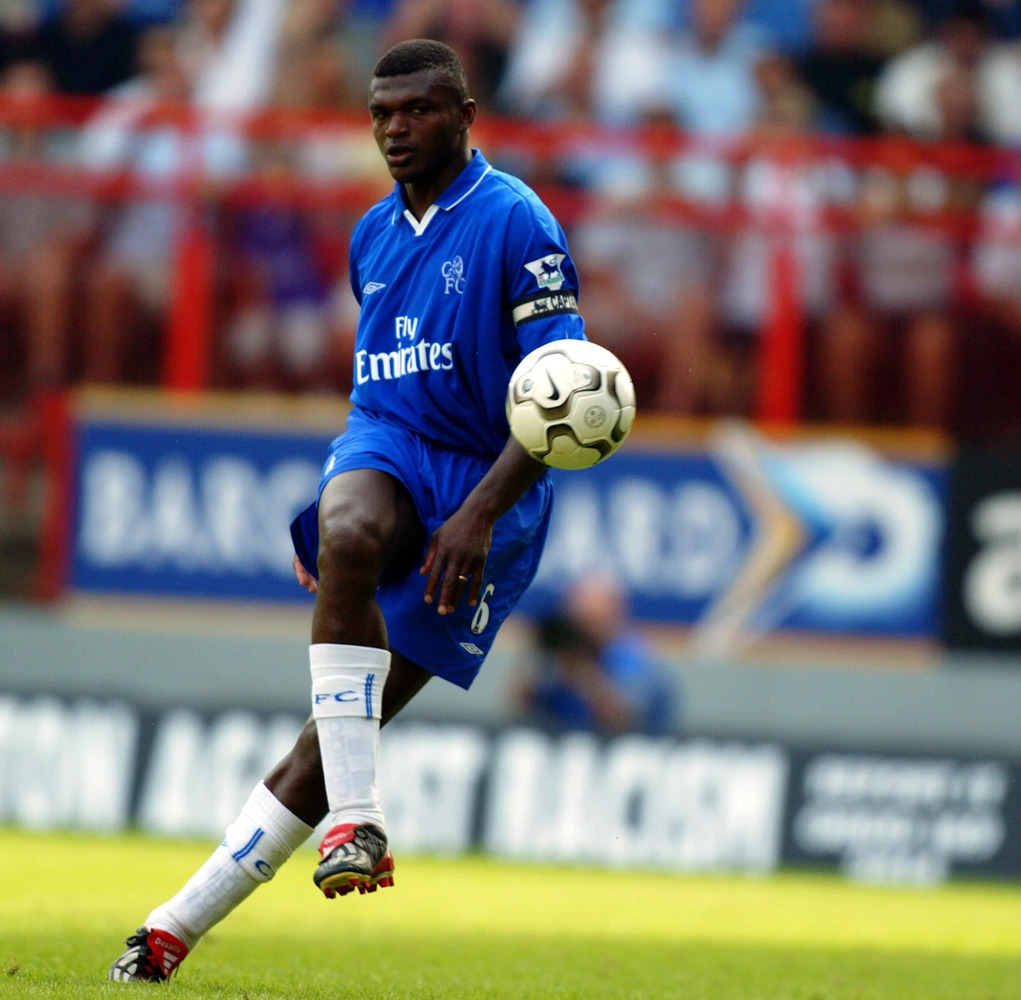
Desailly, a World Cup winner and two-time European champion, stands among the greatest defenders the game has ever produced.
Marcel Desailly’s story is different because he never went to Clairefontaine – yet he remains one of the clearest symbols of French football’s margins producing greatness. Before he lifted the World Cup and Champions League trophies, he was a quiet child navigating the banlieues of Nantes. Born in Accra, he moved to France young after his mother remarried a diplomat. The shift from Ghana’s heat to the grey Atlantic coast was dramatic. In the estates of Nantes, he learned toughness, resilience, and belonging in a country still learning how to embrace its diversity.
At school he was shy but strongly built. Football became his language. FC Nantes’ academy taught him structure, geometry, and discipline. This was the school of jeu à la nantaise – elegant, intelligent passing football. The banlieue had given him toughness; Nantes taught him timing. “Il était sérieux, trop sérieux pour son âge,” a youth coach said. He was too serious for his age – but that seriousness became his defining strength.
He adapted wherever his team needed him: midfield, defence, any role. By the time he reached Marseille in the early 1990s, he carried quiet steel. In the 1993 Champions League final, he dominated, becoming the first player to win back-to-back European Cups with two clubs. For France, he became Le Roc – the anchor of the 1998 team. As tricolore flags waved from the same banlieues the country once ignored, Desailly embodied something profound: the margins were no longer France’s afterthought; they were its backbone. Even in triumph he stayed humble. “Je fais mon travail, c’est tout.” I do my job, that's all. Desailly remains proof that when given structure and belief, the banlieue produces champions.
Legacy and Continuum
When Kylian Mbappé became a World Cup winner at nineteen, he symbolised more than brilliance – he embodied an entire system working in harmony. From Zidane to Camavinga, from Henry to Saliba, the French footballer has become its own archetype: intelligent, expressive, adaptable. In a sport obsessed with instant gratification, France’s secret remains patience. It trusts its teachers, its structures, its culture. It allows genius to simmer. As the sun sets over Clairefontaine and another generation laces up their boots, the rhythm continues. A nation of educators keeps teaching football’s language – one perfect touch at a time. In France, talent isn’t discovered. It’s developed.
Further Reading
The Making of Les Bleus: Sport in France, 1958-2010 – Lindsay Sarah Krasnoff
Soccer Empire: The World Cup and the Future of France – Laurent Dubois
Gérard Houllier – Stephen F. Kelly
Kylian Mbappé: Soccer Superstar – Derek Moon
Le Footballeur: An Autobiography – Robert Pirès
Capitaine – Marcel Desailly
A School for Genius
The morning fog hangs low over Clairefontaine, France’s national football academy, as the first sounds of studs and laughter echo across immaculate lawns. It’s a familiar scene repeated across generations. In these corridors, France has refined not only its footballers but its footballing soul. Here, amid discipline and science, genius has been quietly sculpted. Thierry Henry, Nicolas Anelka, Blaise Matuidi, and Kylian Mbappé all trained under the same Parisian sky. They represent the essence of Le Système Français – a methodical yet creative philosophy that turned a nation’s restless diversity into world football’s most consistent production line. How did France create this golden conveyor belt, and why does it keep running when others stall?
From Crisis to Creation
The roots of France’s revolution go back to the early 1970s, when the national game was languishing in mediocrity. Results were poor, infrastructure weak, and coaching fragmented. Then came a radical decision: to build a national centre for excellence that would professionalise youth training. In 1973, the Centre Technique National Fernand Sastre – better known simply as Clairefontaine – opened its doors. It was a football academy like no other, combining sport and education, technique and intellect. Young players lived, studied, and trained together in a controlled environment that valued thought as much as flair. “Clairefontaine was never just about football,” said Gérard Houllier, one of its architects. “It was about shaping minds.” That mindset set France apart. While other nations prized athleticism and grit, the French emphasised intelligence, adaptability, and touch. They built thinkers who could improvise and players who could read patterns and anticipate moments. By the late 1990s, the payoff arrived: Zidane, Vieira, Henry, Thuram – the class that conquered the world in 1998. They were a new type of footballer: multicultural, technical, and fearless. Clairefontaine wasn’t just a school; it was a factory of identity.
The Blueprint Expands
The FFF didn’t stop at one centre. Over the next two decades, it rolled out 12 regional Pôles Espoirs – satellite academies designed to find raw talent from every corner of the country. Each one mirrored the Clairefontaine philosophy of education first, technique second, results third. Scouts travelled across youth leagues and urban tournaments, often unearthing brilliance in overlooked suburbs. At 15, the best graduates moved into professional club academies such as Lyon, Rennes, Monaco, and Le Havre, each now an institution in its own right. Lyon’s conveyor belt produced Karim Benzema and Corentin Tolisso. Rennes nurtured Ousmane Dembélé and Eduardo Camavinga. Le Havre, humble yet legendary, birthed Paul Pogba and Riyad Mahrez. The numbers tell their own story: by the early 2020s, France was producing more professional footballers in Europe’s top five leagues than any other nation – well over a thousand.
Banlieues and Brilliance
But Clairefontaine alone cannot explain the phenomenon. France’s true strength comes from the streets – the banlieues, the sprawling suburban estates that ring Paris, Lyon, Marseille, and other major cities. In Bondy, Sarcelles, Trappes and beyond, children play football on cracked asphalt and inside small cages, improvising with style and swagger. It’s here that Kylian Mbappé honed his acceleration, N’Golo Kanté learned patience and perseverance, and Paul Pogba developed his confidence. “On those playgrounds, you play with your soul,” Mbappé once said. “You learn freedom before tactics.” The FFF recognised early that these communities, often marginalised, were brimming with untamed genius. By integrating banlieue clubs into their scouting networks, they turned social diversity into footballing gold. The synergy between street football and structured coaching became France’s secret weapon – an alchemy of creativity and order that few nations have replicated.
The French Way: Technique, Vision, Intelligence
At the heart of the French system lies a mantra repeated through every level of coaching: technique, vision, intelligence. Every licensed youth coach in France is trained through the FFF’s rigorous education system. The curriculum demands not only knowledge of drills and tactics but an understanding of psychology and pedagogy. The aim is to create decision-makers, not automatons. “The French player is taught to see before he receives,” explained François Blaquart, former FFF technical director. “We coach the brain first, then the body.” It’s why French players appear so composed under pressure, why defenders like Varane and Upamecano pass with confidence, and why midfielders like Tchouaméni and Camavinga read the game as if conducting it. Sessions are built around repetition and recognition: small-sided games, rondos, and positional drills that teach geometry and rhythm. The young player learns not just how to play, but why – a distinction that underpins French success.
The Modern Academies
Today’s French academies are marvels of both science and culture. At Paris Saint-Germain’s new Poissy complex, players wear GPS trackers and motion sensors. At Rennes, every youth team has access to nutritionists, psychologists, and academic tutors. Lyon collaborates with local universities to research decision-making and motor learning. Yet despite the technology, France refuses to abandon its artistic heart. “We never want to produce robots,” insists Jean-Claude Giuntini, head of France’s under-17 programme. “We want thinkers who can invent solutions.” That duality – rigorous yet imaginative – remains the defining trait of the French school. It’s why they keep producing players who fit any tactical era: from Henry’s elegance to Griezmann’s work rate, from Pogba’s charisma to Mbappé’s clinical speed.
The Exporters of Excellence
French football’s fingerprints stretch far beyond its borders. Japan’s academy network was modelled on Clairefontaine’s methods. African nations like Senegal and Mali have benefited from French-trained coaches and scouts. Even England’s 2010s overhaul of its youth system – culminating in its 2017 U17 World Cup win – owed a quiet debt to French inspiration. France’s system works because it is not purely technical; it’s social. The diversity of its talent pool, the blend of cultures and styles, gives it an unmatched edge. As one FFF coach put it: “Our secret isn’t Clairefontaine. It’s the street, the school, and the dream – all working together.”
New Pressures, New Frontiers
Success, however, brings new dilemmas. European superclubs now raid French academies with precision, snapping up teenagers before they debut. The financial reality of Ligue 1 forces clubs to sell early, turning player development into economic necessity. There is also a philosophical warning. Some within France fear the system’s efficiency could sterilise its spontaneity. “We risk producing players who all look the same,” Jean-Pierre Papin warned. “We must preserve our individuality.” Social issues also linger. The same banlieues that fuel French football’s rise still wrestle with inequality and tension. The national team’s multicultural identity – once celebrated as Black, Blanc, Beur – remains a flashpoint for political debate. But on the pitch, the formula still works. Football in France remains a rare space where difference unites.
Horizon 2030: The Next Revolution
Looking ahead, France is already retooling. The FFF’s Horizon 2030 project aims to integrate neuroscience and cognitive training into youth development – training the mind’s decision-making processes alongside technique. The women’s game has also flourished under this blueprint. Clubs like Lyon Féminin and PSG have built youth systems as sophisticated as the men’s, producing global stars such as Wendie Renard and Marie-Antoinette Katoto. The next frontier isn’t just about developing better players; it’s about nurturing thinkers who can thrive in football’s future chaos.
Case Study: Kylian Mbappé
Mbappé stands as the ultimate product of France’s footballing assembly line: fast, intelligent, and fearless.
On quiet mornings at Clairefontaine, when the mist still hangs low over the pines, coaches sometimes point toward a certain stretch of grass and say, “C’est là qu’il a commencé à vraiment comprendre qui il était.” That’s where he started to understand who he was. They mean Kylian Mbappé. When he arrived in 2011, Clairefontaine was already steeped in myth – built on anonymity, discipline, and humility. Yet even within that ecosystem, one boy stood out. Mbappé was small but explosive, with acceleration that made coaches exchange glances of disbelief. “He was the only player I’ve seen who could arrive at full speed and still make the right decision,” said one former coach. Another noted that his brain seemed to move ahead of his feet.
Clairefontaine is a place where talent is not indulged. It expects its prodigies to be its quietest workers. The young Mbappé adapted quickly – polite, curious, driven. He asked for extra finishing drills, studied game footage obsessively, and peppered coaches with questions. During a video session on Thierry Henry, he focused not on Henry but on defenders, rewinding their mistakes. He wanted to understand the entire match, not just his part in it. Even in his early teens, stories circulated: the day he scored twice in a scrimmage, then spent forty minutes fixing his weaker foot; the classroom session where he spoke about tactics with the calm authority of someone older. Clairefontaine staff would not call him a star – but they would say, “He’s different.”
By fourteen, he was being contacted by Real Madrid and Chelsea. Clairefontaine worked to shield him while preparing him for the pressures he would inevitably face. They trained him in leadership, communication, resilience. “He never seemed weighed down,” a coach said. “He seemed motivated by the idea that the world was watching.” When he left for Monaco, Clairefontaine wasn’t losing a player – it was releasing a phenomenon. “Nous, on a posé les premières pierres. Lui, il a construit tout le reste,” one instructor said. We laid the first stones. He built everything else.
Case Study #2: Robert Pirès
Robert Pires won two Premier League titles and three FA Cups with Arsenal.
At Clairefontaine, he learned tactical structure that later allowed him to drift between midfield and attack with airy intelligence. He refined his signature movements: starting wide, disappearing briefly, then reappearing in pockets defenders couldn’t anticipate. These weren’t improvisations – they were the result of long, methodical sessions that valued intelligence as much as athleticism. Off the pitch, classmates remember him as quiet, witty, and self-assured. “Avec Robert, le ballon vivait,” one coach recalled. With Robert, the ball lived.
Pirès also found belonging. Born in Reims to a Portuguese father and Spanish mother, he grew up on the edges of French identity. Clairefontaine, a melting pot of cultures and backgrounds, gave him a sense of home. His quiet confidence bloomed. Beneath his elegance, the academy hardened him. He stayed after training, rehearsing the same curved delivery over and over until it became his trademark. When he later excelled at Metz and soared at Arsenal, Clairefontaine’s imprint was unmistakable: intelligence in transition, velvet control, effortless creativity. Pirès remains one of Clairefontaine’s purest products – proof that in football’s most industrialised talent factory, there has always been room for poetry.
Case Study #3: Marcel Desailly
Desailly, a World Cup winner and two-time European champion, stands among the greatest defenders the game has ever produced.
Marcel Desailly’s story is different because he never went to Clairefontaine – yet he remains one of the clearest symbols of French football’s margins producing greatness. Before he lifted the World Cup and Champions League trophies, he was a quiet child navigating the banlieues of Nantes. Born in Accra, he moved to France young after his mother remarried a diplomat. The shift from Ghana’s heat to the grey Atlantic coast was dramatic. In the estates of Nantes, he learned toughness, resilience, and belonging in a country still learning how to embrace its diversity.
At school he was shy but strongly built. Football became his language. FC Nantes’ academy taught him structure, geometry, and discipline. This was the school of jeu à la nantaise – elegant, intelligent passing football. The banlieue had given him toughness; Nantes taught him timing. “Il était sérieux, trop sérieux pour son âge,” a youth coach said. He was too serious for his age – but that seriousness became his defining strength.
He adapted wherever his team needed him: midfield, defence, any role. By the time he reached Marseille in the early 1990s, he carried quiet steel. In the 1993 Champions League final, he dominated, becoming the first player to win back-to-back European Cups with two clubs. For France, he became Le Roc – the anchor of the 1998 team. As tricolore flags waved from the same banlieues the country once ignored, Desailly embodied something profound: the margins were no longer France’s afterthought; they were its backbone. Even in triumph he stayed humble. “Je fais mon travail, c’est tout.” I do my job, that's all. Desailly remains proof that when given structure and belief, the banlieue produces champions.
Legacy and Continuum
When Kylian Mbappé became a World Cup winner at nineteen, he symbolised more than brilliance – he embodied an entire system working in harmony. From Zidane to Camavinga, from Henry to Saliba, the French footballer has become its own archetype: intelligent, expressive, adaptable. In a sport obsessed with instant gratification, France’s secret remains patience. It trusts its teachers, its structures, its culture. It allows genius to simmer. As the sun sets over Clairefontaine and another generation laces up their boots, the rhythm continues. A nation of educators keeps teaching football’s language – one perfect touch at a time. In France, talent isn’t discovered. It’s developed.
Further Reading
The Making of Les Bleus: Sport in France, 1958-2010 – Lindsay Sarah Krasnoff
Soccer Empire: The World Cup and the Future of France – Laurent Dubois
Gérard Houllier – Stephen F. Kelly
Kylian Mbappé: Soccer Superstar – Derek Moon
Le Footballeur: An Autobiography – Robert Pirès
Capitaine – Marcel Desailly