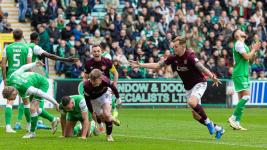
When discussing football in Scotland, the conversation almost always revolves around Glasgow’s two giants. And rightly so, Glasgow Rangers and Glasgow Celtic have dominated the Scottish football scene for what feels like forever. It’s a huge rivalry, one of the most intense in world sport.
Of course, Scottish football isn’t alone in its passion. There are many other great rivalries across the globe, each with its own story and identity.
For the avid football fan, derby weekend is one of the most important times of the year, bringing feelings of hope, fear, and anticipation in equal measure.
Determining the "biggest" rivalry in world football is no easy task. It depends on many factors: history, the intensity of the matches, the devotion of the fans, and the cultural meaning behind it all.
From Galatasaray v Fenerbahce to Flamengo v Fluminense, Inter Milan v AC Milan, Boca Juniors v River Plate, Bayern Munich v Borussia Dortmund, Al Ahly v Zamalek, Real Madrid v Barcelona, Club América v Pumas UNAM, and Sydney FC v Western Sydney Wanderers, the list goes on. Each represents more than just football; it represents pride, identity, and tradition.
Some are entwined with geographical reasons, some with history, some with politics, some with religion and sectarianism, and even some with war. But Rangers v Celtic is all of those rolled into one and more. It's by far the biggest football match in Scotland, arguably Britain, and quite possibly the world. It dates all the way back to 1888 and will probably last for as long as the game of football is played.
The Glasgow derby isn't my favourite game in Scotland; Glasgow isn't my favourite footballing city in Scotland either. For pure football fans who might be from slightly further afield than Scotland, you could forgive them for thinking that Glasgow is indeed the capital city of Scotland. Of course, Celtic and Rangers play there, and the national stadium of Hampden Park is also located there. But as the majority will know, it is in fact Edinburgh, home to the rivalry of this title, Heart of Midlothian v Hibernian. The 'Auld Rivalry,' as it is called, is my favourite game in Scottish football.
As a youngster living in Middlesbrough in the early 1980s, I was playing football on Sunday mornings for a youth club side called Coatham YC. We weren't particularly good, but I was a keen defender and sometime midfielder. We had this lovely Scottish fella coaching us who was from Leith in Edinburgh and a big Hibs fan. He organised a trip to Edinburgh. We went up to Scotland on a coach, a few hours' journey, and played a few games against a similar youth club in Leith, staying in a local youth club hostel. Quite the exciting trip for 13 or 14-year-old boys. We played Friday evening and another game on Saturday morning. Then on the Saturday afternoon, we went to the famous Easter Road and saw Hibernian play Dundee.
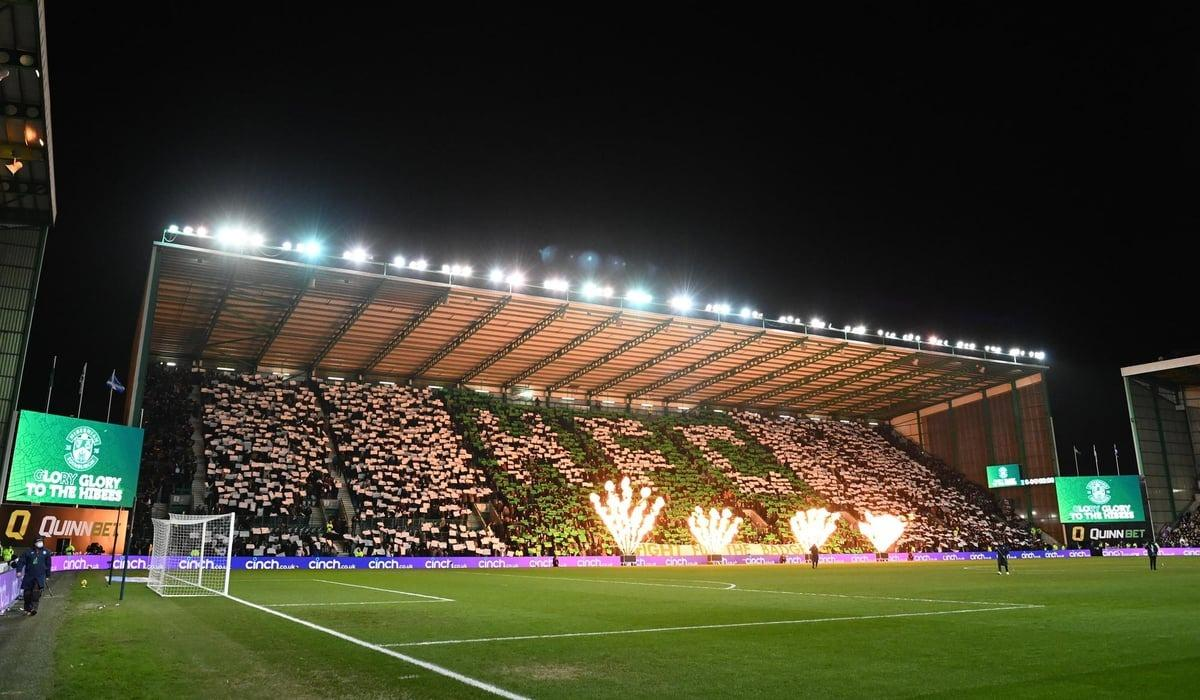
Easter Road has been the home ground of Hibernian FC since 1893.
On the Sunday, we did the Edinburgh sightseeing tour and returned home later that day. It was a trip that, for me, ignited a lifetime interest in the beautiful city of Edinburgh and particularly Edinburgh football and the Scottish football scene in general. I've been back there many times since.
Edinburgh is a city where history is etched into every cobblestone. From the medieval lanes of the Old Town to the Georgian elegance of the New Town, it feels like you're walking through the pages of a living story, a story of tartan-imbued identity and culture. The famous Edinburgh Castle is the city’s soul carved in stone. Perched dramatically on Castle Rock, proud, weathered, eternal, it watches the world below. The winding streets, the grey stone spires, the lives unfolding in its glorious shadow. Below, like most historical European capital cities, Edinburgh hums with life, yet wherever you wander, the castle’s presence lingers in the pubs, bars, and restaurants everywhere.
Edinburgh blends old-world charm with cutting-edge cool. It’s an engrossing city in every way imaginable. At its core lies a thriving financial sector, often called the “UK’s second financial centre” after London. In recent years, technology and innovation have joined finance as pillars of growth. The city’s tech ecosystem, anchored by the University of Edinburgh’s world-leading research in artificial intelligence, robotics, and data science, has attracted startups and international firms alike.
It's a fabulous place to be. It's a city of many facets, one that very much includes football. The city’s two football clubs sit at the zenith of Edinburgh’s cultural identity.
It is believed the world's first Association Football club was formed in Edinburgh in 1825, and it was known simply as the Foot Ball Club. But, as the world’s first such organisation, it faced some unique challenges. Undoubtedly, its most serious problem was the lack of any other clubs to play against.
The club’s founder was a 17-year-old Scottish law student called John Hope, who had just enrolled at Edinburgh University, and for most of the club’s existence (from 1824 to at least 1841), it consisted mainly of law students and played a rudimentary form of the game against other teams usually made up of students. Games weren't played on marked-out pitches, just old farming fields.
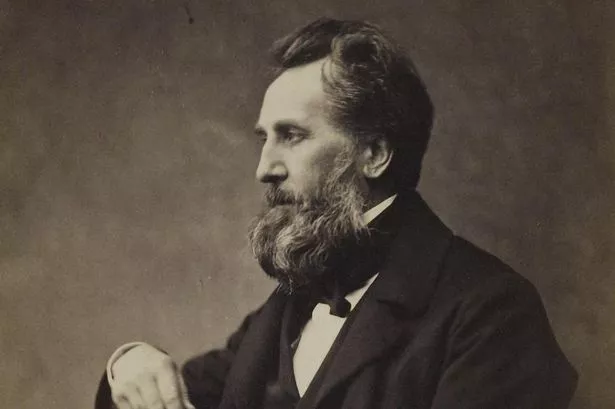
John Hope founded the Foot-Ball Club in 1824, which was eventually dissolved 17 years later in 1841.
As football spread across Britain in the 1840s and 1850s, it remained a predominantly middle-class sport, partly because it was still a mainly participatory game rather than a spectator one. Furthermore, the rules varied from city to city. Only in 1863 was the game of football officially codified.
Back in Edinburgh, on Christmas Day of 1875, was the date of the first meeting of the clubs commonly known today as Hearts and Hibs. The two had to wait 20 more years to meet in their first official league meeting in 1895, a 1-0 win for Hearts. In that twenty-year interval from 1875 to 1895, there were a handful of cup and friendly games between them. However, since 1895, the two have been virtually inseparable.
Hearts have most definitely had the upper hand down the years, winning considerably more games than Hibs. The two met in the 1896 and 2012 Scottish Cup Finals, and on both occasions, the trophy left with the Jambos (Hearts) back to Tynecastle. The scoreline was 3-1 in 1896, whilst in the 2012 edition, Hearts delivered a hammer blow to Hibs, beating them 5-1 in a cup final that is now fondly remembered by Hearts fans as a “demolition derby.”
Hearts v Hibs is a rivalry as complex and historic as Edinburgh itself, encompassing world wars and sacrifice, religious and ethnic hatred, social class, football hooliganism, clubs on the brink of death saved by amazing feats of fan devotion, and the dubious financial dealings and characters that have nearly ruined both clubs.
My next football excursion to Scotland was another trip to Easter Road in 1986 to see Hibernian play Hearts. A couple of hours’ jaunt up to Edinburgh from Middlesbrough on the train, a few beers around the city, then off to Leith to see the game.
The mid-1980s in Britain was a time when the 'Football Casuals' subculture dominated the terraces and both fan and hooligan culture. They were known for wearing European designer sportswear brands like Ellesse, Sergio Tacchini, and Lacoste, and high-end British clothing brands like Burberry, Aquascutum, and Barbour. Later, into the 1990s, expensive Italian luxury brands such as Stone Island and C.P. Company became popular. Wearing these designer labels was a way of distinguishing themselves from traditional supporters who wore team colours. This fashion trend became synonymous with the casuals movement and was adopted by various hooligan firms across the UK. Edinburgh’s two clubs’ fanbases certainly had a huge 'Casuals' presence in their respective ranks.
That spring Saturday in 1986, I saw literally hundreds, if not thousands, of them in Edinburgh before the game. Fighting was breaking out everywhere: the city centre, the railway station, Leith (the suburb where Hibernian are based), inside and outside the Easter Road ground, before the game and afterwards. And while trouble like that was pretty commonplace in Britain’s cities on Saturdays during the 1980s, seeing it happen in Princes Street, the main shopping thoroughfare of Edinburgh, was still pretty surreal. It was a hectic day out, to say the least.
I've been back to Edinburgh a few times since and have always tried to make time to watch a game at either Easter Road or Tynecastle. Personally, I'll always be a fan of Scottish football and Edinburgh's footballing scene in particular. And Edinburgh is just one of those cities that gets right under your skin.
The city is inextricably linked with Australian football too, with the Scottish Premiership increasingly perceived as both a reliable platform for Australian football players to establish or maintain a Socceroos career and as a potential springboard into bigger leagues. Mark Viduka at Celtic was the most celebrated example. Competing in a country where football is embedded in communities, in a league with promotion and relegation, and in which clubs regularly feature in some form of continental football also provides an important developmental opportunity. And Edinburgh has seen numerous Australian players ply their trade in the city.

Edinburgh’s football rivalry has a strong Australian presence, with Kye Rowles, Lewis Miller, Cameron Devlin, and Martin Boyle starring for Hearts and Hibernian.
Players like Pat Kisnorbo, Jamie Maclaren, Mark Milligan, Lewis Miller, Martin Boyle, Cameron Devlin, and Kye Rowles, to name a few. And one very famous Socceroos goalkeeper, Jack Reilly, who kept goal for Australia at their first World Cup in 1974, spent a number of years with Hibs’ reserve team before emigrating to Australia by way of the US. I don't blame any of them for turning up in Edinburgh to play football. It's a great city and a great footballing city.
The Edinburgh derby in October 2023 actually had five Australians starting, a quarter of the starting outfield players.
I think perhaps there’s something curiously fitting about Australian footballers ending up in Edinburgh. The city’s character is quite stoic, proud, and slightly melancholic, which mirrors something of Australia’s sporting psyche. Both cultures admire hard work more than glamour, and both value honesty above arrogance.
Edinburgh too is a city of sporting underdogs. It lives in the shadow of Glasgow’s football behemoths, just as Australian football lives in the shadow of AFL and Rugby League. Yet that underdog spirit breeds defiance. Maybe Hearts fans see in players like Devlin and Atkinson a reflection of themselves, never the biggest, never the richest, but determined to fight for respect. And Hearts, with that attitude, are doing quite well at the minute!
Of course, Scottish football isn’t alone in its passion. There are many other great rivalries across the globe, each with its own story and identity.
For the avid football fan, derby weekend is one of the most important times of the year, bringing feelings of hope, fear, and anticipation in equal measure.
Determining the "biggest" rivalry in world football is no easy task. It depends on many factors: history, the intensity of the matches, the devotion of the fans, and the cultural meaning behind it all.
From Galatasaray v Fenerbahce to Flamengo v Fluminense, Inter Milan v AC Milan, Boca Juniors v River Plate, Bayern Munich v Borussia Dortmund, Al Ahly v Zamalek, Real Madrid v Barcelona, Club América v Pumas UNAM, and Sydney FC v Western Sydney Wanderers, the list goes on. Each represents more than just football; it represents pride, identity, and tradition.
Some are entwined with geographical reasons, some with history, some with politics, some with religion and sectarianism, and even some with war. But Rangers v Celtic is all of those rolled into one and more. It's by far the biggest football match in Scotland, arguably Britain, and quite possibly the world. It dates all the way back to 1888 and will probably last for as long as the game of football is played.
The Glasgow derby isn't my favourite game in Scotland; Glasgow isn't my favourite footballing city in Scotland either. For pure football fans who might be from slightly further afield than Scotland, you could forgive them for thinking that Glasgow is indeed the capital city of Scotland. Of course, Celtic and Rangers play there, and the national stadium of Hampden Park is also located there. But as the majority will know, it is in fact Edinburgh, home to the rivalry of this title, Heart of Midlothian v Hibernian. The 'Auld Rivalry,' as it is called, is my favourite game in Scottish football.
As a youngster living in Middlesbrough in the early 1980s, I was playing football on Sunday mornings for a youth club side called Coatham YC. We weren't particularly good, but I was a keen defender and sometime midfielder. We had this lovely Scottish fella coaching us who was from Leith in Edinburgh and a big Hibs fan. He organised a trip to Edinburgh. We went up to Scotland on a coach, a few hours' journey, and played a few games against a similar youth club in Leith, staying in a local youth club hostel. Quite the exciting trip for 13 or 14-year-old boys. We played Friday evening and another game on Saturday morning. Then on the Saturday afternoon, we went to the famous Easter Road and saw Hibernian play Dundee.
Easter Road has been the home ground of Hibernian FC since 1893.
Edinburgh is a city where history is etched into every cobblestone. From the medieval lanes of the Old Town to the Georgian elegance of the New Town, it feels like you're walking through the pages of a living story, a story of tartan-imbued identity and culture. The famous Edinburgh Castle is the city’s soul carved in stone. Perched dramatically on Castle Rock, proud, weathered, eternal, it watches the world below. The winding streets, the grey stone spires, the lives unfolding in its glorious shadow. Below, like most historical European capital cities, Edinburgh hums with life, yet wherever you wander, the castle’s presence lingers in the pubs, bars, and restaurants everywhere.
Edinburgh blends old-world charm with cutting-edge cool. It’s an engrossing city in every way imaginable. At its core lies a thriving financial sector, often called the “UK’s second financial centre” after London. In recent years, technology and innovation have joined finance as pillars of growth. The city’s tech ecosystem, anchored by the University of Edinburgh’s world-leading research in artificial intelligence, robotics, and data science, has attracted startups and international firms alike.
It's a fabulous place to be. It's a city of many facets, one that very much includes football. The city’s two football clubs sit at the zenith of Edinburgh’s cultural identity.
It is believed the world's first Association Football club was formed in Edinburgh in 1825, and it was known simply as the Foot Ball Club. But, as the world’s first such organisation, it faced some unique challenges. Undoubtedly, its most serious problem was the lack of any other clubs to play against.
The club’s founder was a 17-year-old Scottish law student called John Hope, who had just enrolled at Edinburgh University, and for most of the club’s existence (from 1824 to at least 1841), it consisted mainly of law students and played a rudimentary form of the game against other teams usually made up of students. Games weren't played on marked-out pitches, just old farming fields.
John Hope founded the Foot-Ball Club in 1824, which was eventually dissolved 17 years later in 1841.
As football spread across Britain in the 1840s and 1850s, it remained a predominantly middle-class sport, partly because it was still a mainly participatory game rather than a spectator one. Furthermore, the rules varied from city to city. Only in 1863 was the game of football officially codified.
Back in Edinburgh, on Christmas Day of 1875, was the date of the first meeting of the clubs commonly known today as Hearts and Hibs. The two had to wait 20 more years to meet in their first official league meeting in 1895, a 1-0 win for Hearts. In that twenty-year interval from 1875 to 1895, there were a handful of cup and friendly games between them. However, since 1895, the two have been virtually inseparable.
Hearts have most definitely had the upper hand down the years, winning considerably more games than Hibs. The two met in the 1896 and 2012 Scottish Cup Finals, and on both occasions, the trophy left with the Jambos (Hearts) back to Tynecastle. The scoreline was 3-1 in 1896, whilst in the 2012 edition, Hearts delivered a hammer blow to Hibs, beating them 5-1 in a cup final that is now fondly remembered by Hearts fans as a “demolition derby.”
Hearts v Hibs is a rivalry as complex and historic as Edinburgh itself, encompassing world wars and sacrifice, religious and ethnic hatred, social class, football hooliganism, clubs on the brink of death saved by amazing feats of fan devotion, and the dubious financial dealings and characters that have nearly ruined both clubs.
My next football excursion to Scotland was another trip to Easter Road in 1986 to see Hibernian play Hearts. A couple of hours’ jaunt up to Edinburgh from Middlesbrough on the train, a few beers around the city, then off to Leith to see the game.
The mid-1980s in Britain was a time when the 'Football Casuals' subculture dominated the terraces and both fan and hooligan culture. They were known for wearing European designer sportswear brands like Ellesse, Sergio Tacchini, and Lacoste, and high-end British clothing brands like Burberry, Aquascutum, and Barbour. Later, into the 1990s, expensive Italian luxury brands such as Stone Island and C.P. Company became popular. Wearing these designer labels was a way of distinguishing themselves from traditional supporters who wore team colours. This fashion trend became synonymous with the casuals movement and was adopted by various hooligan firms across the UK. Edinburgh’s two clubs’ fanbases certainly had a huge 'Casuals' presence in their respective ranks.
That spring Saturday in 1986, I saw literally hundreds, if not thousands, of them in Edinburgh before the game. Fighting was breaking out everywhere: the city centre, the railway station, Leith (the suburb where Hibernian are based), inside and outside the Easter Road ground, before the game and afterwards. And while trouble like that was pretty commonplace in Britain’s cities on Saturdays during the 1980s, seeing it happen in Princes Street, the main shopping thoroughfare of Edinburgh, was still pretty surreal. It was a hectic day out, to say the least.
I've been back to Edinburgh a few times since and have always tried to make time to watch a game at either Easter Road or Tynecastle. Personally, I'll always be a fan of Scottish football and Edinburgh's footballing scene in particular. And Edinburgh is just one of those cities that gets right under your skin.
The city is inextricably linked with Australian football too, with the Scottish Premiership increasingly perceived as both a reliable platform for Australian football players to establish or maintain a Socceroos career and as a potential springboard into bigger leagues. Mark Viduka at Celtic was the most celebrated example. Competing in a country where football is embedded in communities, in a league with promotion and relegation, and in which clubs regularly feature in some form of continental football also provides an important developmental opportunity. And Edinburgh has seen numerous Australian players ply their trade in the city.
Edinburgh’s football rivalry has a strong Australian presence, with Kye Rowles, Lewis Miller, Cameron Devlin, and Martin Boyle starring for Hearts and Hibernian.
The Edinburgh derby in October 2023 actually had five Australians starting, a quarter of the starting outfield players.
I think perhaps there’s something curiously fitting about Australian footballers ending up in Edinburgh. The city’s character is quite stoic, proud, and slightly melancholic, which mirrors something of Australia’s sporting psyche. Both cultures admire hard work more than glamour, and both value honesty above arrogance.
Edinburgh too is a city of sporting underdogs. It lives in the shadow of Glasgow’s football behemoths, just as Australian football lives in the shadow of AFL and Rugby League. Yet that underdog spirit breeds defiance. Maybe Hearts fans see in players like Devlin and Atkinson a reflection of themselves, never the biggest, never the richest, but determined to fight for respect. And Hearts, with that attitude, are doing quite well at the minute!