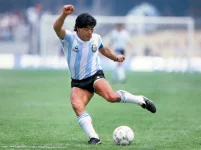
Football used to belong to the mad ones. The misfits, the poets with mud on their boots and a cigarette tucked behind their ear. Once upon a time, every dressing room had a wild card, the player who arrived late, ignored the manager’s plan, scored twice anyway, and then went out until Tuesday. These were the mavericks, the artists of chaos.
Today, football is a spreadsheet. Nutritionists track calorie intake, data analysts track sprints, and clubs employ 'sleep coaches' to monitor nap efficiency. The modern player is a laboratory specimen. Somewhere in all the protein shakes and xG charts, football misplaced its soul or at least its funny bone.
So let’s pour a pint, light a metaphorical cigarette, and raise a glass to the dying breed - the maverick footballer.
The Original Rock Stars
If you’re going to talk about mavericks, you start with George Best. Not just a player, but a concept. Best could glide past six defenders like he was dodging puddles, then vanish into the night to do unspeakable things to Manchester’s alcohol supply. At his peak, he was untouchable. At his worst, he was unmanageable. “I spent a lot of money on booze, birds and fast cars,” he said. “The rest I just squandered...”
In an age when footballers were still expected to look like postmen, Best looked like a Rolling Stone. He was the first to turn football into a lifestyle and to make being brilliant seem effortless and dangerous all at once.
Eric Cantona took that torch and set it on fire. A philosopher in shin pads, Cantona treated football like performance art. He could score a 25-yard chip and then deliver a post-match monologue about seagulls and trawlers. He once kung-fu kicked a Crystal Palace fan and somehow came out looking cool. The Frenchman didn’t just play football; like another French philosopher, Albert Camus, he made it existential.
The Fragile Geniuses
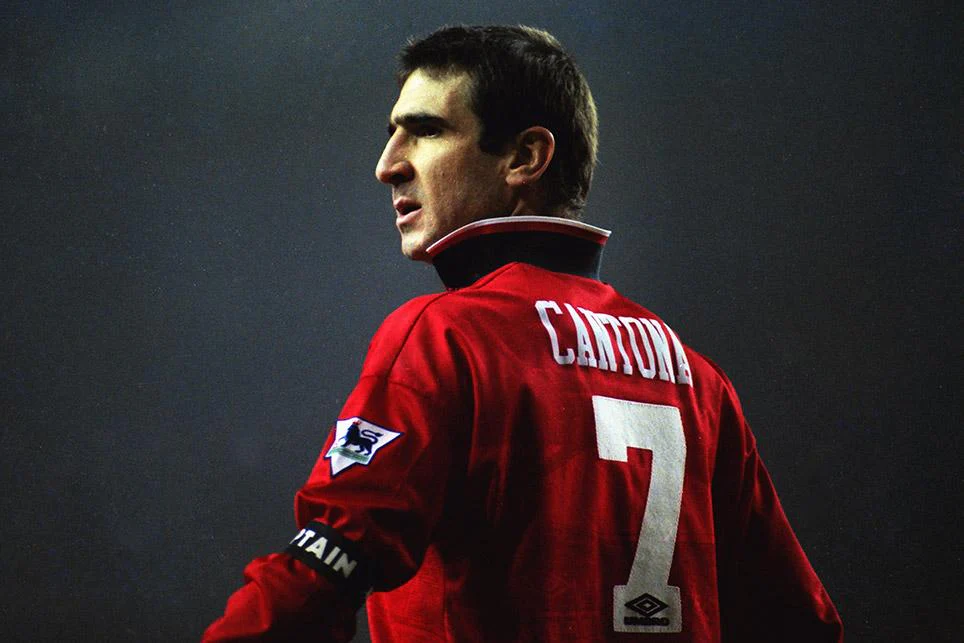
Eric Cantona redefined the English game, turning heads with his mercurial skill and flair
If Best and Cantona were rebels, Paul Gascoigne was pure chaos in human form. Gazza didn’t need tactics. He didn’t even need common sense. He just needed a ball, a grin, and a sense of mischief.
Watch his goal for England against Scotland in Euro ’96 – that flick over Colin Hendry, the volley, the dentist’s chair celebration – and you see football in its purest form: unfiltered joy. But for every moment of genius came a moment of heartbreak. The tears at Italia ’90. The missed opportunities. The self-destruction. Gazza was what happens when a street footballer is dropped into a corporate sport and told to behave.
And there’s something deeply English about the way we revere and ruin players like Paul Gascoigne. We love them when they’re wild and punish them when they can’t change. Gascoigne was too tender for the tabloids, too raw for the modern game. He was what football once was: unpredictable, flawed, human.
The Artists Who Changed Everything
Not all mavericks are tragic. Some are revolutionary. Johan Cruyff was a troublemaker of a higher order, the intellectual maverick. He didn’t just play football, he rewrote its code.
Cruyff argued with managers, dictated tactics, and chain-smoked on the touchline. But he also invented Total Football – a system so fluid it made everyone else look like they were playing in heavy boots. He believed football was art, that space and geometry mattered more than grit and shouting.
Then came Bernd Schuster, Germany’s Football Artist.
Bernd Schuster was the German who refused to fit the mould. In a football culture defined by order and discipline, he was an artist – elegant, temperamental, and gloriously unpredictable. With his golden hair, graceful stride, and painter’s touch, Schuster brought beauty to a system built on efficiency.
Born in Augsburg in 1959, Schuster rose quickly through the ranks at FC Köln, making his debut as a teenager and catching the eye with his creative midfield play. At just 20, he was a key figure in West Germany’s 1980 European Championship triumph, dictating games with vision and control. He seemed destined to become the heartbeat of the national team for years. But Schuster’s rebellious streak – his refusal to bow to authority – soon changed that. After falling out with coaches and officials, he walked away from international football at only 24, one of the most shocking exits in German sporting history.
Schuster’s football was about imagination, not instruction. He saw angles others missed, dictated tempo with calm authority, and played with a poise that felt almost too refined for the era. Yet his career was as turbulent as it was talented, a constant duel between genius and rebellion.
In the end, Bernd Schuster stood as German football’s great artist-outsider, a visionary who proved that perfection in football need not come from obedience, but from imagination and courage.
The Eccentrics and Lunatics
Mavericks don’t all come from midfield. René Higuita was a goalkeeper with a death wish. His scorpion kick save against England remains one of football’s most ridiculous acts of confidence. Who else would turn his back on the ball mid-air? It was reckless, absurd, and completely unnecessary – which is exactly why it was brilliant. The maddest goalkeeper ever, even madder than Bruce Grobbelaar.
Then there was Carlos Valderrama, Higuita's Colombian teammate, whose hair alone deserved its own testimonial. Valderrama played football like he was on holiday – slow, stylish, and utterly unbothered. Every pass was a caress, every movement a shrug.
Fast forward a few decades, and you find Mario Balotelli – football’s favourite walking headline. Balotelli didn’t just play for Manchester City; he haunted Manchester City. He set off fireworks in his bathroom. He fought teammates in training. He scored, celebrated, and lifted his shirt to reveal: “Why Always Me?” – a rhetorical question for the ages.
The thing about Balotelli is that underneath the circus, he was extraordinarily gifted. Power, touch, imagination – the lot. He just never seemed that interested in pretending to care. Football kept trying to make him fit in; he kept lighting metaphorical fireworks in its bath.
The Beautiful Narcissists
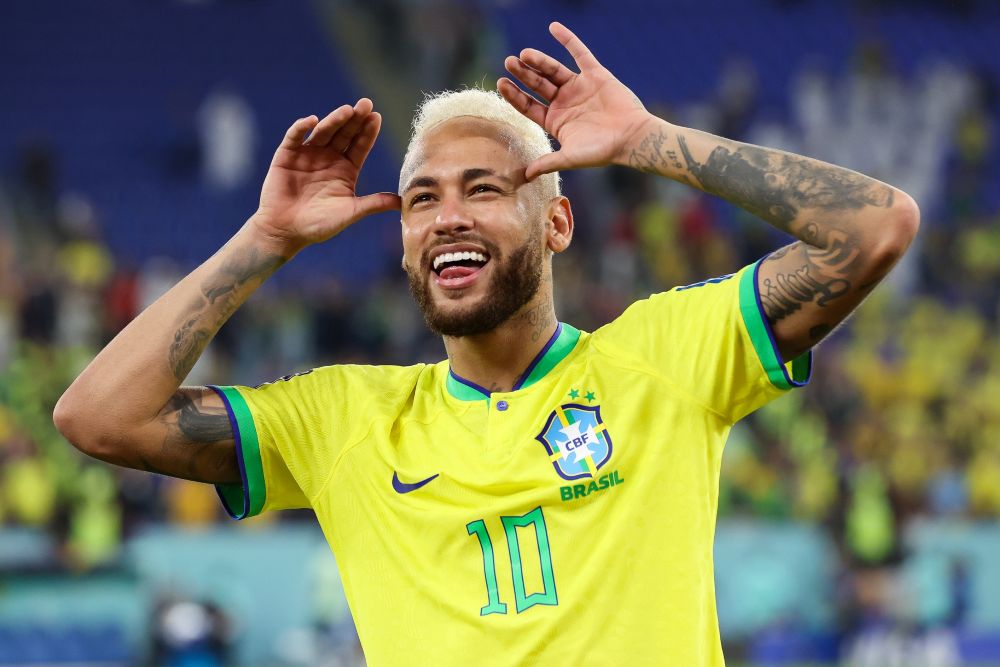
Neymar Jr in Qatar in 2022, a modern maverick reminding the world that football is still art.
Modern football, ever the hypocrite, still loves a showman – as long as he behaves in brand-approved ways. Enter Zlatan Ibrahimović, the self-styled god of football. Zlatan has played for more clubs than most players have owned cars, and he’s scored outrageous goals for all of them.
He once said, “I can’t help but laugh at how perfect I am.” The difference between him and the rest is that he was usually right. He’s a maverick for the age of Instagram, the only man who can make narcissism look noble.
Then there’s Neymar, once seemingly the eternal teenager of the global game. Neymar played football like he was at the Rio de Janeiro Carnival – the stepovers, flicks, feints, and the drama. The man could turn a mid-table Ligue 1 match into theatre. But he also embodied the contradictions of the modern maverick: commercial, hyper-monitored, yet desperate to express. For every piece of genius, there’s a roll on the turf that lasts longer than an ad break.
The Greatest of Them All
Of course, there are maverick footballers, and then there is THE maverick footballer.
Few figures in football’s long history embody the word maverick quite like Diego Armando Maradona. A magician, a rebel, a saint and a sinner all in one, Maradona lived and played in defiance of the ordinary. His story is that of a boy from the slums of Buenos Aires who rose to become a global icon, all while refusing to conform to anyone’s rules but his own.
Born in 1960 in Villa Fiorito, one of Argentina’s poorest neighbourhoods, Maradona’s genius with a football was evident before he was ten. On the dusty streets he learned to dance past defenders, to protect the ball like treasure, and to improvise solutions out of chaos. That street education shaped him into one of the most instinctive players the game has ever seen. He didn’t play football so much as feel it, a conductor of rhythm, daring and defiance.
Maradona was a natural maverick. He never played by the book. While others followed tactics and structure, he followed instinct. His low centre of gravity, extraordinary balance, and vision made him unstoppable when in full flight. Yet his artistry was matched by audacity – he thrived on risk, on proving that he could do the impossible. To watch Maradona dribble was to witness pure rebellion in motion.
At Barcelona, he dazzled and infuriated in equal measure. Injuries, clashes with management, and that infamous brawl against Athletic Bilbao marked a turbulent spell. But in Naples, his maverick spirit found its home. When he joined Napoli in 1984, the club was an underdog in Italy’s Serie A – poor, chaotic, mocked by the rich clubs of the north. Maradona changed everything.
He led Napoli to their first ever league title in 1987, turning the city into a sea of blue euphoria. He gave the Neapolitans not just trophies but pride. For them, he wasn’t a foreign star; he was one of their own, a working-class hero who carried their hopes on his small, genius shoulders. Maradona’s relationship with Naples was spiritual; he became a living saint in a city that worshipped him like a god.
Then came Mexico 1986. The tournament that immortalised him. As captain of Argentina, Maradona produced one of the most extraordinary individual campaigns in World Cup history. Against England, he captured both sides of his legend in a single match: the cunning “Hand of God” goal, followed minutes later by the Goal of the Century – a 60-yard solo run that defied logic and physics. In that moment, he transcended sport and entered myth.
But like all true mavericks, Maradona’s brilliance carried a shadow. Fame, pressure, and addiction haunted him. His career became a tragic epic, moments of dazzling genius punctuated by controversy and collapse. Yet even at his lowest, he remained magnetic, unapologetically human, never pretending to be anything other than himself.
Maradona was never just a footballer. He was a cultural force. A voice for the marginalised, a rebel against the establishment, a flawed genius whose imperfections only deepened his allure. He played with a freedom and emotion that today’s polished stars rarely dare to show.
In death, as in life, he remains untouchable. Statues, murals, and songs keep his spirit alive from Buenos Aires to Naples. Because Maradona was more than goals or trophies. He was the living embodiment of football’s soul: unpredictable, emotional, and utterly alive.
Diego Maradona was, and always will be, the beautiful game’s greatest maverick.
The Death of the Maverick
So where did all the wild ones go? The short answer: they were coached out of existence.
Football’s industrial revolution – the rise of data analytics, tactical systems, and sports science – has completely ironed out the wrinkles. Every player is drilled to press, recycle, and retain. The great academies produce athletes, not anarchists. Creativity is measured in expected threat.
Managers like Pep Guardiola, Jürgen Klopp, and Mikel Arteta have built footballing machines so efficient they make NASA look disorganised. It’s breathtaking to watch but also suffocating. Every movement is planned, every risk calculated. There’s no room for someone to dribble just because it feels right.
The modern player is professional to the point of parody. They hydrate. They meditate. They eat chicken and broccoli six times a day. You won’t catch them with a pint in one hand and a football in the other. The tattoos might scream rebellion, but the GPS vest says otherwise.
Jack Grealish is perhaps the last of the Mohicans, a throwback wrapped in shabby chic designer gear. His socks are rolled down, his calves are somehow their own religion, and he plays like a man still dribbling down Birmingham streets. But even he had to adapt, to conform, to fit into his manager's algorithm. The edges are still there, but they’ve been smoothed for broadcast.
Why We Still Crave Them
Despite all that, we still long for the unpredictable. We still tune in hoping for someone to nutmeg logic. Mavericks give football its soul. The sudden, impossible moment that no tactic can prepare for. They remind us that this game, for all its structure and science, is still a performance.
When a maverick gets the ball, the air changes. You sit up. You don’t know what’s coming next – and that’s the point. That jolt of surprise, that spark of invention, is what football has spent the last twenty years trying (and failing) to quantify.
The irony is that fans worship systems now. Twitter wars rage over pressing shapes and expected goals. But when someone like Vinícius Júnior dances past a defender or Alejandro Garnacho attempts a bicycle kick from the edge of the box, the analytics disappear. The stadium roars because football, at its best, is still about madness.
The Cult of Control
Modern football doesn’t trust freedom. The maverick, by definition, is uncontrollable, and control is the currency of elite sport. Coaches talk about non-negotiables. Clubs issue codes of conduct longer than Dostoevsky novels. Players are media-trained to death.
Imagine Maradona turning up late to a team meeting today. Imagine Maradona having a sleeping coach. He’d be fined, benched, and probably sent on a mindfulness retreat. George Best would be trending for all the wrong reasons. Cantona’s kung-fu kick would be dissected on TikTok frame by frame. Gazza wouldn’t have survived a week.
Football has become a risk-averse business masquerading as entertainment. And yet it’s the unpredictable players who make the clips, sell the shirts, and fill the stands. Every club wants a maverick. They just want one who follows the nutrition plan and doesn’t swear in interviews.
The New Rebels
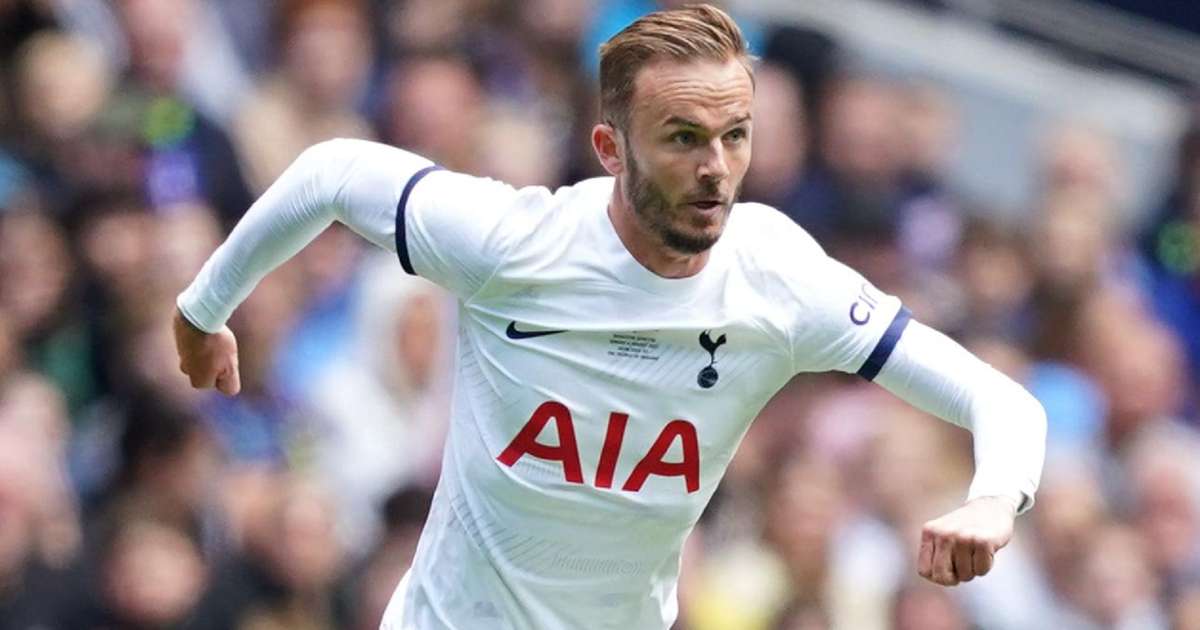
Maddison in action for Tottenham, a playmaker who turns structure into expression.
Still, the flame flickers. Players like James Maddison, Vinícius, and João Félix play with a hint of defiance, that refusal to be fully robotic. They smile when they score. They try stupid things. They remind us that joy is an act of rebellion.
Even the women’s game is producing its own mavericks – Sam Kerr’s audacity, Lauren James’ elegance, Alexia Putellas’ swagger. The artistry is there, just expressed with more intelligence and less self-destruction. Maybe that’s the evolution the game needed all along.
Because the truth is, the old mavericks often burned out. They lived too fast, drank too hard, and were devoured by fame. Modern players may be blander, but they last longer. Perhaps the trick now is to find balance, the madness within the structure.
Conclusion - Long Live the Lunatics
Football will always need its mavericks. Without them, it’s just geometry and sweat. The system can create winners, but only the maverick can create memories.
The dribble that shouldn’t work, the shot from 35 yards, the ridiculous backheel – these are the acts that make football transcend itself. The spreadsheets will never understand it, and maybe that’s the point.
So here’s to Best and Cantona, Gascoigne and Maradona, Balotelli and Zlatan, and to every player who made us laugh, gasp, and occasionally shake our heads. They might not have lasted long in today’s game of systems and in-game analysis, but they made football human.
To quote the late Steve Jobs:
Further reading
The Mavericks: English Football When Flair Wore Flares by Rob Steen
The Greatest Footballer You Never Saw: The Robin Friday Story by Paul McGuigan and Paolo Hewitt
Gazza: My Story by Paul Gascoigne
Cantona: The Rebel Who Would Be King by Philippe Auclair
Ajax, Barcelona, Cruyff by Frits Barend
Maradona: The Hand of God by Jimmy Burns
I Am Zlatan by Zlatan Ibrahimović
Today, football is a spreadsheet. Nutritionists track calorie intake, data analysts track sprints, and clubs employ 'sleep coaches' to monitor nap efficiency. The modern player is a laboratory specimen. Somewhere in all the protein shakes and xG charts, football misplaced its soul or at least its funny bone.
So let’s pour a pint, light a metaphorical cigarette, and raise a glass to the dying breed - the maverick footballer.
The Original Rock Stars
If you’re going to talk about mavericks, you start with George Best. Not just a player, but a concept. Best could glide past six defenders like he was dodging puddles, then vanish into the night to do unspeakable things to Manchester’s alcohol supply. At his peak, he was untouchable. At his worst, he was unmanageable. “I spent a lot of money on booze, birds and fast cars,” he said. “The rest I just squandered...”
In an age when footballers were still expected to look like postmen, Best looked like a Rolling Stone. He was the first to turn football into a lifestyle and to make being brilliant seem effortless and dangerous all at once.
Eric Cantona took that torch and set it on fire. A philosopher in shin pads, Cantona treated football like performance art. He could score a 25-yard chip and then deliver a post-match monologue about seagulls and trawlers. He once kung-fu kicked a Crystal Palace fan and somehow came out looking cool. The Frenchman didn’t just play football; like another French philosopher, Albert Camus, he made it existential.
The Fragile Geniuses
Eric Cantona redefined the English game, turning heads with his mercurial skill and flair
Watch his goal for England against Scotland in Euro ’96 – that flick over Colin Hendry, the volley, the dentist’s chair celebration – and you see football in its purest form: unfiltered joy. But for every moment of genius came a moment of heartbreak. The tears at Italia ’90. The missed opportunities. The self-destruction. Gazza was what happens when a street footballer is dropped into a corporate sport and told to behave.
And there’s something deeply English about the way we revere and ruin players like Paul Gascoigne. We love them when they’re wild and punish them when they can’t change. Gascoigne was too tender for the tabloids, too raw for the modern game. He was what football once was: unpredictable, flawed, human.
The Artists Who Changed Everything
Not all mavericks are tragic. Some are revolutionary. Johan Cruyff was a troublemaker of a higher order, the intellectual maverick. He didn’t just play football, he rewrote its code.
Cruyff argued with managers, dictated tactics, and chain-smoked on the touchline. But he also invented Total Football – a system so fluid it made everyone else look like they were playing in heavy boots. He believed football was art, that space and geometry mattered more than grit and shouting.
Then came Bernd Schuster, Germany’s Football Artist.
Bernd Schuster was the German who refused to fit the mould. In a football culture defined by order and discipline, he was an artist – elegant, temperamental, and gloriously unpredictable. With his golden hair, graceful stride, and painter’s touch, Schuster brought beauty to a system built on efficiency.
Born in Augsburg in 1959, Schuster rose quickly through the ranks at FC Köln, making his debut as a teenager and catching the eye with his creative midfield play. At just 20, he was a key figure in West Germany’s 1980 European Championship triumph, dictating games with vision and control. He seemed destined to become the heartbeat of the national team for years. But Schuster’s rebellious streak – his refusal to bow to authority – soon changed that. After falling out with coaches and officials, he walked away from international football at only 24, one of the most shocking exits in German sporting history.
Schuster’s football was about imagination, not instruction. He saw angles others missed, dictated tempo with calm authority, and played with a poise that felt almost too refined for the era. Yet his career was as turbulent as it was talented, a constant duel between genius and rebellion.
In the end, Bernd Schuster stood as German football’s great artist-outsider, a visionary who proved that perfection in football need not come from obedience, but from imagination and courage.
The Eccentrics and Lunatics
Mavericks don’t all come from midfield. René Higuita was a goalkeeper with a death wish. His scorpion kick save against England remains one of football’s most ridiculous acts of confidence. Who else would turn his back on the ball mid-air? It was reckless, absurd, and completely unnecessary – which is exactly why it was brilliant. The maddest goalkeeper ever, even madder than Bruce Grobbelaar.
Then there was Carlos Valderrama, Higuita's Colombian teammate, whose hair alone deserved its own testimonial. Valderrama played football like he was on holiday – slow, stylish, and utterly unbothered. Every pass was a caress, every movement a shrug.
Fast forward a few decades, and you find Mario Balotelli – football’s favourite walking headline. Balotelli didn’t just play for Manchester City; he haunted Manchester City. He set off fireworks in his bathroom. He fought teammates in training. He scored, celebrated, and lifted his shirt to reveal: “Why Always Me?” – a rhetorical question for the ages.
The thing about Balotelli is that underneath the circus, he was extraordinarily gifted. Power, touch, imagination – the lot. He just never seemed that interested in pretending to care. Football kept trying to make him fit in; he kept lighting metaphorical fireworks in its bath.
The Beautiful Narcissists
Neymar Jr in Qatar in 2022, a modern maverick reminding the world that football is still art.
Modern football, ever the hypocrite, still loves a showman – as long as he behaves in brand-approved ways. Enter Zlatan Ibrahimović, the self-styled god of football. Zlatan has played for more clubs than most players have owned cars, and he’s scored outrageous goals for all of them.
He once said, “I can’t help but laugh at how perfect I am.” The difference between him and the rest is that he was usually right. He’s a maverick for the age of Instagram, the only man who can make narcissism look noble.
Then there’s Neymar, once seemingly the eternal teenager of the global game. Neymar played football like he was at the Rio de Janeiro Carnival – the stepovers, flicks, feints, and the drama. The man could turn a mid-table Ligue 1 match into theatre. But he also embodied the contradictions of the modern maverick: commercial, hyper-monitored, yet desperate to express. For every piece of genius, there’s a roll on the turf that lasts longer than an ad break.
The Greatest of Them All
Of course, there are maverick footballers, and then there is THE maverick footballer.
Few figures in football’s long history embody the word maverick quite like Diego Armando Maradona. A magician, a rebel, a saint and a sinner all in one, Maradona lived and played in defiance of the ordinary. His story is that of a boy from the slums of Buenos Aires who rose to become a global icon, all while refusing to conform to anyone’s rules but his own.
Born in 1960 in Villa Fiorito, one of Argentina’s poorest neighbourhoods, Maradona’s genius with a football was evident before he was ten. On the dusty streets he learned to dance past defenders, to protect the ball like treasure, and to improvise solutions out of chaos. That street education shaped him into one of the most instinctive players the game has ever seen. He didn’t play football so much as feel it, a conductor of rhythm, daring and defiance.
Maradona was a natural maverick. He never played by the book. While others followed tactics and structure, he followed instinct. His low centre of gravity, extraordinary balance, and vision made him unstoppable when in full flight. Yet his artistry was matched by audacity – he thrived on risk, on proving that he could do the impossible. To watch Maradona dribble was to witness pure rebellion in motion.
At Barcelona, he dazzled and infuriated in equal measure. Injuries, clashes with management, and that infamous brawl against Athletic Bilbao marked a turbulent spell. But in Naples, his maverick spirit found its home. When he joined Napoli in 1984, the club was an underdog in Italy’s Serie A – poor, chaotic, mocked by the rich clubs of the north. Maradona changed everything.
He led Napoli to their first ever league title in 1987, turning the city into a sea of blue euphoria. He gave the Neapolitans not just trophies but pride. For them, he wasn’t a foreign star; he was one of their own, a working-class hero who carried their hopes on his small, genius shoulders. Maradona’s relationship with Naples was spiritual; he became a living saint in a city that worshipped him like a god.
Then came Mexico 1986. The tournament that immortalised him. As captain of Argentina, Maradona produced one of the most extraordinary individual campaigns in World Cup history. Against England, he captured both sides of his legend in a single match: the cunning “Hand of God” goal, followed minutes later by the Goal of the Century – a 60-yard solo run that defied logic and physics. In that moment, he transcended sport and entered myth.
But like all true mavericks, Maradona’s brilliance carried a shadow. Fame, pressure, and addiction haunted him. His career became a tragic epic, moments of dazzling genius punctuated by controversy and collapse. Yet even at his lowest, he remained magnetic, unapologetically human, never pretending to be anything other than himself.
Maradona was never just a footballer. He was a cultural force. A voice for the marginalised, a rebel against the establishment, a flawed genius whose imperfections only deepened his allure. He played with a freedom and emotion that today’s polished stars rarely dare to show.
In death, as in life, he remains untouchable. Statues, murals, and songs keep his spirit alive from Buenos Aires to Naples. Because Maradona was more than goals or trophies. He was the living embodiment of football’s soul: unpredictable, emotional, and utterly alive.
Diego Maradona was, and always will be, the beautiful game’s greatest maverick.
The Death of the Maverick
So where did all the wild ones go? The short answer: they were coached out of existence.
Football’s industrial revolution – the rise of data analytics, tactical systems, and sports science – has completely ironed out the wrinkles. Every player is drilled to press, recycle, and retain. The great academies produce athletes, not anarchists. Creativity is measured in expected threat.
Managers like Pep Guardiola, Jürgen Klopp, and Mikel Arteta have built footballing machines so efficient they make NASA look disorganised. It’s breathtaking to watch but also suffocating. Every movement is planned, every risk calculated. There’s no room for someone to dribble just because it feels right.
The modern player is professional to the point of parody. They hydrate. They meditate. They eat chicken and broccoli six times a day. You won’t catch them with a pint in one hand and a football in the other. The tattoos might scream rebellion, but the GPS vest says otherwise.
Jack Grealish is perhaps the last of the Mohicans, a throwback wrapped in shabby chic designer gear. His socks are rolled down, his calves are somehow their own religion, and he plays like a man still dribbling down Birmingham streets. But even he had to adapt, to conform, to fit into his manager's algorithm. The edges are still there, but they’ve been smoothed for broadcast.
Why We Still Crave Them
Despite all that, we still long for the unpredictable. We still tune in hoping for someone to nutmeg logic. Mavericks give football its soul. The sudden, impossible moment that no tactic can prepare for. They remind us that this game, for all its structure and science, is still a performance.
When a maverick gets the ball, the air changes. You sit up. You don’t know what’s coming next – and that’s the point. That jolt of surprise, that spark of invention, is what football has spent the last twenty years trying (and failing) to quantify.
The irony is that fans worship systems now. Twitter wars rage over pressing shapes and expected goals. But when someone like Vinícius Júnior dances past a defender or Alejandro Garnacho attempts a bicycle kick from the edge of the box, the analytics disappear. The stadium roars because football, at its best, is still about madness.
The Cult of Control
Modern football doesn’t trust freedom. The maverick, by definition, is uncontrollable, and control is the currency of elite sport. Coaches talk about non-negotiables. Clubs issue codes of conduct longer than Dostoevsky novels. Players are media-trained to death.
Imagine Maradona turning up late to a team meeting today. Imagine Maradona having a sleeping coach. He’d be fined, benched, and probably sent on a mindfulness retreat. George Best would be trending for all the wrong reasons. Cantona’s kung-fu kick would be dissected on TikTok frame by frame. Gazza wouldn’t have survived a week.
Football has become a risk-averse business masquerading as entertainment. And yet it’s the unpredictable players who make the clips, sell the shirts, and fill the stands. Every club wants a maverick. They just want one who follows the nutrition plan and doesn’t swear in interviews.
The New Rebels
Maddison in action for Tottenham, a playmaker who turns structure into expression.
Even the women’s game is producing its own mavericks – Sam Kerr’s audacity, Lauren James’ elegance, Alexia Putellas’ swagger. The artistry is there, just expressed with more intelligence and less self-destruction. Maybe that’s the evolution the game needed all along.
Because the truth is, the old mavericks often burned out. They lived too fast, drank too hard, and were devoured by fame. Modern players may be blander, but they last longer. Perhaps the trick now is to find balance, the madness within the structure.
Conclusion - Long Live the Lunatics
Football will always need its mavericks. Without them, it’s just geometry and sweat. The system can create winners, but only the maverick can create memories.
The dribble that shouldn’t work, the shot from 35 yards, the ridiculous backheel – these are the acts that make football transcend itself. The spreadsheets will never understand it, and maybe that’s the point.
So here’s to Best and Cantona, Gascoigne and Maradona, Balotelli and Zlatan, and to every player who made us laugh, gasp, and occasionally shake our heads. They might not have lasted long in today’s game of systems and in-game analysis, but they made football human.
To quote the late Steve Jobs:
“Here’s to the crazy ones. The misfits. The rebels. The troublemakers. The round pegs in the square holes. The ones who see things differently. They’re not fond of rules. And they have no respect for the status quo. You can quote them, disagree with them, glorify or vilify them. About the only thing you can’t do is ignore them. Because they change things. They push the human race forward. And while some may see them as the crazy ones, we see genius. Because the people who are crazy enough to think they can change the world, are the ones who do.”
Further reading
The Mavericks: English Football When Flair Wore Flares by Rob Steen
The Greatest Footballer You Never Saw: The Robin Friday Story by Paul McGuigan and Paolo Hewitt
Gazza: My Story by Paul Gascoigne
Cantona: The Rebel Who Would Be King by Philippe Auclair
Ajax, Barcelona, Cruyff by Frits Barend
Maradona: The Hand of God by Jimmy Burns
I Am Zlatan by Zlatan Ibrahimović