Let's put some facts out there
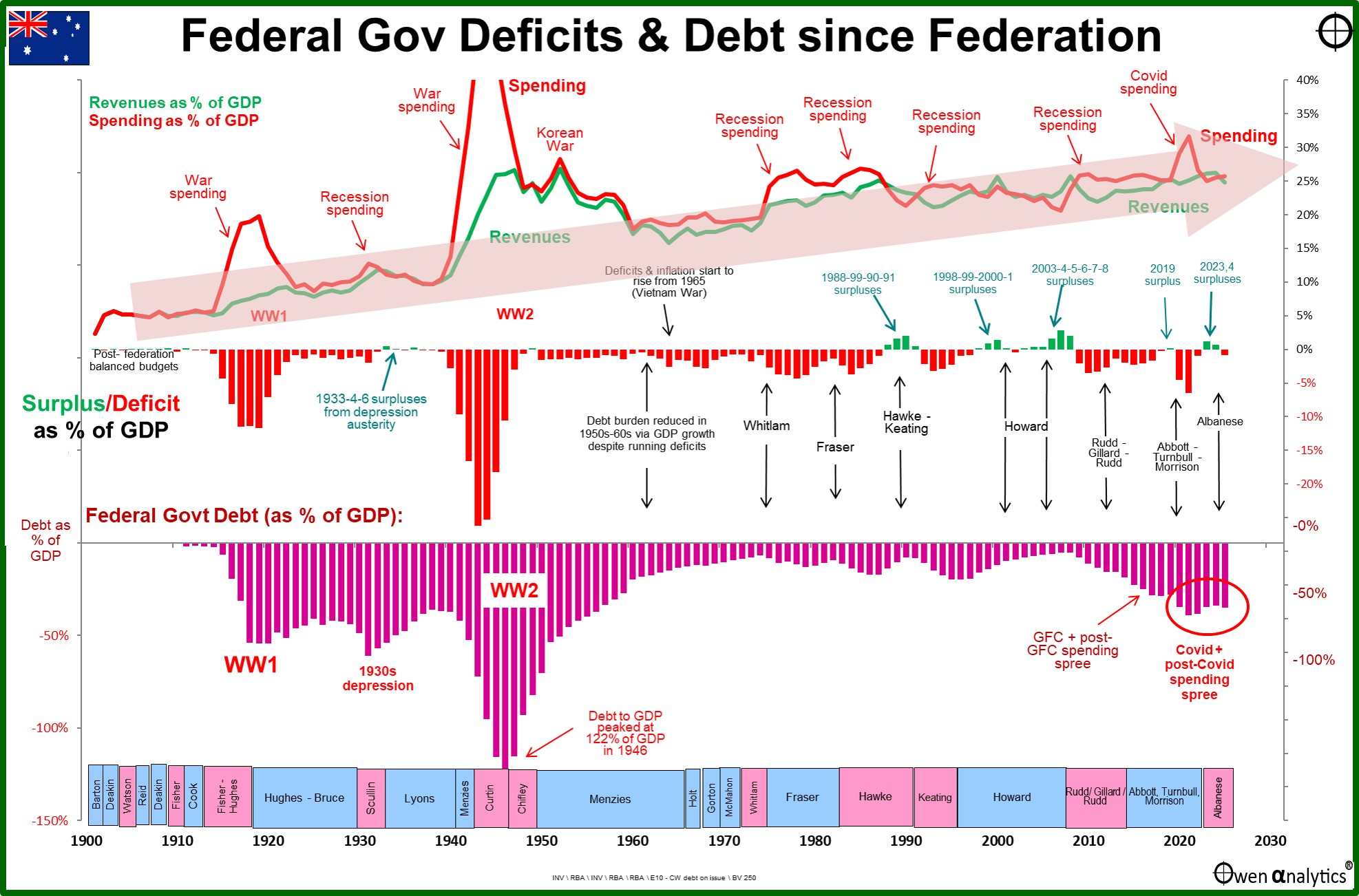
When the Coalition took office under Tony Abbott in
September 2013, the Australian government's
net debt was approximately
$161.3 billion to
$174.6 billion, while
gross debt was roughly
$271.7 billion.
Before the COVID-19 pandemic hit in
early 2020, debt levels had already significantly increased under the Coalition. By
December 2019, net debt had risen to
$403 billion. Gross debt on the eve of the pandemic (January 2020) was approximately
$568.1 billion, nearly double what it was in 2013.
At the time of the
May 2022 election, when the Albanese government took over from Scott Morrison, the inherited
gross debt was
$888.5 billion and
net debt stood at approximately
$515.6 billion.
Then compare the projections taken to the 2022 election by the LNP to waht is there now
Projected vs. Current Debt (2025–26)
Based on the Coalition's
2022 PEFO projections compared to the most recent
December 2025 budget update:
- Gross Debt: Was projected to reach $1,169 billion (44.7% of GDP) by June 2026. Current 2026 projections have this at $993 billion, which is $176 billion lower than the Coalition's estimate.
- Net Debt: Was projected to hit $865 billion (33.1% of GDP) by mid-2026. Current 2026 projections have this at $587.5 billion, approximately $277 billion lower than the 2022 forecast.
| Comparison Table: 2025–26 Debt Projections | | | |
Metric | LNP 2022 PEFO Projection | Current Dec 2025 Projection | Improvement |
| Gross Debt (% of GDP) | 44.70% | 34.00% | -10.70% |
| Net Debt (% of GDP) | 33.10% | 20.10% | -13.00% |
| Gross Debt ($ Billions) | $1,169B | $993B | -$176B |
| Net Debt ($ Billions) | $865B | $587.5B | -$277.5B |
Future Trajectory
Current medium-term projections indicate that debt as a share of the economy is expected to fluctuate before gradually declining:
- Peak Gross Debt: Gross debt is now expected to peak at 37.0% of GDP in 2030–31. This is 7.9 percentage points lower than the peak of 44.9% projected under the previous government's 2022 settings.
- Long-term Decline: Gross debt is projected to fall to 31.9% of GDP by June 2036.
- Interest Savings: Due to the improved budget position compared to 2022 levels, the government estimates it will avoid more than $60 billion in interest costs over the 11 years to 2032–33.
In 2013 post GFC
| Entity | Gross Debt (% of GDP) |
| Australia | 30.80% |
| Germany | ~78% |
| United Kingdom | ~88% |
| United States | ~104% |
| France | ~122% |
| Japan | ~230% |
Net Debt: Australia’s net debt of 11.3% in 2013 was a fraction of the 71.9% average for the Euro Area at the time.
Fiscal Strength: Experts noted that Australia was "more like a frugal Germany than a spendthrift US" during this period, benefiting from a decades of mining-boom revenues and lower initial debt levels prior to the GFC.
Deterioration Rate: While Australia's debt did increase between 2007 and 2013 due to GFC stimulus, the scale of deterioration was far less severe than the "disasters of Europe" (such as Greece, Ireland, or Spain), which saw debt ratios jump by more than 50% of GDP in the same period.