As with anything, football had to have a start. It had to have firsts. All of which serve as the foundations of which the sport is built on today. The women’s game has come leaps and bounds from when it hit the mainstream at its inaugural 1991 World Cup in China. As the game continues to grow, the household names become more apparent. We all know Sam Kerr, Alexia Putellas, Ada Hegerberg, Lindsay Heaps, or Alessia Russo. But what about the women we don’t often hear of. The ones who set the standard. The ones who blazed a path for the names above to follow.
Born in 1876, Clarke grew up in a Lancashire home in the town of Bootle. At the age of 15, she was working as a confectioner’s apprentice. In 1895, Nettie Honeyball and Lady Florence formed the British Ladies Football Club. Formed with the idea that ‘women are not the ornamental and useless creatures men have pictured’, Honeyball was a pseudonym for Mary Hutson who like many women involved in football at the time, had to change their name to avoid ridicule and abuse from supporters and the media. Clarke – along with her sisters June and Mary - responded to adverts for players and made the side that trained twice a week. The significance of Clarke playing football went beyond being part of a women’s only team. Clarke was the first black female to play football.
At the time, England granted black citizens the same civic rights, however a new wave of Victorian Imperialism saw the rise of Social Darwinism and new racist ideologies. Clarke would represent the British Ladies Football Club and Mrs Graham’s XI for two years. It is believed that the teams played more than 100 games in this period, often playing amongst the team in a North vs South format. Clarke was selected in Mrs Grahams XI for a tour of Scotland in 1896, where Clarke and her colleagues would have received payment for their performances, highlighting one of the earliest signs of professionalism within the game.
In 1897, Clarke was selected in a team named “The New Women and Ten of Her Lady Friends” in a match against “Eleven Gentlemen”. The women were victorious 3-1, although reports at the time were not kind of female football describing the game as “grotesque”. Not much is known of Clarke’s exact career, but it is believed she played until 1903. Whenever Clarke finished her career, her status as a trailblazer is guaranteed. In 2019, she was immortalised in football history with a blue plaque unveiled at Campsbourne School, and the site of her former team.
Reilly moved to French side Reims in 1974, and became the first recognised female footballer to play overseas. It is this feat that positions her in the record books, and opened the pathway for female footballers to pursue the game as a professional career. The Scottish FA were annoyed by Reilly’s move, as well as criticism that she levelled towards the FA for lack of development to the women’s game, that she was banned sine die (without a day). Following six months in France, she was signed my A.C. Milan. She would spend the rest of her career bouncing around between clubs in Italy until her career finished in 1995.
Despite being from Scotland, Reilly was able to play for Italy due to having lived in the country for a significant amount of time and was chosen for the Le Azzure in 1984. Before the Women’s World Cup was held, the International Ladies Football Festival – known as Mundialito – was a global invitational tournament that served as the pinnacle of Women’s International Football at the time. Reilly was part of the Italian side that won the tournament in 1985 where Italy beat the USA in the final 1-0.
In January 2025, Girma etched her name in the history books when she signed for Chelsea in the WSL. Her $1.1million fee became the highest ever fee paid for a female footballer and made Girma the first female transfer of $1million plus. At just 26 years old, Girma still has a long career ahead of her, but her transfer fee has opened the pathway for the women’s game. Much like in the men’s game, competitive transfer fees have created opportunity for players to earn more, and resulted in clubs investing more in their infrastructure as they look to protect their assets.
Whilst Girma does not dictate the fee of her transfer, her fee is a mark of her quality as a player. Girma is a daughter of Ethiopian migrants who met in the Bay Area in California. Growing up in a household where English was not her first language, Girma had to earn her place on the football field. She was named U.S. Soccer Female Player of the Year in 2023 aged 23, and won the 2024 Gold Medal at the Paris Olympics playing every single minute of the campaign. Girma has opened the door for women footballers across the globe. With the $1 million mark breached, female football talent across the globe now find themselves in a position to demand the fees that can see them pursue a professional career, and no longer have to juggle football with a 2nd job.
When the first ever Women’s World Cup took place in China in 1991, only one African nation could qualify. Nigeria is the nation to hold this prestigious honour. The women’s game in Africa has largely been a dominant field for Nigeria, with many nations either not having the facilities to produce players of quality, or being unable to challenge on the international stage when given the chance. As the game has developed, the women’s game has gotten more competitive. African nations are catching up and starting to hold their own. This was seen at the 2023 edition in Australia and New Zealand, when South Africa, Nigeria, and Morocco made the knockout stages. Three of the four African nations – Zambia was the other – was more than any pundits predicted.
It is the North African nation from which the prominent story arises. Nouhalia Benzina was part of the Moroccan squad at their first ever World Cup appearance in 2023. When Morocco took on South Korea in their second group stage match in Adelaide, not only did they create their own history scoring their first world cup goal and winning the match, Benzina made history as the first ever woman to wear a hijab (headscarf) at a global football event, and on the World Cup stage. It was a moment of significance for all women in football.
Benzina’s attire was a symbol of not just how far the game has grown, but of the global language the game speaks to. Football showed itself as a sport that accepts all religions, cultures, and people. Benzina broke the ceiling for women by proving that you can be devoted to your faith, and still make a name for yourself on the global stage. One does not prevent the other. For many girls watching Benzina, they saw an athlete that broke barriers and represented them. Benzina further highlighted the progress of female empowerment defining that success is not define by what a woman wears. It became a symbolic moment, and one that instantly proved that football was no longer a game for the select few.
The only non-playing female on this list, Stephanie Frappart forayed into football at a very young age. Born in 1983, Frappart has had a life and career drenched in football. However, it was not on the pathway many would think. At the age of 13, Frappart began refereeing youth games in her native France. By the time she was 18, she was refereeing national under 19 games. Her rise was meteoric as her quality as a match official became more evident. By 2011, she began refereeing male matches in the Championnat National – the third division of men’s French football.
Frappart soon became one of the leading female referees in the world, being selected to referee at Women’s World Cups, and in the top echelon of women’s football including the Women’s Champions League. In April 2019, Frappart made history when it was announced that she would become the first female referee to officiate in Ligue 1 in a match between SC Amiens and RC Strasbourg. Her appointment also saw her become the first female to officiate a men’s top-level match. Since her appointment, Frappart has opened the door for other female referees across the globe.
In 2003, Nicole Petignat of Switzerland became the first female to referee a men’s UEFA Cup match. However, Frappart continues to be the history maker. In 2021, she became the first female referee to take charge of a Men’s World Cup Qualifying match as Netherlands beat Latvia 2-0 in Amsterdam. The following year, she took charge of a Men’s World Cup Match in Qatar as Germany beat Costa Rica 4-2. The match was significant not only because Frappart made history as the first female to referee a Men’s World Cup game, but because she led the first all-female on field team. Neuza Back of Brazil and Karen Diaz Medina of Mexico served as Assistant Referees.
Since Frappart’s history making game, female officials have become a common sight within the men’s game. In 2017, Bibiana Steinhaus-Webb took charge of a Bundesliga game. Rebecca Welch made history as the first female to referee an English Premier League game taking charge of Fulham vs Burnley in December 2023. At the 2026 World Cup, we saw the second instance of a female take charge of a Men’s World Cup game as Tori Penso led an all-female team in the South Africa vs Czechia group stage game. Frappart is a clear trailblazer in a game that often reserves its biggest plaudits for the players. However, Frappart has proven that even the most unassuming and lesser-known individuals can have the biggest impacts.
Emma Clarke
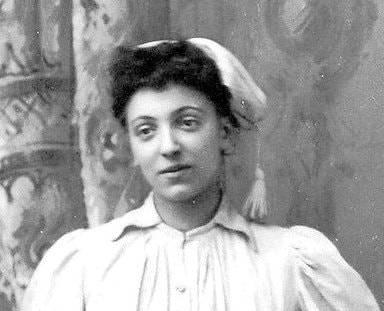
Emma Clarke was the first black female footballer
Emma Clarke was the first black female footballer
Born in 1876, Clarke grew up in a Lancashire home in the town of Bootle. At the age of 15, she was working as a confectioner’s apprentice. In 1895, Nettie Honeyball and Lady Florence formed the British Ladies Football Club. Formed with the idea that ‘women are not the ornamental and useless creatures men have pictured’, Honeyball was a pseudonym for Mary Hutson who like many women involved in football at the time, had to change their name to avoid ridicule and abuse from supporters and the media. Clarke – along with her sisters June and Mary - responded to adverts for players and made the side that trained twice a week. The significance of Clarke playing football went beyond being part of a women’s only team. Clarke was the first black female to play football.
At the time, England granted black citizens the same civic rights, however a new wave of Victorian Imperialism saw the rise of Social Darwinism and new racist ideologies. Clarke would represent the British Ladies Football Club and Mrs Graham’s XI for two years. It is believed that the teams played more than 100 games in this period, often playing amongst the team in a North vs South format. Clarke was selected in Mrs Grahams XI for a tour of Scotland in 1896, where Clarke and her colleagues would have received payment for their performances, highlighting one of the earliest signs of professionalism within the game.
In 1897, Clarke was selected in a team named “The New Women and Ten of Her Lady Friends” in a match against “Eleven Gentlemen”. The women were victorious 3-1, although reports at the time were not kind of female football describing the game as “grotesque”. Not much is known of Clarke’s exact career, but it is believed she played until 1903. Whenever Clarke finished her career, her status as a trailblazer is guaranteed. In 2019, she was immortalised in football history with a blue plaque unveiled at Campsbourne School, and the site of her former team.
Rose Reilly
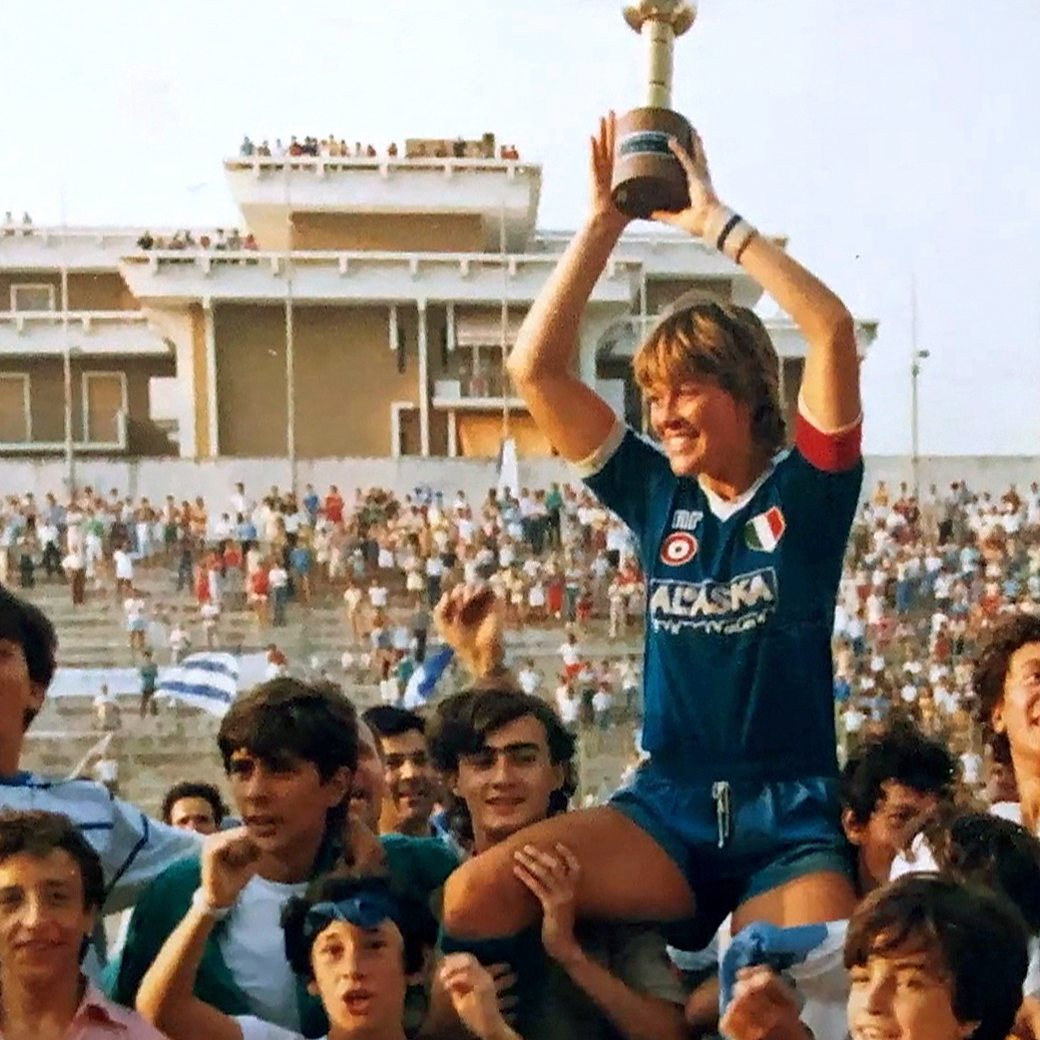
Rose Reilly holding aloft the Mundialito title she won with Italy
Scotland has produced a plethora of footballing talents. Kenny Dalglish, Dennis Law, Graeme Souness, Billy Bremner, and even Scott McTominay. However, despite their footballing prowess, none of them have won a World Cup. Rose Reilly has. Reilly was born in Kilmarnock in 1955 and began her footballing career at the age of 7, with her talents attracting the scouts at Rangers and Celtic. Despite her skills, Rose was playing with local boys club Stewarton United and only allowed to play on the proviso she cut her hair short and called herself Ross. She eventually made her debut for the women’s side Stewarton Thistle Ladies in 1965 and was part of the side that lifted the inaugural Scottish Cup in 1971. Reilly became a serial winner when she won the Scottish Treble after her move to Westhorn United. It was her desire to play professional football that saw her enter the history books.Rose Reilly holding aloft the Mundialito title she won with Italy
Reilly moved to French side Reims in 1974, and became the first recognised female footballer to play overseas. It is this feat that positions her in the record books, and opened the pathway for female footballers to pursue the game as a professional career. The Scottish FA were annoyed by Reilly’s move, as well as criticism that she levelled towards the FA for lack of development to the women’s game, that she was banned sine die (without a day). Following six months in France, she was signed my A.C. Milan. She would spend the rest of her career bouncing around between clubs in Italy until her career finished in 1995.
Despite being from Scotland, Reilly was able to play for Italy due to having lived in the country for a significant amount of time and was chosen for the Le Azzure in 1984. Before the Women’s World Cup was held, the International Ladies Football Festival – known as Mundialito – was a global invitational tournament that served as the pinnacle of Women’s International Football at the time. Reilly was part of the Italian side that won the tournament in 1985 where Italy beat the USA in the final 1-0.
Naomi Girma
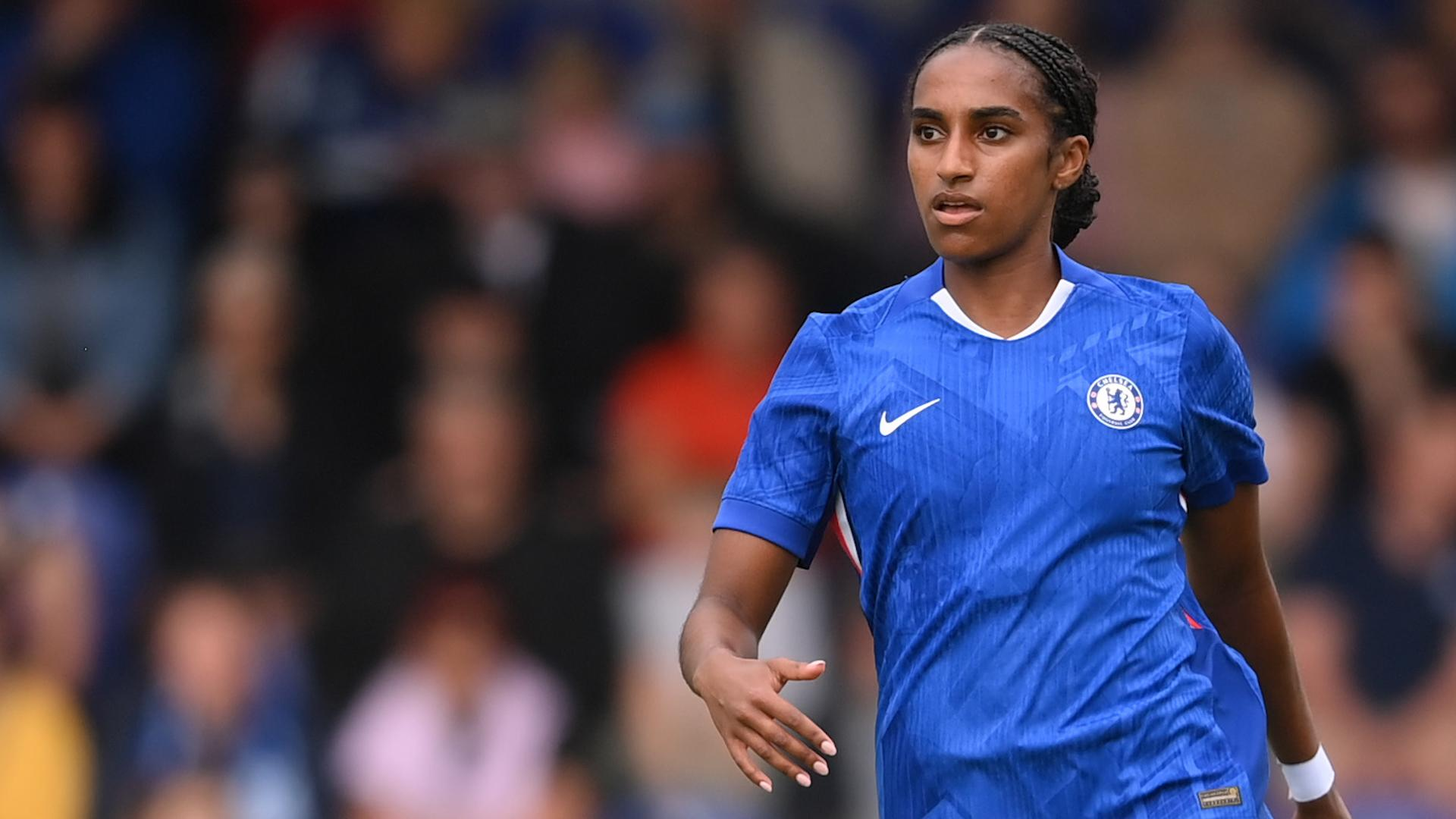
Naomi Girma plying her trade for Chelseas since her record breaking transfer
Of all the names on this list, Naomi Girma may be one that a few readers know. Currently playing for Chelsea in WSL, Girma is an Olympic Gold Medallist, and already has 3 titles from her first season with Chelsea. Her trailblazing history record is a testament to the hard work and determination she has placed in her craft. Like many from the USA, Girma began her football career in the collegiate system. She was a standout player with Stanford Cardinal earning her a move in 2022 to San Diego Wave in the NWSL. She spent two years at the Wave winning an NWSL Shield and NWSL Challenge Cup.Naomi Girma plying her trade for Chelseas since her record breaking transfer
In January 2025, Girma etched her name in the history books when she signed for Chelsea in the WSL. Her $1.1million fee became the highest ever fee paid for a female footballer and made Girma the first female transfer of $1million plus. At just 26 years old, Girma still has a long career ahead of her, but her transfer fee has opened the pathway for the women’s game. Much like in the men’s game, competitive transfer fees have created opportunity for players to earn more, and resulted in clubs investing more in their infrastructure as they look to protect their assets.
Whilst Girma does not dictate the fee of her transfer, her fee is a mark of her quality as a player. Girma is a daughter of Ethiopian migrants who met in the Bay Area in California. Growing up in a household where English was not her first language, Girma had to earn her place on the football field. She was named U.S. Soccer Female Player of the Year in 2023 aged 23, and won the 2024 Gold Medal at the Paris Olympics playing every single minute of the campaign. Girma has opened the door for women footballers across the globe. With the $1 million mark breached, female football talent across the globe now find themselves in a position to demand the fees that can see them pursue a professional career, and no longer have to juggle football with a 2nd job.
Nouhalia Benzina
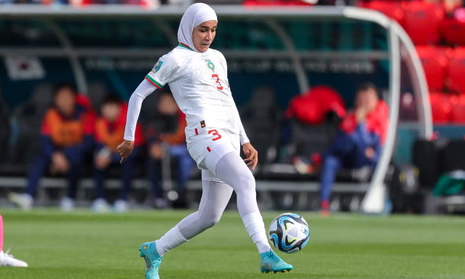
Nouhalia Benzina during the 2023 Women's World Cup
Nouhalia Benzina during the 2023 Women's World Cup
When the first ever Women’s World Cup took place in China in 1991, only one African nation could qualify. Nigeria is the nation to hold this prestigious honour. The women’s game in Africa has largely been a dominant field for Nigeria, with many nations either not having the facilities to produce players of quality, or being unable to challenge on the international stage when given the chance. As the game has developed, the women’s game has gotten more competitive. African nations are catching up and starting to hold their own. This was seen at the 2023 edition in Australia and New Zealand, when South Africa, Nigeria, and Morocco made the knockout stages. Three of the four African nations – Zambia was the other – was more than any pundits predicted.
It is the North African nation from which the prominent story arises. Nouhalia Benzina was part of the Moroccan squad at their first ever World Cup appearance in 2023. When Morocco took on South Korea in their second group stage match in Adelaide, not only did they create their own history scoring their first world cup goal and winning the match, Benzina made history as the first ever woman to wear a hijab (headscarf) at a global football event, and on the World Cup stage. It was a moment of significance for all women in football.
Benzina’s attire was a symbol of not just how far the game has grown, but of the global language the game speaks to. Football showed itself as a sport that accepts all religions, cultures, and people. Benzina broke the ceiling for women by proving that you can be devoted to your faith, and still make a name for yourself on the global stage. One does not prevent the other. For many girls watching Benzina, they saw an athlete that broke barriers and represented them. Benzina further highlighted the progress of female empowerment defining that success is not define by what a woman wears. It became a symbolic moment, and one that instantly proved that football was no longer a game for the select few.
Stephanie Frappart
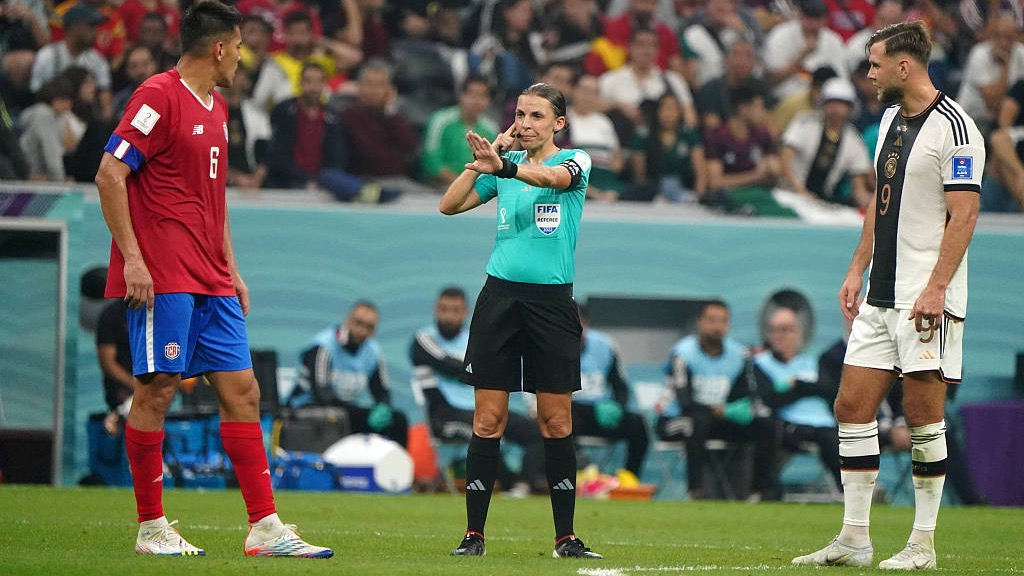
Stephanie Frappart taking charge of the World Cup Game between Costa Rica and Germany
Stephanie Frappart taking charge of the World Cup Game between Costa Rica and Germany
The only non-playing female on this list, Stephanie Frappart forayed into football at a very young age. Born in 1983, Frappart has had a life and career drenched in football. However, it was not on the pathway many would think. At the age of 13, Frappart began refereeing youth games in her native France. By the time she was 18, she was refereeing national under 19 games. Her rise was meteoric as her quality as a match official became more evident. By 2011, she began refereeing male matches in the Championnat National – the third division of men’s French football.
Frappart soon became one of the leading female referees in the world, being selected to referee at Women’s World Cups, and in the top echelon of women’s football including the Women’s Champions League. In April 2019, Frappart made history when it was announced that she would become the first female referee to officiate in Ligue 1 in a match between SC Amiens and RC Strasbourg. Her appointment also saw her become the first female to officiate a men’s top-level match. Since her appointment, Frappart has opened the door for other female referees across the globe.
In 2003, Nicole Petignat of Switzerland became the first female to referee a men’s UEFA Cup match. However, Frappart continues to be the history maker. In 2021, she became the first female referee to take charge of a Men’s World Cup Qualifying match as Netherlands beat Latvia 2-0 in Amsterdam. The following year, she took charge of a Men’s World Cup Match in Qatar as Germany beat Costa Rica 4-2. The match was significant not only because Frappart made history as the first female to referee a Men’s World Cup game, but because she led the first all-female on field team. Neuza Back of Brazil and Karen Diaz Medina of Mexico served as Assistant Referees.
Since Frappart’s history making game, female officials have become a common sight within the men’s game. In 2017, Bibiana Steinhaus-Webb took charge of a Bundesliga game. Rebecca Welch made history as the first female to referee an English Premier League game taking charge of Fulham vs Burnley in December 2023. At the 2026 World Cup, we saw the second instance of a female take charge of a Men’s World Cup game as Tori Penso led an all-female team in the South Africa vs Czechia group stage game. Frappart is a clear trailblazer in a game that often reserves its biggest plaudits for the players. However, Frappart has proven that even the most unassuming and lesser-known individuals can have the biggest impacts.