Welcome!

By registering with us, you'll be able to discuss, share and private message with other members of our community.

Sign Up Now!

Australian Championship campaign ideas!

Wasting too much time on appeasement of those that wouldnt come anyway, when we should be solely focusing all our energy on doing the best version of US alone, as teams and as a comp imo!
hindsight is 20 20 but it was already clear that deethnizing clubs didnt make a difference in the 90s. There was clearly a market for broad based clubs that were new entities. Wish we just expanded by allowing new broadbased clubs until we had 2 tiers. I suspect the failure of nw spirit to keep their crowd averages big led to everyone concluding traditional clubs amd franchises couldnt coexist
 
hindsight is 20 20 but it was already clear that deethnizing clubs didnt make a difference in the 90s. There was clearly a market for broad based clubs that were new entities. Wish we just expanded by allowing new broadbased clubs until we had 2 tiers. I suspect the failure of nw spirit to keep their crowd averages big led to everyone concluding traditional clubs amd franchises couldnt coexist
Sooooo many different ways (other than the one undertaken) that couldve led to a different better outcome but alas... I agree in part regarding the NWS domino effect, but imo the stage was already set for the same outcome even if Spirit had suceeded... saturation wouldve come and the ethnic clubs pushed out one by one bc that was the want, just recall that snake david hill and his perth glory claim as his footballing success on par with de ethnicizing... took a long while but the article below explained it perfectly....
 
Sooooo many different ways (other than the one undertaken) that couldve led to a different better outcome but alas... I agree in part regarding the NWS domino effect, but imo the stage was already set for the same outcome even if Spirit had suceeded... saturation wouldve come and the ethnic clubs pushed out one by one bc that was the want, just recall that snake david hill and his perth glory claim as his footballing success on par with de ethnicizing... took a long while but the article below explained it perfectly....
full article isn't on archive. Do you have access?
 
full article isn't on archive. Do you have access?
I could open and copy pasted - I did not put the cross lines bottom paragraphs FYI, how it pasted strangley.......

In Collingwood's Cambridge Street State School during the early '70s kids kicked footballs on weekends. Usually it was a Sherrin, but Greek kids booted round balls. The kids eventually swapped balls and stories. They talked of Collingwood's lost Grand Finals and of soccer clubs, Alexander and Hellas. I was one of those kids and eventually the Greeks' game became mine. In the mid-1970s, however, the school gate was padlocked and the games stopped.

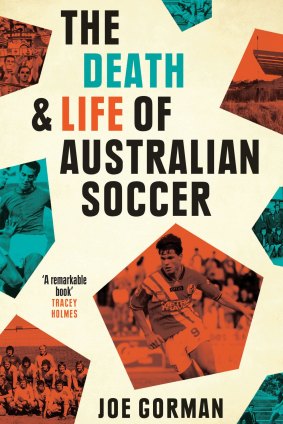
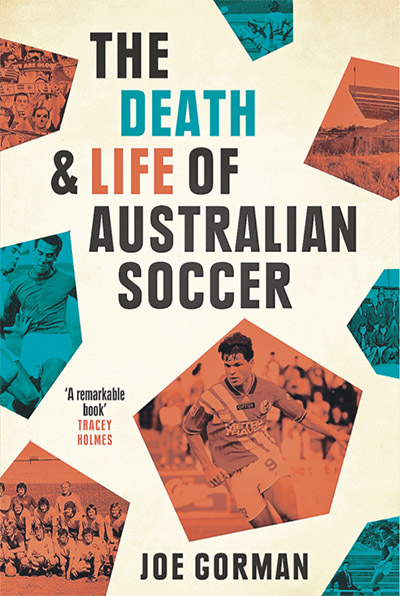
Joe Gorman's The Death and Life of Australian Soccer and David Hill's The Fair and the Foul: Inside our Sporting Nation rekindle memories of those days, though with mixed results. While Gorman would have been at home in the schoolyard, Hill padlocks the gate on soccer's rich migrant past.

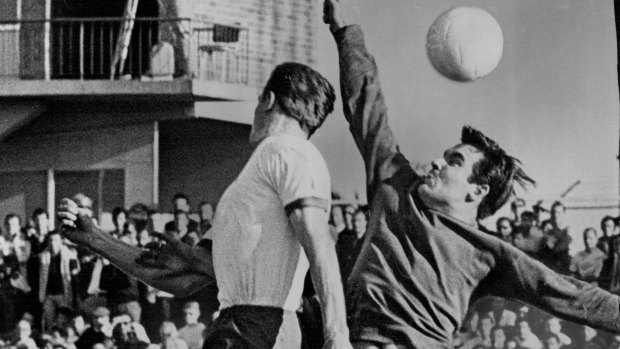
Sydney-Prague goal keeper Gary King, playing in the State Ampol Cup Final against South Melbourne Hellas in 1969. Soccer in the 1960s and '70s was dominated by ethnic clubs, which  reflected multiculturalism in a nation that was still mainly white, Anglo-Australian and xenophobic.

Sydney-Prague goal keeper Gary King, playing in the State Ampol Cup Final against South Melbourne Hellas in 1969. Soccer in the 1960s and '70s was dominated by ethnic clubs, which reflected multiculturalism in a nation that was still mainly white, Anglo-Australian and xenophobic. Credit: Fairfax Media

Gorman's book is one of the best and most important written on Australian sport. It is not just about soccer, but how mainstream Australia turned its back on multiculturalism. There's enough on-pitch stuff to keep soccer tragics happy, but this book is not for flag-wearing nationalists or those who salivate over a "stat". Gorman knows that elite Australian sport remains white, Anglo-Australian and predominantly male.

Australia's post-war migrants were fringe-dwellers in this culture. They were meant to assimilate, but instead congregated in their clubs, maintained their cultures and languages, and built a sporting legacy which mainstream Australia has now junked.

Gorman tells the story of the ethnic-based state league clubs of the '50s and '60s, and the now almost forgotten successes of early Socceroo teams. From these clubs came the players who took Australia to its first international tournament victory, the 1967 Quoc Khanh Cup in Saigon, and the 1974 World Cup finals.

By 1977 a national club competition – the National Soccer League (NSL) – had been established. Now denigrated as a corrupt, ethnic backwater, it was the first national football competition, transcending the regional fiefdoms of rugby and rules.

Advertisement

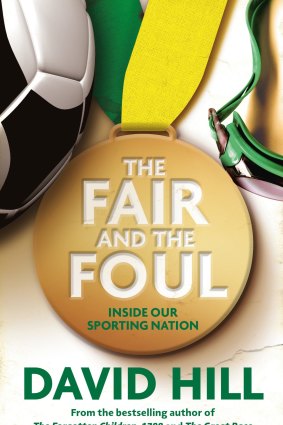
The Fair and the Foul. By David Hill.

The Fair and the Foul. By David Hill.

In 1978 the Fraser Government's Galbally Report recommended the maintenance of migrant languages and cultures through organisations within ethnic communities. As Gorman shows, soccer was at "the vanguard".

The NSL was dominated by ethnic clubs. Though rivalries sometimes ignited flares and tempers on terraces, these clubs reflected multiculturalism in a nation that was still mainly white, Anglo-Australian and xenophobic.

The Death and life of Australian Soccer. By Joe Gorman.

The Death and life of Australian Soccer. By Joe Gorman.

As Gorman reveals, a battle brewed within soccer between those who saw it as an authentic expression of multiculturalism, and corporate assimilationists who sought to repackage it for Anglo-Australian consumption. Leading the assimilationist charge was Frank Lowy, who pushed clubs to remove their ethnic names, and David Hill.

Now a populist historian, Hill once headed the NSW Rail Authority and the ABC, and was president of rugby league's North Sydney Bears. In 1987 he was elected Soccer Australia's chief, and over the next eight years attempted to rid the game of its ethnic roots. Hill is an Australian sporting nationalist, evident The Fair and the Foul. It surveys the best and worst of Australian sport, treading familiar territory. The usual heroes are mentioned: Bradman, the Golden Girls, the swimmers and tennis players of the '50s and '60s, and the 1983 America's Cup crew. Among the villains are dopers, gamblers and match-fixers, but there are too many mistakes in this book.

Hill wrongly confers a PhD on Essendon's prince of peptides, Steven Dank. He slices Keith Miller's Test batting average and suggests Bradman was caught for a first-ball duck during the second Test of the 1932-33 Bodyline series. A stickler for the facts, "The Don" would be spinning in his grave. He was bowled by Bill Bowes in one of cricket's more famous dismissals.

Hill also suggests Rod Laver was the world's top-ranked tennis player for an unparalleled seven-year stretch during the '60s. For most of this period Laver played the professional circuit, not the Slams, and ATP rankings were not introduced until 1973.

Hill is more insightful when questioning Australians' readiness to overlook their sports heroes' failings. How can Australians idolise Shane Warne, a convicted doper and an Indian bookie's snitch?

He details his battle at the Bears against rugby league's addiction to tobacco sponsorship, pointedly noting that "when it came to a choice between money and principle, sport could be relied on to take the cash".

Hill is less convincing in detailing his achievements as Soccer Australia's head. His greatest coup was luring former England manager Terry Venables to head the Socceroos' ill-fated 1998 World Cup campaign. More significant was Hill's war on ethnic-based NSL clubs. Though Hill claims he was only partially successful, ethnic clubs declined on his watch, while regional ones increased. Many struggled, but the privately owned Perth Glory became a model for future A-League franchises.

This was Hill's great achievement. Whether fair or foul, he signposted soccer's future direction.

Hill was ideally suited for the task. He isn't a Gallipoli or bush myth tragic, but he's in the spectrum. He suggests Australians have a never-say-die spirit, love underdogs and punch above their sporting weight. We are rightfully acknowledged as a great sporting nation.

There's little evidence to support this. Australians are champions in sports that most of the world don't play.

Gorman recognises that soccer does not fit this grandstanding nationalistic narrative. "Australia's lack of success," he argues, "ha always been an uncomfortably accurate reflection of the nation's irrelevance to the rest of world." We want to be seen as winners, but "soccer d[oes] not assuage to these delusions of grandeur". We have no world class players or administrative muscle, and until recently dismissed soccer as "wogball".

While Gorman embraces soccer's diversity, Hill shuns it. He glosses over the NSL and the 1974 World Cup team's achievement. Soccer history begins with Hill and ends with an ethnically "sanitised", corporatised A-League.

His benchmark is the AFL, which got rid of non-performing clubs and broadened its national reach to increase broadcast revenues. For Hill, the ultimate measure of a sport seems to be "continued commercial success".

Gorman does not reduce sport to a good set of figures, nor shy away from the NSL's corruption, ethnic infighting and financial problems. He contextualises these within the political "blowback" against multiculturalism.

"New soccer" was partially funded by the Howard government, which saw multiculturalism as producing a nation of tribes. It paralleled the rise of Hansonism, fears of an Islamic "other", and the endless quest for an Australian value other than Bradman's batting average.

This narrowing of the Australian mind was reflected in soccer. While the NSL embraced dual national identities, the A-League shuns them. Under Lowy elite soccer has been cleansed of its ethnic past. As Gorman reveals, only the Australian flag is allowed into A-League grounds. The competition is multicultural lite.

Gorman rightly suggests the A-League is "the combination of soccer and multiculturalism as middle Australia had always wanted it", without overt displays of ethnic tribalism. It is the league "David Hill had wanted but could not find, hermetically sealed off from the complicated and politically volatile reality of the Australian soccer community".

As Australians turn their backs on multiculturalism, Gorman reminds us of its contribution to this country and its football. Unlike Hill, he writes for those who kicked round balls in school grounds before the gates were padlocked, and grew up believing in an authentic rather than a sanitised multicultural Australia.

Tom Heenan teaches sport and Australian Studies at Monash University
 
In Collingwood's Cambridge Street State School during the early '70s kids kicked footballs on weekends. Usually it was a Sherrin, but Greek kids booted round balls. The kids eventually swapped balls and stories. They talked of Collingwood's lost Grand Finals and of soccer clubs, Alexander and Hellas. I was one of those kids and eventually the Greeks' game became mine. In the mid-1970s, however, the school gate was padlocked and the games stopped.

Joe Gorman's The Death and Life of Australian Soccer and David Hill's The Fair and the Foul: Inside our Sporting Nation rekindle memories of those days, though with mixed results. While Gorman would have been at home in the schoolyard, Hill padlocks the gate on soccer's rich migrant past.

Sydney-Prague goal keeper Gary King, playing in the State Ampol Cup Final against South Melbourne Hellas in 1969. Soccer in the 1960s and '70s was dominated by ethnic clubs, which  reflected multiculturalism in a nation that was still mainly white, Anglo-Australian and xenophobic. '70s was dominated by ethnic clubs, which  reflected multiculturalism in a nation that was still mainly white, Anglo-Australian and xenophobic.

Sydney-Prague goal keeper Gary King, playing in the State Ampol Cup Final against South Melbourne Hellas in 1969. Soccer in the 1960s and '70s was dominated by ethnic clubs, which reflected multiculturalism in a nation that was still mainly white, Anglo-Australian and xenophobic. Credit: Fairfax Media

Gorman's book is one of the best and most important written on Australian sport. It is not just about soccer, but how mainstream Australia turned its back on multiculturalism. There's enough on-pitch stuff to keep soccer tragics happy, but this book is not for flag-wearing nationalists or those who salivate over a "stat". Gorman knows that elite Australian sport remains white, Anglo-Australian and predominantly male.

Australia's post-war migrants were fringe-dwellers in this culture. They were meant to assimilate, but instead congregated in their clubs, maintained their cultures and languages, and built a sporting legacy which mainstream Australia has now junked.

Gorman tells the story of the ethnic-based state league clubs of the '50s and '60s, and the now almost forgotten successes of early Socceroo teams. From these clubs came the players who took Australia to its first international tournament victory, the 1967 Quoc Khanh Cup in Saigon, and the 1974 World Cup finals.

By 1977 a national club competition – the National Soccer League (NSL) – had been established. Now denigrated as a corrupt, ethnic backwater, it was the first national football competition, transcending the regional fiefdoms of rugby and rules.

Advertisement

The Fair and the Foul. By David Hill.

The Fair and the Foul. By David Hill.

In 1978 the Fraser Government's Galbally Report recommended the maintenance of migrant languages and cultures through organisations within ethnic communities. As Gorman shows, soccer was at "the vanguard".

The NSL was dominated by ethnic clubs. Though rivalries sometimes ignited flares and tempers on terraces, these clubs reflected multiculturalism in a nation that was still mainly white, Anglo-Australian and xenophobic.

The Death and life of Australian Soccer. By Joe Gorman.

The Death and life of Australian Soccer. By Joe Gorman.

As Gorman reveals, a battle brewed within soccer between those who saw it as an authentic expression of multiculturalism, and corporate assimilationists who sought to repackage it for Anglo-Australian consumption. Leading the assimilationist charge was Frank Lowy, who pushed clubs to remove their ethnic names, and David Hill.

Now a populist historian, Hill once headed the NSW Rail Authority and the ABC, and was president of rugby league's North Sydney Bears. In 1987 he was elected Soccer Australia's chief, and over the next eight years attempted to rid the game of its ethnic roots. Hill is an Australian sporting nationalist, evident The Fair and the Foul. It surveys the best and worst of Australian sport, treading familiar territory. The usual heroes are mentioned: Bradman, the Golden Girls, the swimmers and tennis players of the '50s and '60s, and the 1983 America's Cup crew. Among the villains are dopers, gamblers and match-fixers, but there are too many mistakes in this book.

Hill wrongly confers a PhD on Essendon's prince of peptides, Steven Dank. He slices Keith Miller's Test batting average and suggests Bradman was caught for a first-ball duck during the second Test of the 1932-33 Bodyline series. A stickler for the facts, "The Don" would be spinning in his grave. He was bowled by Bill Bowes in one of cricket's more famous dismissals.

Hill also suggests Rod Laver was the world's top-ranked tennis player for an unparalleled seven-year stretch during the '60s. For most of this period Laver played the professional circuit, not the Slams, and ATP rankings were not introduced until 1973.

Hill is more insightful when questioning Australians' readiness to overlook their sports heroes' failings. How can Australians idolise Shane Warne, a convicted doper and an Indian bookie's snitch?

He details his battle at the Bears against rugby league's addiction to tobacco sponsorship, pointedly noting that "when it came to a choice between money and principle, sport could be relied on to take the cash".

Hill is less convincing in detailing his achievements as Soccer Australia's head. His greatest coup was luring former England manager Terry Venables to head the Socceroos' ill-fated 1998 World Cup campaign. More significant was Hill's war on ethnic-based NSL clubs. Though Hill claims he was only partially successful, ethnic clubs declined on his watch, while regional ones increased. Many struggled, but the privately owned Perth Glory became a model for future A-League franchises.

This was Hill's great achievement. Whether fair or foul, he signposted soccer's future direction.

Hill was ideally suited for the task. He isn't a Gallipoli or bush myth tragic, but he's in the spectrum. He suggests Australians have a never-say-die spirit, love underdogs and punch above their sporting weight. We are rightfully acknowledged as a great sporting nation.

There's little evidence to support this. Australians are champions in sports that most of the world don't play.

Gorman recognises that soccer does not fit this grandstanding nationalistic narrative. "Australia's lack of success," he argues, "ha always been an uncomfortably accurate reflection of the nation's irrelevance to the rest of world." We want to be seen as winners, but "soccer d[oes] not assuage to these delusions of grandeur". We have no world class players or administrative muscle, and until recently dismissed soccer as "wogball".

While Gorman embraces soccer's diversity, Hill shuns it. He glosses over the NSL and the 1974 World Cup team's achievement. Soccer history begins with Hill and ends with an ethnically "sanitised", corporatised A-League.

His benchmark is the AFL, which got rid of non-performing clubs and broadened its national reach to increase broadcast revenues. For Hill, the ultimate measure of a sport seems to be "continued commercial success".

Gorman does not reduce sport to a good set of figures, nor shy away from the NSL's corruption, ethnic infighting and financial problems. He contextualises these within the political "blowback" against multiculturalism.

"New soccer" was partially funded by the Howard government, which saw multiculturalism as producing a nation of tribes. It paralleled the rise of Hansonism, fears of an Islamic "other", and the endless quest for an Australian value other than Bradman's batting average.

This narrowing of the Australian mind was reflected in soccer. While the NSL embraced dual national identities, the A-League shuns them. Under Lowy elite soccer has been cleansed of its ethnic past. As Gorman reveals, only the Australian flag is allowed into A-League grounds. The competition is multicultural lite.

Gorman rightly suggests the A-League is "the combination of soccer and multiculturalism as middle Australia had always wanted it", without overt displays of ethnic tribalism. It is the league "David Hill had wanted but could not find, hermetically sealed off from the complicated and politically volatile reality of the Australian soccer community".

As Australians turn their backs on multiculturalism, Gorman reminds us of its contribution to this country and its football. Unlike Hill, he writes for those who kicked round balls in school grounds before the gates were padlocked, and grew up believing in an authentic rather than a sanitised multicultural Australia.

Tom Heenan teaches sport and Australian Studies at Monash University
thanks!

Interesting that David Hill was a ring in

Also interesting that David hill was described with flattering language as a visionary by Johnny warren. Johnny Warren also apparently made a really strong rebuttal of Hill's version of the NCIP
 
I could open and copy pasted - I did not put the cross lines bottom paragraphs FYI, how it pasted strangley.......

In Collingwood's Cambridge Street State School during the early '70s kids kicked footballs on weekends. Usually it was a Sherrin, but Greek kids booted round balls. The kids eventually swapped balls and stories. They talked of Collingwood's lost Grand Finals and of soccer clubs, Alexander and Hellas. I was one of those kids and eventually the Greeks' game became mine. In the mid-1970s, however, the school gate was padlocked and the games stopped.

Joe Gorman's The Death and Life of Australian Soccer and David Hill's The Fair and the Foul: Inside our Sporting Nation rekindle memories of those days, though with mixed results. While Gorman would have been at home in the schoolyard, Hill padlocks the gate on soccer's rich migrant past.

Sydney-Prague goal keeper Gary King, playing in the State Ampol Cup Final against South Melbourne Hellas in 1969. Soccer in the 1960s and '70s was dominated by ethnic clubs, which  reflected multiculturalism in a nation that was still mainly white, Anglo-Australian and xenophobic. '70s was dominated by ethnic clubs, which  reflected multiculturalism in a nation that was still mainly white, Anglo-Australian and xenophobic.

Sydney-Prague goal keeper Gary King, playing in the State Ampol Cup Final against South Melbourne Hellas in 1969. Soccer in the 1960s and '70s was dominated by ethnic clubs, which reflected multiculturalism in a nation that was still mainly white, Anglo-Australian and xenophobic. Credit: Fairfax Media

Gorman's book is one of the best and most important written on Australian sport. It is not just about soccer, but how mainstream Australia turned its back on multiculturalism. There's enough on-pitch stuff to keep soccer tragics happy, but this book is not for flag-wearing nationalists or those who salivate over a "stat". Gorman knows that elite Australian sport remains white, Anglo-Australian and predominantly male.

Australia's post-war migrants were fringe-dwellers in this culture. They were meant to assimilate, but instead congregated in their clubs, maintained their cultures and languages, and built a sporting legacy which mainstream Australia has now junked.

Gorman tells the story of the ethnic-based state league clubs of the '50s and '60s, and the now almost forgotten successes of early Socceroo teams. From these clubs came the players who took Australia to its first international tournament victory, the 1967 Quoc Khanh Cup in Saigon, and the 1974 World Cup finals.

By 1977 a national club competition – the National Soccer League (NSL) – had been established. Now denigrated as a corrupt, ethnic backwater, it was the first national football competition, transcending the regional fiefdoms of rugby and rules.

Advertisement

The Fair and the Foul. By David Hill.

The Fair and the Foul. By David Hill.

In 1978 the Fraser Government's Galbally Report recommended the maintenance of migrant languages and cultures through organisations within ethnic communities. As Gorman shows, soccer was at "the vanguard".

The NSL was dominated by ethnic clubs. Though rivalries sometimes ignited flares and tempers on terraces, these clubs reflected multiculturalism in a nation that was still mainly white, Anglo-Australian and xenophobic.

The Death and life of Australian Soccer. By Joe Gorman.

The Death and life of Australian Soccer. By Joe Gorman.

As Gorman reveals, a battle brewed within soccer between those who saw it as an authentic expression of multiculturalism, and corporate assimilationists who sought to repackage it for Anglo-Australian consumption. Leading the assimilationist charge was Frank Lowy, who pushed clubs to remove their ethnic names, and David Hill.

Now a populist historian, Hill once headed the NSW Rail Authority and the ABC, and was president of rugby league's North Sydney Bears. In 1987 he was elected Soccer Australia's chief, and over the next eight years attempted to rid the game of its ethnic roots. Hill is an Australian sporting nationalist, evident The Fair and the Foul. It surveys the best and worst of Australian sport, treading familiar territory. The usual heroes are mentioned: Bradman, the Golden Girls, the swimmers and tennis players of the '50s and '60s, and the 1983 America's Cup crew. Among the villains are dopers, gamblers and match-fixers, but there are too many mistakes in this book.

Hill wrongly confers a PhD on Essendon's prince of peptides, Steven Dank. He slices Keith Miller's Test batting average and suggests Bradman was caught for a first-ball duck during the second Test of the 1932-33 Bodyline series. A stickler for the facts, "The Don" would be spinning in his grave. He was bowled by Bill Bowes in one of cricket's more famous dismissals.

Hill also suggests Rod Laver was the world's top-ranked tennis player for an unparalleled seven-year stretch during the '60s. For most of this period Laver played the professional circuit, not the Slams, and ATP rankings were not introduced until 1973.

Hill is more insightful when questioning Australians' readiness to overlook their sports heroes' failings. How can Australians idolise Shane Warne, a convicted doper and an Indian bookie's snitch?

He details his battle at the Bears against rugby league's addiction to tobacco sponsorship, pointedly noting that "when it came to a choice between money and principle, sport could be relied on to take the cash".

Hill is less convincing in detailing his achievements as Soccer Australia's head. His greatest coup was luring former England manager Terry Venables to head the Socceroos' ill-fated 1998 World Cup campaign. More significant was Hill's war on ethnic-based NSL clubs. Though Hill claims he was only partially successful, ethnic clubs declined on his watch, while regional ones increased. Many struggled, but the privately owned Perth Glory became a model for future A-League franchises.

This was Hill's great achievement. Whether fair or foul, he signposted soccer's future direction.

Hill was ideally suited for the task. He isn't a Gallipoli or bush myth tragic, but he's in the spectrum. He suggests Australians have a never-say-die spirit, love underdogs and punch above their sporting weight. We are rightfully acknowledged as a great sporting nation.

There's little evidence to support this. Australians are champions in sports that most of the world don't play.

Gorman recognises that soccer does not fit this grandstanding nationalistic narrative. "Australia's lack of success," he argues, "ha always been an uncomfortably accurate reflection of the nation's irrelevance to the rest of world." We want to be seen as winners, but "soccer d[oes] not assuage to these delusions of grandeur". We have no world class players or administrative muscle, and until recently dismissed soccer as "wogball".

While Gorman embraces soccer's diversity, Hill shuns it. He glosses over the NSL and the 1974 World Cup team's achievement. Soccer history begins with Hill and ends with an ethnically "sanitised", corporatised A-League.

His benchmark is the AFL, which got rid of non-performing clubs and broadened its national reach to increase broadcast revenues. For Hill, the ultimate measure of a sport seems to be "continued commercial success".

Gorman does not reduce sport to a good set of figures, nor shy away from the NSL's corruption, ethnic infighting and financial problems. He contextualises these within the political "blowback" against multiculturalism.

"New soccer" was partially funded by the Howard government, which saw multiculturalism as producing a nation of tribes. It paralleled the rise of Hansonism, fears of an Islamic "other", and the endless quest for an Australian value other than Bradman's batting average.

This narrowing of the Australian mind was reflected in soccer. While the NSL embraced dual national identities, the A-League shuns them. Under Lowy elite soccer has been cleansed of its ethnic past. As Gorman reveals, only the Australian flag is allowed into A-League grounds. The competition is multicultural lite.

Gorman rightly suggests the A-League is "the combination of soccer and multiculturalism as middle Australia had always wanted it", without overt displays of ethnic tribalism. It is the league "David Hill had wanted but could not find, hermetically sealed off from the complicated and politically volatile reality of the Australian soccer community".

As Australians turn their backs on multiculturalism, Gorman reminds us of its contribution to this country and its football. Unlike Hill, he writes for those who kicked round balls in school grounds before the gates were padlocked, and grew up believing in an authentic rather than a sanitised multicultural Australia.

Tom Heenan teaches sport and Australian Studies at Monash University
Thanks LFC! Was trying to get it across.
 
thanks!

Interesting that David Hill was a ring in

Also interesting that David hill was described with flattering language as a visionary by Johnny warren. Johnny Warren also apparently made a really strong rebuttal of Hill's version of the NCIP
IMO I think Johnny W appeased to anyone in time of Governance hoping to influence them as time went on but nothing really prevailed but got him press space......
His influence was once he got behind the mic with Les again my opinion.
I think Gorman makes alot of very valid points - even though I was a kid/teen of ethnic background but blondish/light ranger hair I was kind of accepted or mistaken as a "white" for Gormans comments ring true growing up in the '70's :
"As Gorman reveals, a battle brewed within soccer between those who saw it as an authentic expression of multiculturalism, and corporate assimilationists who sought to repackage it for Anglo-Australian consumption. Leading the assimilationist charge was Frank Lowy, who pushed clubs to remove their ethnic names, and David Hill."
Lets recall Oz back then was still very Anglo/Aussie dominated in everything/press/TV/radio and the mainstream didn't like ethnics or possibly couldn't relate to them generally whatsoever And League/Union/gayfl were the tuff man's game socecr was the sissies.
What was Hill's main background - NRL ! so soccer needs to be white/anglo mindset even though he wouldn't say to your face, I recall the days and no diff to Lowy assigning (that you shake your head being a ethnic but no only $$$ was in his mind and control) Ex ARU John ONeil, another shake your head moment and look who followed on and on later........
Pretty much rings true to Gormans comments even later.
People here have been conned and sadly the mud has stuck and alot of damage setting us back.
Again all my opnion.
Pleasure H bw.
 
IMO I think Johnny W appeased to anyone in time of Governance hoping to influence them as time went on but nothing really prevailed but got him press space......
His influence was once he got behind the mic with Les again my opinion.
I think Gorman makes alot of very valid points - even though I was a kid/teen of ethnic background but blondish/light ranger hair I was kind of accepted or mistaken as a "white" for Gormans comments ring true growing up in the '70's :
"As Gorman reveals, a battle brewed within soccer between those who saw it as an authentic expression of multiculturalism, and corporate assimilationists who sought to repackage it for Anglo-Australian consumption. Leading the assimilationist charge was Frank Lowy, who pushed clubs to remove their ethnic names, and David Hill."
Lets recall Oz back then was still very Anglo/Aussie dominated in everything/press/TV/radio and the mainstream didn't like ethnics or possibly couldn't relate to them generally whatsoever And League/Union/gayfl were the tuff man's game socecr was the sissies.
What was Hill's main background - NRL ! so soccer needs to be white/anglo mindset even though he wouldn't say to your face, I recall the days and no diff to Lowy assigning (that you shake your head being a ethnic but no only $$$ was in his mind and control) Ex ARU John ONeil, another shake your head moment and look who followed on and on later........
Pretty much rings true to Gormans comments even later.
People here have been conned and sadly the mud has stuck and alot of damage setting us back.
Again all my opnion.
Pleasure H bw.
kind of crazy that Albanese was the first non Anglo prime minister if I'm not mistaken?
 
kind of crazy that Albanese was the first non Anglo prime minister if I'm not mistaken?
oh don't go there - shows how low we have gone politically wise but yer I guess first non anglo name PM but he never met his real father till many years later like '09 and his Mum (aussie) adopted the fathers surname (they split their ways don't think they married ? father went back to Italy) he hardly grew up with a ethnic up bringing (but for growing up around inner west ethnic areas) that I know of so he's not a out and out ethnic really.....
 
In the book, Gorman criticises the NSL, referring to violence on the terraces and racism, stating that the League ended its life as “a garbage fire of personal, political, factional and sectarian jealousies”. But he credits the NSL’s clubs with establishing the production line of talented players which eventually produced the ‘Golden Generation’ which qualified for the 2006 and rightly criticised the way in which the A-League was developed in a way designed to isolate the ‘ethnic’ clubs and which sabotaged the development of young Australian players.

A further insight into the book for those that may not have read it https://southmelbournefc.blogspot.com/2017/08/some-thoughts-on-joe-gormans-death-and.html?m=1

As LFC rightly pointed out it makes some powerful and valid points! Unlike LFC I migrated here as a teenager long beyond the main greek migrational waves. We arrived in the early 90s when community was more established but the club quickly became the extension of my identity almost immediately as was the case for most of us. Having it coincide with the Hill era and beyond one doesnt have to wonder too much as to why i question motives, dislike the idea of 'mainstream' and would never support an AL in its current form!
Thats the real byporduct of the meaning in the book for me!
 
  • Like
Reactions: LFC
In the book, Gorman criticises the NSL, referring to violence on the terraces and racism, stating that the League ended its life as “a garbage fire of personal, political, factional and sectarian jealousies”. But he credits the NSL’s clubs with establishing the production line of talented players which eventually produced the ‘Golden Generation’ which qualified for the 2006 and rightly criticised the way in which the A-League was developed in a way designed to isolate the ‘ethnic’ clubs and which sabotaged the development of young Australian players.

A further insight into the book for those that may not have read it https://southmelbournefc.blogspot.com/2017/08/some-thoughts-on-joe-gormans-death-and.html?m=1

As LFC rightly pointed out it makes some powerful and valid points! Unlike LFC I migrated here as a teenager long beyond the main greek migrational waves. We arrived in the early 90s when community was more established but the club quickly became the extension of my identity almost immediately as was the case for most of us. Having it coincide with the Hill era and beyond one doesnt have to wonder too much as to why i question motives, dislike the idea of 'mainstream' and would never support an AL in its current form!
Thats the real byporduct of the meaning in the book for me!
don't remember that quote! Thought he spoke quite highly of the traditional clubs for the most part

the blog by paul was quite good
 
actually are you sure that quote is in the book, it seems pretty dramatically at odds with the thesis of the book - that the a league was a xenophobic project that happened because anglos are uncomfortable with any situation where they don't have complete dominance

he does quote other people who are all across the ideological spectrum, but weaves it into a narrative of tragedy and a passionate defense of migrant communities, so I suspect even if that quote is in the book it is out of context?
 
FA with the Clubs bombard the local Clubs through SM/some ads if anything on local radio stations and have posters or printed flags put up around every ground and indoor facility plus similar at lowys westfields/malls Re the Championship.
You'd think SBS would be having ads being the Broadcaster and through their other channels.
Yes you would, but let’s be honest, who really watches SBS? They only have a very, very small audience at the best of times. From what I have seen , all the games are either on their app or the secondary channel, Viceland.
 
don't remember that quote! Thought he spoke quite highly of the traditional clubs for the most part

the blog by paul was quite good
He surely doesnt whitewash the NSL (and rightly so) without chastising the trad clubs, and doesnt avoid the issues on either side of the argument. In truth it is some very good academic work on the plight of football in Oz a whole. Wouldnt say it paints the trad clubs in the best of light either though to be fair.
actually are you sure that quote is in the book, it seems pretty dramatically at odds with the thesis of the book - that the a league was a xenophobic project that happened because anglos are uncomfortable with any situation where they don't have complete dominance

he does quote other people who are all across the ideological spectrum, but weaves it into a narrative of tragedy and a passionate defense of migrant communities, so I suspect even if that quote is in the book it is out of context?
More than likely you are right, im sure i read it though and a quick search has shown others have also .

I think it might be a good op to go back, a second read of the book is apparently warranted.
 
interesting, I'm curious about the quote in context. Planning to reread it. Nearly got my mum to read it because she was a non-english speaking migrant post ww2 but hates sport :D
To be fair its probably an easier read for someone outside the waring sides! Id like to have read it as a neutral to see what would be my take away in that instance as opposed to my perapective from my heavily influenced sensitivity! Imagine that convo with myself! Hahahaha
 
To be fair its probably an easier read for someone outside the waring sides! Id like to have read it as a neutral to see what would be my take away in that instance as opposed to my perapective from my heavily influenced sensitivity! Imagine that convo with myself! Hahahaha
It ended with despair, concluding that Australia is too racist to have a nst and p&r. He seems to have left the game

it reminded me of the white liberal in the usa who "deconstructs" the history of their country or denomination and become so cynical and negative about their country they, if anything, hurt any chance of change

In Gorman's case though, the academic quality and talent for story telling more than make up for that flaw and make it an incredible book. It is a very unflattering look at the a league revolution and the xenophobic motivations of it!
 
It ended with despair, concluding that Australia is too racist to have a nst and p&r. He seems to have left the game

it reminded me of the white liberal in the usa who "deconstructs" the history of their country or denomination and become so cynical and negative about their country they, if anything, hurt any chance of change

In Gorman's case though, the academic quality and talent for story telling more than make up for that flaw and make it an incredible book. It is a very unflattering look at the a league revolution and the xenophobic motivations of it!
Unfortunately along with the trad clubs and under the guise of progress went many of the most passionate advocates of the game, leaving the field open for the proponents of change to push the agenda forward unhindered.
 
Back
Top