Welcome!

By registering with us, you'll be able to discuss, share and private message with other members of our community.

Sign Up Now!

Australian news and politics.


The key question is whether this support can be converted into House of Representatives seats, where Australia's preferential voting system matters more than national vote share. If the trend continues, One Nation could either force the Coalition to adopt more of its policies or potentially challenge it as Australia's main right-of-centre political force. Polling strength, however, does not guarantee electoral success...

One Nation still has the air ifva protest party and the question is whether it remains a vehicle for protest votes or develops the organisation, candidates and policy depth needed to sustain long-term support. Australian history suggests the former is more common, but current voter volatility makes these kinds of predictions difficult.
 
The key question is whether this support can be converted into House of Representatives seats, where Australia's preferential voting system matters more than national vote share. If the trend continues, One Nation could either force the Coalition to adopt more of its policies or potentially challenge it as Australia's main right-of-centre political force. Polling strength, however, does not guarantee electoral success...

One Nation still has the air ifva protest party and the question is whether it remains a vehicle for protest votes or develops the organisation, candidates and policy depth needed to sustain long-term support. Australian history suggests the former is more common, but current voter volatility makes these kinds of predictions difficult.
National vote share is pretty important in the House of Reps. If you only poll 5% nationally you don't end up in the final two candidates very often. With 25% nationally you end up in a few of them. With 30% you end up in the majority of them. Unless you make it to the final 2 candidates preferences mean nothing to you. The people who voted for you get a say on deciding who wins, but you don't win.
 
The funny thing about one nation is the people who rabidly support her will be way worse off under her.

And people like myself who don’t like her would be better off.

Yep.....It’s one of the classic paradoxes of modern populist politics, and you see it play out not just with One Nation, but globally.
When you look at the actual policy platform of parties like Pauline Hanson's One Nation, there is often a massive disconnect between the rhetoric and the economic reality.

One Nation draws a huge amount of support from working-class Australians, regional communities, and lower-income demographics who feel left behind by the major parties. They are drawn to the anti-establishment voice and promises to put "Australia first."

However, when you look at how One Nation actually votes in the Senate, their track record leans heavily corporate and conservative. Historically, they have voted with the Coalition on a range of economic policies that directly impact their own base....
 
Yep.....It’s one of the classic paradoxes of modern populist politics, and you see it play out not just with One Nation, but globally.
When you look at the actual policy platform of parties like Pauline Hanson's One Nation, there is often a massive disconnect between the rhetoric and the economic reality.

One Nation draws a huge amount of support from working-class Australians, regional communities, and lower-income demographics who feel left behind by the major parties. They are drawn to the anti-establishment voice and promises to put "Australia first."

However, when you look at how One Nation actually votes in the Senate, their track record leans heavily corporate and conservative. Historically, they have voted with the Coalition on a range of economic policies that directly impact their own base....
Yep. Not just economic but social and infrastructure impact too.

She let some miners or other corporation steal a farmer’s water source for a donation as well of it suited her
 
Yep. Not just economic but social and infrastructure impact too.

She let some miners or other corporation steal a farmer’s water source for a donation as well of it suited her

Also....


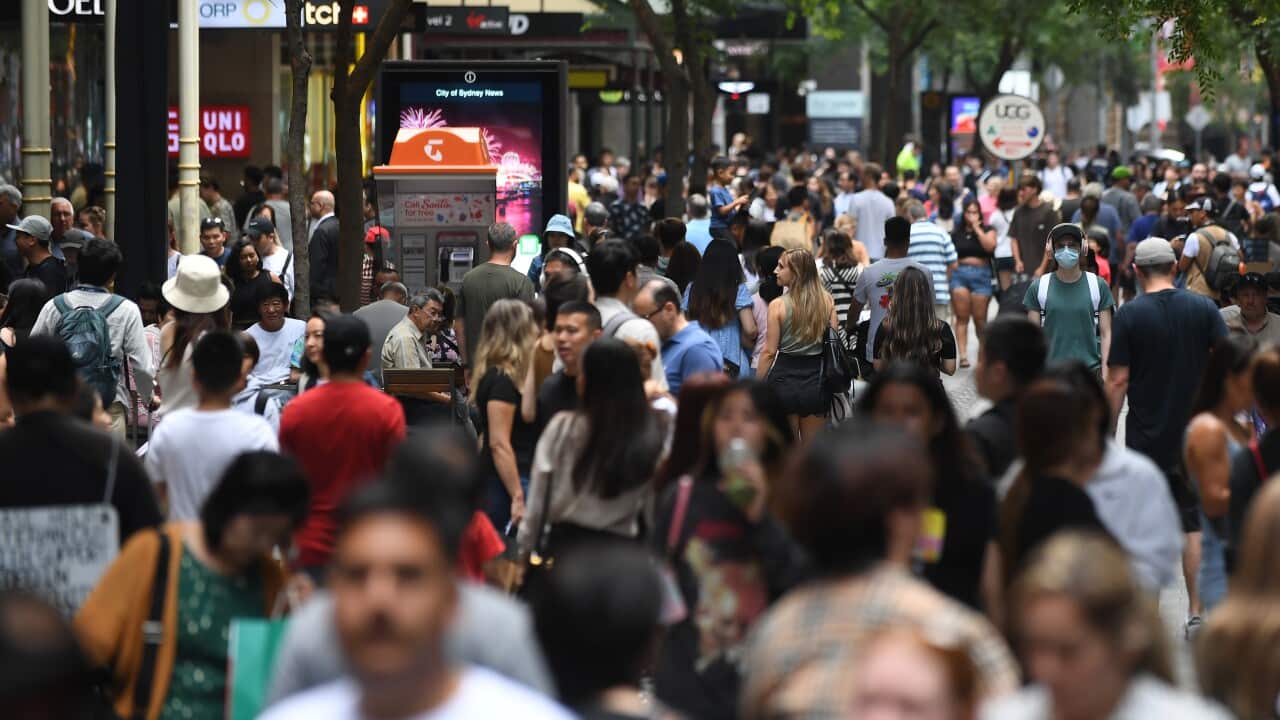
I was out on Saturday night, sitting in a bar in Brisbane's West End district with a few friends looking around at the crowd.

The place was packed with people from all sorts of backgrounds and nationalities. It struck me just how much Brisbane has changed over the past few decades.

It's is increasingly becoming a global village rather than simply a regional Australian capital. The city's diversity is visible everywhere in its restaurants, businesses, festivals, languages and neighbourhoods.

Multiculturalism here is not about replacing a local identity. Instead, it is expanding what it means to be a Brisbane local. People from different cultures and backgrounds are contributing to the city's character while helping to create a more dynamic, connected and vibrant place to live.

On a Saturday night in West End, you can see that transformation happening in real time....

Do people really want to go backwards?
 
National vote share is pretty important in the House of Reps. If you only poll 5% nationally you don't end up in the final two candidates very often. With 25% nationally you end up in a few of them. With 30% you end up in the majority of them. Unless you make it to the final 2 candidates preferences mean nothing to you. The people who voted for you get a say on deciding who wins, but you don't win.


That's a fair point. Preferential voting doesn't magically turn a party on 5% into a seat winner. To benefit from preferences, a party first has to survive long enough to reach the final two candidates in a seat.

The reason analysts focus on seat conversion, though, is that national vote share doesn't automatically translate into House of Representatives seats. A party can poll strongly nationwide but still underperform if its support is spread too evenly or if it lacks strong local campaigns and candidates.

So I'd agree that a large primary vote is a prerequisite for success. The open question is whether One Nation's support is deep and geographically concentrated enough to translate that national polling strength into a substantial number of lower-house seats.

Also it's an important nuance in discussions about Australia's preferential voting system.
 
I'm not sure how One Nation would go if they did manage to get a handful or more lower house seats in the House of Reps. I remember the huge swing to ON in the 1998 Qld election, just after ON was formed by Hanson in ON heartland, where ON ended up with 11 seats (had to look up the number, I don't carry exact data in my head for this stuff!). However ON was so disfunctional though that within months a large number of ON MLA's had defected, and in the next election they were down to 3 members elected and since then have only had the odd member in Qld parliament.

Have they developed any more from then as a political party? I suspect not, when their leaders are still of the likes of Pauline and Barnaby.
 
One thing that's becoming increasingly obvious though is after Labor’s strong 2025 federal victory, many Australians, especially in Queensland feel spooked by broken-promise perceptions, negative gearing tweaks, high migration, and slow cost-of-living relief.

One Nation has surged to 31% primary vote in recent polls, overtaking Labor (28%), by hammering “Aussies first” messaging. Labor counters by painting One Nation as protest merchants lacking credible policy, while relying on preference flows from Greens and independents to hold two-party-preferred leads.

The backlash highlights classic voter nervousness toward strong governments shifting left on economic and cultural issues.

Labor's main challenge is shifting perceptions from "out of touch" to "delivering for everyday Aussies"...

How?

Changing deep perceptions takes time and tangible outcomes not just attacks. The budget backlash shows they may have misread the room?
 
I'm not sure how One Nation would go if they did manage to get a handful or more lower house seats in the House of Reps. I remember the huge swing to ON in the 1998 Qld election, just after ON was formed by Hanson in ON heartland, where ON ended up with 11 seats (had to look up the number, I don't carry exact data in my head for this stuff!). However ON was so disfunctional though that within months a large number of ON MLA's had defected, and in the next election they were down to 3 members elected and since then have only had the odd member in Qld parliament.

Have they developed any more from then as a political party? I suspect not, when their leaders are still of the likes of Pauline and Barnaby.


You could say, perhaps that One Nation has matured since the 1998 Queensland chaos. They now hold stable Senate seats and won their first federal lower house seat in 2026.

However, the party remains heavily personalised around Hanson, with ongoing risks of poor discipline and candidate quality. A larger lower house bloc would likely be disruptive but unproven in governance....
 
One thing that's becoming increasingly obvious though is after Labor’s strong 2025 federal victory, many Australians, especially in Queensland feel spooked by broken-promise perceptions, negative gearing tweaks, high migration, and slow cost-of-living relief.

One Nation has surged to 31% primary vote in recent polls, overtaking Labor (28%), by hammering “Aussies first” messaging. Labor counters by painting One Nation as protest merchants lacking credible policy, while relying on preference flows from Greens and independents to hold two-party-preferred leads.

The backlash highlights classic voter nervousness toward strong governments shifting left on economic and cultural issues.

Labor's main challenge is shifting perceptions from "out of touch" to "delivering for everyday Aussies"...

How?

Changing deep perceptions takes time and tangible outcomes not just attacks. The budget backlash shows they may have misread the room?

See that's where it falls down. Before 2025 the ALP where pretty thin on the ground. They took a couple of Green seats that the Greens might win back and a bunch from the LNP that may well go to PHON this time. Their real trouble will lie at the outer metro areas the fringes of the metro area around the country. In QLD NSW and Vic meanwhile the LNP and Nationals in the regions will basically be wiped out. Taylor and Hastie are both vulnerable as are McCormack and Littleproud. Littleproud has one the biggest margins - but it isn't safe.

As some said yesterday PHON are taking nibbles at the ALP while taking bite sized chunked from the coalition.
 
The funny thing about one nation is the people who rabidly support her will be way worse off under her.

And people like myself who don’t like her would be better off.
Yer that’s pretty much where it puts me.
She is not my type to vote for but for her stance on some migration points that have been a bone of contention for couple of decades.
Her support is very old skool especially parochial Qld and regional area types.
Shes picking up minor support from disgruntled Lib voters and swingers.
I have heard friends here or there that feel in the corner that will consider ON as hit against the red coats.
Being a blue supporter in the e sinking ship you either go down with it or deflect the vote against red that I will if and when the time comes.
If I’m better off in the end as tsf says happy days if not celavie I will survive as would my kids.
 
  • Like
Reactions: tsf
While it can be quite a poltically charged topic of debate, I'm generally a fan of the 'Big Australia' concept and it's population growth...

Population growth foundational to Australia's economic success story and powered largely by skilled migration – a powerful engine for prosperity, dynamism, and long-term strength of the place. It's one of the key reasons Australia has punched above its weight globally....

Like everything there's pro's and cons!

Pros.....

Larger economy, more innovation, and productivity.
Stronger tax base for services and infrastructure.
Greater geopolitical weight in the Indo-Pacific.
Fills labour shortages and sustains growth.


Cons......

Strains housing, infrastructure, and urban congestion.
Environmental pressures (water, emissions, biodiversity).
Risk to per capita living standards if supply doesn't keep up.
Public backlash over rapid change and affordability.

Everyone is doing this in some form or another, however Australia gets it right better than most in my opinion!
 
While it can be quite a poltically charged topic of debate, I'm generally a fan of the 'Big Australia' concept and it's population growth...

Population growth foundational to Australia's economic success story and powered largely by skilled migration – a powerful engine for prosperity, dynamism, and long-term strength of the place. It's one of the key reasons Australia has punched above its weight globally....

Like everything there's pro's and cons!

Pros.....

Larger economy, more innovation, and productivity.
Stronger tax base for services and infrastructure.
Greater geopolitical weight in the Indo-Pacific.
Fills labour shortages and sustains growth.


Cons......

Strains housing, infrastructure, and urban congestion.
Environmental pressures (water, emissions, biodiversity).
Risk to per capita living standards if supply doesn't keep up.
Public backlash over rapid change and affordability.

Everyone is doing this in some form or another, however Australia gets it right better than most in my opinion!


I come from a different point of view

1) What do we what Australia to look like. That may be your 'Big Australia' or it may not be.
2) Do we have the infrastructure to support what we decide on?
3) What is needed in terms of infrastructure to get there?

What is clear is that many of our big cities are really struggling. They have roads from 80 years ago. They have sewers meant to handle a population of around 12 million people mostly in the cities - not 28 million in high density in those cities.

And its not only the big cities - it is any rapidly growing city. Look at Darwin and their build up for defence. with all the US changes up there. The water, sewer and lighting infrastructure is struggling
 
I come from a different point of view

1) What do we what Australia to look like. That may be your 'Big Australia' or it may not be.
2) Do we have the infrastructure to support what we decide on?
3) What is needed in terms of infrastructure to get there?

What is clear is that many of our big cities are really struggling. They have roads from 80 years ago. They have sewers meant to handle a population of around 12 million people mostly in the cities - not 28 million in high density in those cities.

And its not only the big cities - it is any rapidly growing city. Look at Darwin and their build up for defence. with all the US changes up there. The water, sewer and lighting infrastructure is struggling

Australian-population-growth_graph-1090x631.webp


There's a good chance someone said exactly what you said in 1824....

And in 1924....


Imagine an Australia that's big in every sense: economically powerhouse, culturally vibrant, geopolitically weighty in the Indo-Pacific, and innovative on the world stage. A country that rejects small thinking and "populate or perish" hesitation, choosing instead to harness human capital for generational success. Cities evolve into thriving, connected metropolises, regions boom with opportunity, and diversity becomes its greatest competitive edge.....

Yes, today's roads, sewers, and utilities in Sydney, Melbourne, Brisbane, and even Darwin show strain from legacy systems built for smaller populations.

But challenges like housing, infrastructure and congestion shouldn't be arguments against growth — they should be calls to get planning and execution right.

Australia could choose optimism and ambition over managed decline. A nation that grows boldly to secure its place in the future of an ever expanding globalised world!
 
Back
Top