The National Women's Soccer League (NWSL) -America's top women's soccer league- is one of the best leagues in the world. Once better than the European leagues -before the big money kicked in in the late 2010s through to the 2020s- the NWSL has so much history and success despite only being founded in 2012. Its predecessor, Women's Professional Soccer (WPS), was founded in 2009 before dissolving in 2012. A fully professional league with high attendances and vibrant fanbases. The best players from all over the world always pick to either play in the Big Six leagues in Europe or the NWSL. Its competitiveness, preserved by the salary cap (which is set to be extended to an extra $1 million for top talents under the High Impact Player Rule (HIP), dubbed the "Rodman Rule" as it likely exists to encourage Trinity Rodman to stay in the US), is also frequently noted and praised by fans worldwide. It can call on its competitiveness unlike its European counterparts in which Barcelona, Bayern Munich, Chelsea or Lyon dominate in their respective leagues. Over the 13 NWSL seasons so far (only skipping 2020 due to the COVID-19 pandemic), the most successful team, Portland Thorns, have only won three NWSL Championships (or Grand Finals) each, while North Carolina Courage and Seattle Reign have both won three NWSL Shields (minor premierships) each. The NWSL even has a super cup, the NWSL Challenge Cup.
Australian players once flocked to the NWSL, with plenty of Aussies having played in the league over the years. But last season, there were only three. So why is it that such a high-profile league watched around the world offering professionalism, full-time contracts and steady wages, vibrant fanbases, high attendances, and a lot of history is failing to attract Aussies. Especially given American weather is usually better for Australians than the year-round cold European weather? Why are there now as many Matildas at Arsenal as there is in the entire NWSL?
The decline
To analyse the decline, we first have to look at the number of Aussies who have played in the NWSL. 27 Aussies have played in the NWSL, meaning Australia ranks among the top countries of origin for all-time NWSL players. To put it in perspective, only 48 players from the Asian confedaration have played in the NWSL, 27 have come from Australia while the remaining 21 have come from Japan (16), South Korea (four) and China (one). Of the 10 most capped Matildas of all time, seven (in order of total caps: Clare Polkinghorne, Emily van Egmond, Lisa de Vanna, Alanna Kennedy, Steph Catley, Caitlin Foord and Sam Kerr) have played in the NWSL, while only three (Cheryl Salisbury, Tameka Yallop and Heather Garriock) haven't. Sam Kerr holds the record for the most goals in a 24-game season (with 18 in her 2019 season at Chicago Red Stars) and remains the second highest goalscorer of all time in the NWSL, with 77 goals (only three behind Lynn Biyendolo's 80) at three clubs (Western New York Flash, a defunct side, Sky Blue FC, now Gotham FC, and Chicago Red Stars, now just Chicago Stars), and the player with the most Golden Boots (with three, in 2017, 2018 and 2019). The majority of these 27 players played in the 2010s, with only nine having played in the 2020s, the decade that many Aussies began moving away from the NWSL to the WSL. Clearly, this means the decline has been ongoing for many years now, but it's now at such a low point that the NWSL may end up being without any Aussie players in a few years time. In fact, there's a very real chance we could end up with only one Matilda left in the NWSL for the 2026 season.
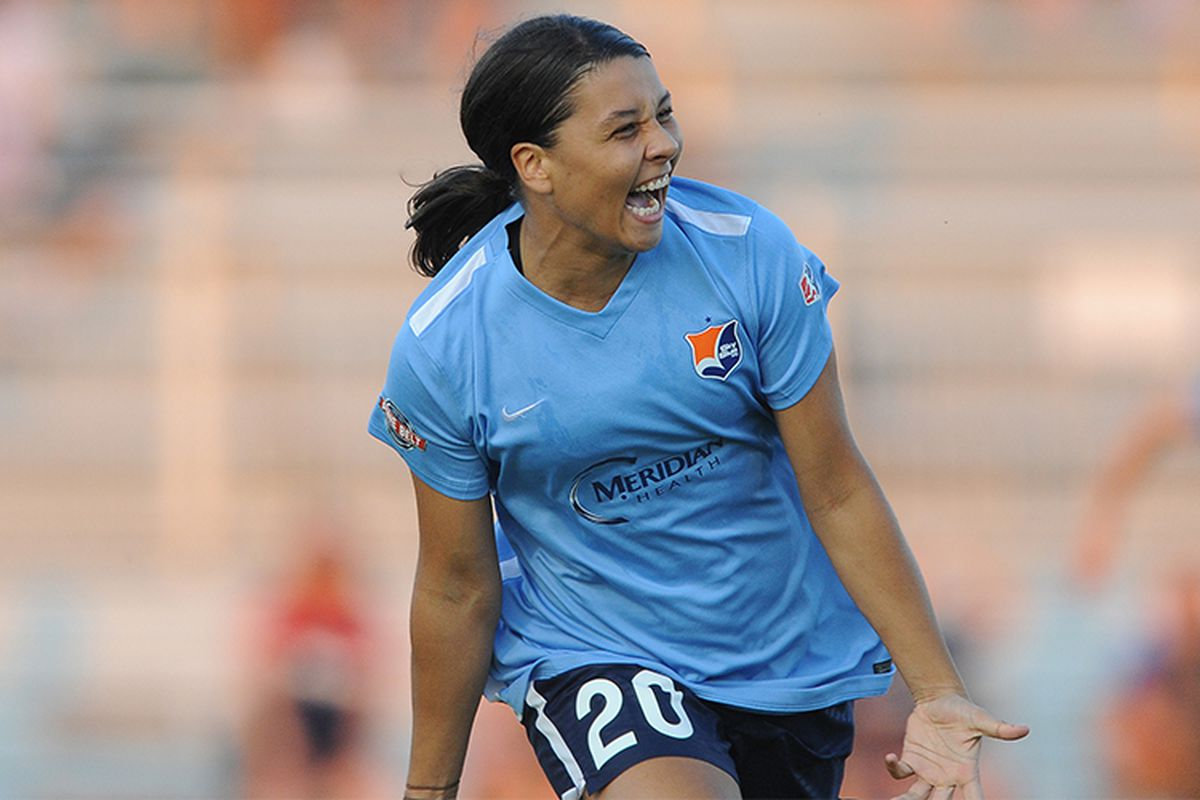
Sam Kerr remains the second highest goalscorer in the NWSL with 77 goals having played for Sky Blue FC (Gotham City) and Chicago Red Stars (Chicago Stars)
The key turning point was in 2019, when 11 Australians left the NWSL, either returning to the A-League or moving across the Atlantic Ocean to Europe, namely to the WSL. While some returned to the NWSL later on, and still had Aussies playing for and even signing for NWSL clubs, the NWSL became less and less attractive for Australian players, while Europe become more attractive.
Current situation
At the end of the 2025 season, a total of five Aussies were registered at NWSL clubs throughout the season. Mackenzie Arnold and Kaitlyn Torpey were at Portland Thorns (with Macca being their starting goalkeeper), Alanna Kennedy (who had moved from Manchester City in January, bringing Manchester United Englishwoman Katie Zelem with her) was at Angel City until August (when she decided to return to England and sign for newly-promoted London City Lionesses, taking Katie back with her), Cortnee Vine was at North Carolina Courage with her girlfriend and former Sydney FC teammate Charlotte McLean (who went on loan to Tampa Bay Sun in the USL Super League, the American second division but without promotion and relegation). Of those, only three completed full seasons in the league. Following the season's end, Charlotte was released by the Courage and ended up going permanently to the Sun and Torpey was released by the Thorns after just one season at the club. This leaves just Arnold and Vine left in NWSL. The next two months are incredibly crucial, with the Asian Cup in March 2026 on home soil, players need regular football to stake a claim for a spot in the team. Further to that, the World Cup is not long after in June and July 2027 in Brazil, and the Olympics are in July 2028.

Cortnee Vine has been on the books at North Carolina Courage since 2024
Of the new talent coming through, Europe seems to be the preferred destination, namely the Big Six leagues: England's Women's Super League (WSL), France's Première Ligue (formerly the D1 Féminine), Germany's Frauen-Bundesliga, Italy's Serie A Femminile, Spain's Liga F, and Sweden's Damallsvenskan. The Aussies there seem to have adapted well, with most being starters or even key players for their respective clubs. Typically, A-League Women talents are going to mid-table teams first, before gradually making their way up to the top if they turn out to be good enough. The Damallsvenskan in particular has become a great development league for youth of all nationalities (not just Australians), and a perfect gateway to Europe. The Aussies that do choose to go to America these days tend to go to the newly created USL Super League, an American second tier without promotion and relegation. Further north, there's also the newly-founded and long-awaited league Kahli Johnson's Calgary Wild calls home: Canada's Northern Super League (NSL). While these leagues may well be a step sideways for an A-League player, the aim tends to be to get noticed by NWSL scouts.
The reasons
So what possibly could be keeping Aussies away from the NWSL? It clearly can't be the common disdain for living in the US for a mixture of reasons irrelevant to this article, since while that may be a factor for many, the USL Super League still attracts Aussie talent. Personally, I think there are many reasons why the NWSL itself is less attractive than before.
Firstly, many have criticised the NWSL's medical team, particularly after Hayley Raso's back injury at Portland Thorns, an injury so severe she was told she would never walk again let alone play professional soccer again, despite her now racking up over 100 Matildas caps and a career that includes the likes of Real Madrid and Manchester City. It's widely believed that Hayley herself would be against returning to play soccer in America. The NWSL has also been criticised for its handling of the sexual harassment scandals that have plagued the league, most notably in 2021, which led to many coaches and council executives resigning and departing (with four ex-managers even being banned). The scandals eventually led to the release of the Yates Report, commissioned by former US Deputy Attorney General Sally Yates and released by the United States Soccer Federation (USSF).
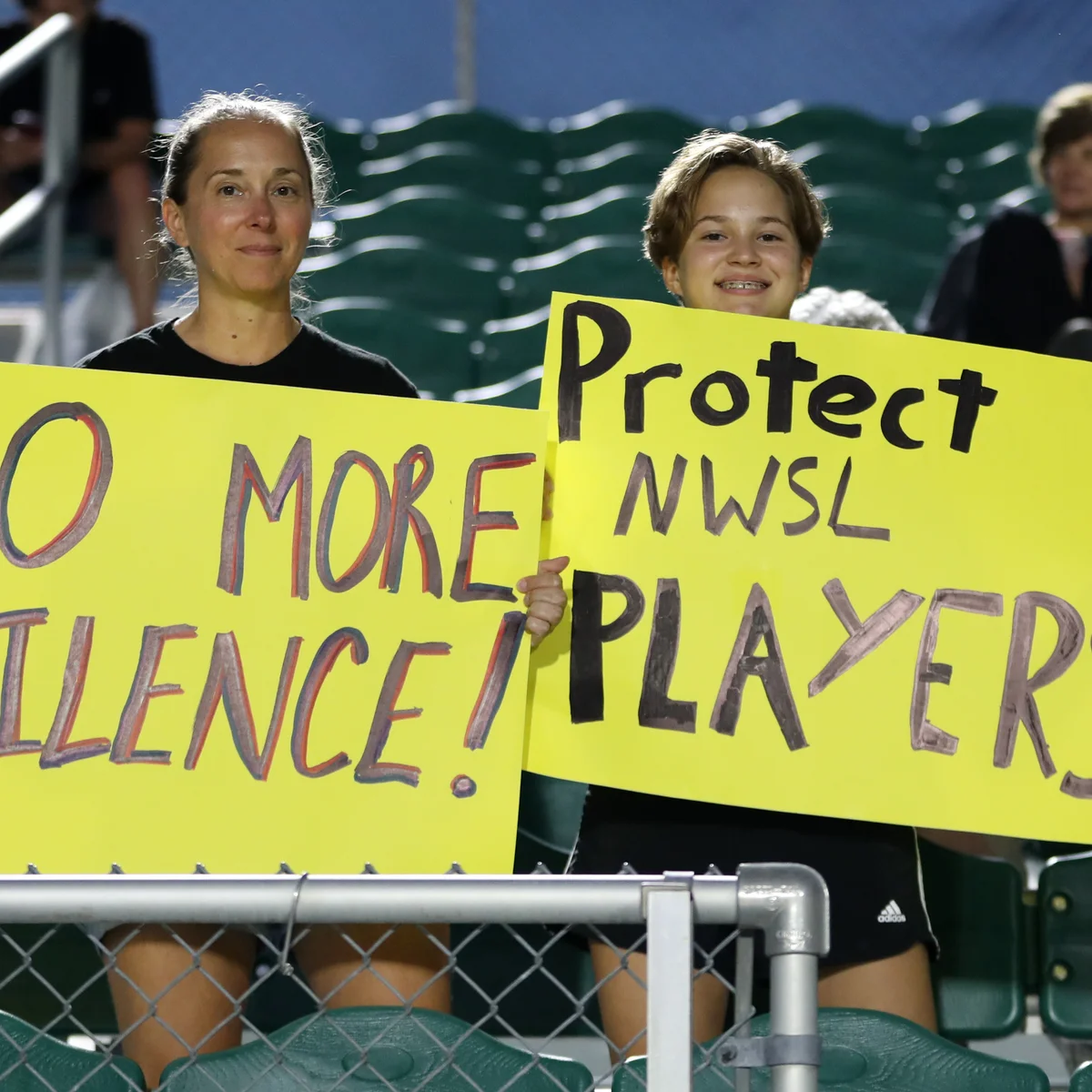
The Sexual Harassment Scandal in the NWSL took a prominent stage in 2021
Secondly, while America is the land of corporatism, there's only so much standalone clubs (which every NWSL club is) can do. Without substantial backing, NWSL clubs can fall behind in creating a level playing field and furthering the progress of the NWSL. Furthermore, while the NWSL is introducing the High Impact Player (HIP) Rule (dubbed the "Rodman Rule"), the NWSL still has a salary cap. In Europe, however, where standalone clubs are less common and clubs usually have both a men's team and a women's team, there is more financial freedom in terms of player wages and how much clubs can spend. Clubs associated with the mens teams also come with a major benefit in terms of club identity, inherited history, and broader global fanbases (as we see with Aussies paying a lot of attention to the WSL, but not as much to the NWSL), something standalone clubs often lack.
Thirdly, like in the men's game, Europe is now the world stage. Playing in Europe makes you more visible to the scouts of major clubs that compete in the Champions League. Formerly, the best league in the world was the NWSL, but nowadays it's the WSL, despite WSL teams lacking European success. This is however changing with Arsenal winning the Women's Champions League last season. Europe is now seen as the ideal environment for improvement, especially given Europe has something America and Australia don't (yet): promotion and relegation. When you factor in European spots and relegation, there's more to play for than just the finals or playoffs.
Where next?
While it's clear that Aussies have begun clearly preferring Europe to America when it comes to playing football, that doesn't mean Aussies will completely stop going to the NWSL. With so many emerging talents coming through, both already well-established talents that made the move to Europe or newer ones in the A-League yet to make the jump yet, I'm sure we will still see a few end up playing in the NWSL. We may even get one at the end of the current season if Holly McNamara chooses to follow her good friend Kaitlyn Torpey's path and start in the US rather than Europe. But one thing remains crystal clear: in Matildas' minds, Europe clearly is their preferred destination.
Australian players once flocked to the NWSL, with plenty of Aussies having played in the league over the years. But last season, there were only three. So why is it that such a high-profile league watched around the world offering professionalism, full-time contracts and steady wages, vibrant fanbases, high attendances, and a lot of history is failing to attract Aussies. Especially given American weather is usually better for Australians than the year-round cold European weather? Why are there now as many Matildas at Arsenal as there is in the entire NWSL?
The decline
To analyse the decline, we first have to look at the number of Aussies who have played in the NWSL. 27 Aussies have played in the NWSL, meaning Australia ranks among the top countries of origin for all-time NWSL players. To put it in perspective, only 48 players from the Asian confedaration have played in the NWSL, 27 have come from Australia while the remaining 21 have come from Japan (16), South Korea (four) and China (one). Of the 10 most capped Matildas of all time, seven (in order of total caps: Clare Polkinghorne, Emily van Egmond, Lisa de Vanna, Alanna Kennedy, Steph Catley, Caitlin Foord and Sam Kerr) have played in the NWSL, while only three (Cheryl Salisbury, Tameka Yallop and Heather Garriock) haven't. Sam Kerr holds the record for the most goals in a 24-game season (with 18 in her 2019 season at Chicago Red Stars) and remains the second highest goalscorer of all time in the NWSL, with 77 goals (only three behind Lynn Biyendolo's 80) at three clubs (Western New York Flash, a defunct side, Sky Blue FC, now Gotham FC, and Chicago Red Stars, now just Chicago Stars), and the player with the most Golden Boots (with three, in 2017, 2018 and 2019). The majority of these 27 players played in the 2010s, with only nine having played in the 2020s, the decade that many Aussies began moving away from the NWSL to the WSL. Clearly, this means the decline has been ongoing for many years now, but it's now at such a low point that the NWSL may end up being without any Aussie players in a few years time. In fact, there's a very real chance we could end up with only one Matilda left in the NWSL for the 2026 season.
Sam Kerr remains the second highest goalscorer in the NWSL with 77 goals having played for Sky Blue FC (Gotham City) and Chicago Red Stars (Chicago Stars)
Current situation
At the end of the 2025 season, a total of five Aussies were registered at NWSL clubs throughout the season. Mackenzie Arnold and Kaitlyn Torpey were at Portland Thorns (with Macca being their starting goalkeeper), Alanna Kennedy (who had moved from Manchester City in January, bringing Manchester United Englishwoman Katie Zelem with her) was at Angel City until August (when she decided to return to England and sign for newly-promoted London City Lionesses, taking Katie back with her), Cortnee Vine was at North Carolina Courage with her girlfriend and former Sydney FC teammate Charlotte McLean (who went on loan to Tampa Bay Sun in the USL Super League, the American second division but without promotion and relegation). Of those, only three completed full seasons in the league. Following the season's end, Charlotte was released by the Courage and ended up going permanently to the Sun and Torpey was released by the Thorns after just one season at the club. This leaves just Arnold and Vine left in NWSL. The next two months are incredibly crucial, with the Asian Cup in March 2026 on home soil, players need regular football to stake a claim for a spot in the team. Further to that, the World Cup is not long after in June and July 2027 in Brazil, and the Olympics are in July 2028.
Cortnee Vine has been on the books at North Carolina Courage since 2024
The reasons
So what possibly could be keeping Aussies away from the NWSL? It clearly can't be the common disdain for living in the US for a mixture of reasons irrelevant to this article, since while that may be a factor for many, the USL Super League still attracts Aussie talent. Personally, I think there are many reasons why the NWSL itself is less attractive than before.
Firstly, many have criticised the NWSL's medical team, particularly after Hayley Raso's back injury at Portland Thorns, an injury so severe she was told she would never walk again let alone play professional soccer again, despite her now racking up over 100 Matildas caps and a career that includes the likes of Real Madrid and Manchester City. It's widely believed that Hayley herself would be against returning to play soccer in America. The NWSL has also been criticised for its handling of the sexual harassment scandals that have plagued the league, most notably in 2021, which led to many coaches and council executives resigning and departing (with four ex-managers even being banned). The scandals eventually led to the release of the Yates Report, commissioned by former US Deputy Attorney General Sally Yates and released by the United States Soccer Federation (USSF).
The Sexual Harassment Scandal in the NWSL took a prominent stage in 2021
Thirdly, like in the men's game, Europe is now the world stage. Playing in Europe makes you more visible to the scouts of major clubs that compete in the Champions League. Formerly, the best league in the world was the NWSL, but nowadays it's the WSL, despite WSL teams lacking European success. This is however changing with Arsenal winning the Women's Champions League last season. Europe is now seen as the ideal environment for improvement, especially given Europe has something America and Australia don't (yet): promotion and relegation. When you factor in European spots and relegation, there's more to play for than just the finals or playoffs.
Where next?
While it's clear that Aussies have begun clearly preferring Europe to America when it comes to playing football, that doesn't mean Aussies will completely stop going to the NWSL. With so many emerging talents coming through, both already well-established talents that made the move to Europe or newer ones in the A-League yet to make the jump yet, I'm sure we will still see a few end up playing in the NWSL. We may even get one at the end of the current season if Holly McNamara chooses to follow her good friend Kaitlyn Torpey's path and start in the US rather than Europe. But one thing remains crystal clear: in Matildas' minds, Europe clearly is their preferred destination.